
What is the Difference between a neurologist and a neurosurgeon ?
If you or someone in your family is dealing with frequent headaches, nerve pain, or a brain-related condition, it’s natural to feel confused about which doctor to consult. Many patients ask, “Should I see a neurologist or a neurosurgeon?” This confusion is very common because both specialists treat conditions related to the brain and nervous system.
However, their roles are quite different. Understanding this difference can help you take the right step at the right time. Early consultation with the correct specialist not only improves diagnosis but also ensures timely treatment and better outcomes.
What is a Neurologist?
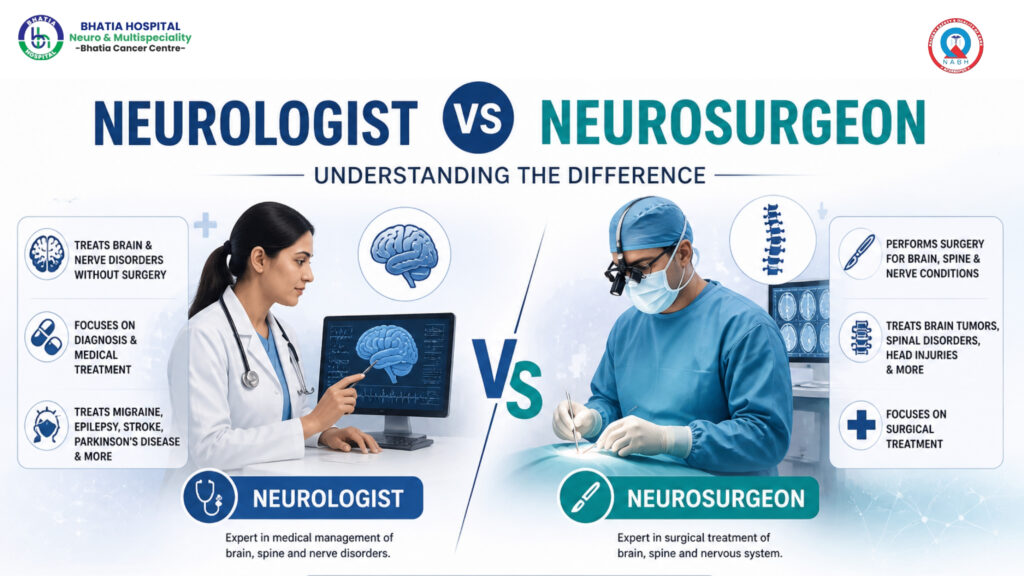
A neurologist is a doctor who specializes in diagnosing and treating disorders of the brain, spinal cord, and nerves without performing surgery. They focus on medical management and long-term care of neurological conditions.
If you’re experiencing issues like recurring headaches, dizziness, seizures, or nerve-related pain, a neurologist is usually the first doctor you should consult. Conditions such as migraine, epilepsy, stroke, and Parkinson’s disease are commonly treated by neurologists.
For example, if you are looking for treatment for migraine, a neurologist will assess your symptoms, recommend tests if needed, and manage your condition with medications and lifestyle changes.
What is a Neurosurgeon?
A neurosurgeon is a specialist trained to perform surgeries on the brain, spine, and nervous system. They deal with conditions that require surgical intervention, especially when there is a structural problem in the body.
This includes serious conditions such as brain tumors, spinal disorders like slipped discs, head injuries, and nerve compression. In such cases, surgery may be necessary to relieve pressure, remove abnormalities, or restore function.
It’s important to understand that not every neurological condition needs surgery. Neurosurgeons usually step in when non-surgical treatments are not enough or when the condition is severe.
Key Difference Between Neurologist and Neurosurgeon
The main difference lies in the type of treatment they provide. A neurologist treats conditions using medications and non-surgical methods, while a neurosurgeon performs operations when required.
In most cases, a neurologist is the first point of contact. After evaluating your condition, they may refer you to a neurosurgeon if surgery becomes necessary. Both specialists often work together to ensure complete and effective care.
When Should You See a Neurologist?
You should consider visiting a neurologist if you experience persistent or unexplained symptoms such as frequent headaches, dizziness, numbness, or weakness in your limbs. Sudden memory issues, seizures, or problems with balance are also warning signs that should not be ignored.
These symptoms may indicate an underlying neurological condition. Early evaluation can help identify the problem before it becomes serious.
When Do You Need a Neurosurgeon?
A neurosurgeon may be required when there is a condition that cannot be managed with medication alone. This includes situations like brain tumors, severe head injuries, spinal cord problems, or nerve compression affecting movement.
If imaging tests like MRI or CT scans show structural issues, your doctor may recommend surgical treatment. In such cases, timely intervention is important to prevent complications.
Who Treats Brain and Nerve Disorders?
Both neurologists and neurosurgeons are considered brain and nerve specialists, but their roles differ based on the treatment required. Neurologists handle diagnosis and medical management, while neurosurgeons focus on surgical solutions.
Depending on your condition, your treatment plan may involve one or both specialists working together to provide comprehensive care.
Diagnosis Process
To understand your condition accurately, doctors may recommend certain diagnostic tests. These can include MRI or CT scans to visualize the brain and spine, blood tests to rule out underlying issues, EEG for seizure-related conditions, and nerve conduction studies to assess nerve function.
These investigations help doctors identify the exact cause of your symptoms and decide the most appropriate treatment approach.
Why Early Treatment Matters?
Delaying treatment for neurological symptoms can lead to serious complications. What may start as mild discomfort can progress into a more severe condition if ignored. In some cases, it can even result in permanent nerve damage.
That’s why it’s important to consult a doctor as soon as you notice unusual symptoms. Early diagnosis often leads to simpler and more effective treatment.
Why Choose Bhatia Hospital in Patiala?
If you are looking for reliable neurological care, Bhatia Hospital in Patiala provides comprehensive services for brain and nerve-related conditions. The hospital is equipped with advanced diagnostic facilities and experienced specialists who focus on patient-centered care.
Patients benefit from accurate diagnosis, personalized treatment plans, and a supportive environment. Whether you need medical management or further evaluation, the hospital ensures that you receive the right care at the right time.
Conclusion
Understanding the difference between a neurologist and a neurosurgeon helps you make informed healthcare decisions. Both specialists play an important role in treating brain and nerve conditions, and choosing the right one depends on your symptoms and diagnosis.
If you or your loved one is experiencing any concerning symptoms, don’t ignore them. Early consultation can prevent complications and improve recovery.
Visit Bhatia Hospital, Patiala, for expert care and guidance. Book your appointment today and take a step toward better health. Stay connected with Bhatia Hospital. Follow us for health tips, patient awareness, and latest healthcare updates on our Instagram and facebook.
FAQS
What is the main difference between a neurologist and a neurosurgeon?
A neurologist treats brain and nerve conditions using non-surgical methods, while a neurosurgeon performs surgeries when required.
When should I see a neurologist?
You should consult a neurologist if you experience headaches, seizures, dizziness, or nerve-related symptoms.
Is a neurologist enough for migraine treatment?
Yes, a neurologist is the right specialist for diagnosing and treating migraines
Item #1
Item #2
Item #3
Do all brain conditions require surgery?
No, many neurological conditions are managed with medication. Surgery is only needed in specific cases.
Can a neurologist refer me to a neurosurgeon?
Yes, if your condition requires surgery, a neurologist will guide you to a neurosurgeon