
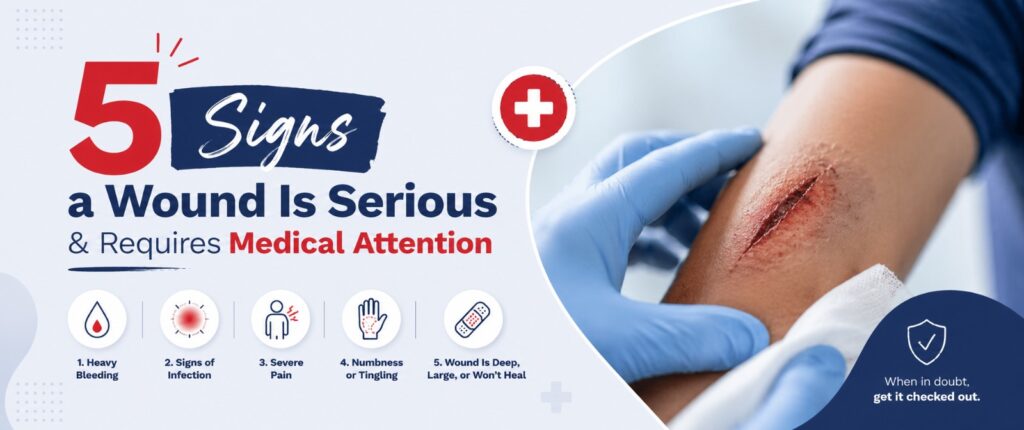
5 Signs a Wound Is Serious & Requires Medical Attention
Every cut, scrape, or injury may seem minor at first. However, not all wounds heal on their own. In some cases, a wound can become infected or lead to serious health problems if left untreated. Therefore, recognizing the warning signs early is essential to prevent complications and ensure faster healing.
At Bhatia Hospital, our experienced healthcare professionals provide expert wound assessment, advanced treatment, and compassionate care for patients with minor and severe injuries.
What Is a Serious Wound?
A serious wound is an injury that requires medical attention because it may involve deep tissue damage, heavy bleeding, infection, or delayed healing. While small cuts often heal with basic first aid, deeper or infected wounds need professional treatment to reduce the risk of complications.
5 Signs a Wound Requires Medical Attention
1. Bleeding Does Not Stop
Although mild bleeding usually stops within a few minutes, continuous bleeding is a warning sign. If a wound keeps bleeding even after applying firm pressure for 10–15 minutes, you should seek medical care immediately.
Medical attention is need if:
- Bleeding is heavy or spurting.
- Blood soaks through bandages quickly.
- The wound is deep or caused by a sharp object.
2. Signs of Infection
Even a small wound can become infected if bacteria enter the damaged skin. Therefore, watch for symptoms that may indicate an infection.
Common signs include:
- Increasing redness around the wound
- Swelling that gets worse
- Warm skin near the injury
- Pus or foul-smelling discharge
- Fever or chills
Early treatment can prevent the infection from spreading to other parts of the body.
3. The Wound Is Deep or Wide
Some wounds affect not only the skin but also muscles, tendons, nerves, or blood vessels. As a result, they often require stitches or advanced medical treatment.
You should visit a doctor if:
- The wound edges remain open.
- Fat, muscle, or bone is visible.
- The injury is longer than half an inch.
- The wound was cause by glass, metal, or another sharp object.
Prompt treatment helps reduce scarring and supports proper healing.
4. Severe Pain or Loss of Movement
Pain is a normal part of healing. However, severe or worsening pain may indicate deeper tissue damage or infection.
Seek medical attention if:
- Pain becomes more intense over time.
- You cannot move the affected area normally.
- You experience numbness or tingling.
- The injured limb becomes weak.
A thorough medical evaluation can identify hidden injuries before they become more serious.
5. The Wound Is Not Healing
Most minor wounds begin to heal within a few days. However, if there is little or no improvement after one to two weeks, professional care is recommend.
A wound may not heal properly if:
- It remains open for several days.
- Swelling and redness continue.
- Drainage increases instead of decreasing.
- The wound appears larger over time.
Delayed wound healing is more common in people with diabetes, poor circulation, or weakened immunity. Therefore, early treatment is especially important.
First Aid Tips Before Visiting the Hospital
Until you receive medical care, you can take a few simple steps to protect the wound.
- Wash your hands before touching the wound.
- Rinse the wound gently with clean water.
- Apply gentle pressure to control bleeding.
- Cover the wound with a clean, sterile dressing.
- Avoid using unclean materials or home remedies on deep wounds.
These measures can reduce the risk of infection while you seek professional treatment.
When Should You Visit the Emergency Department?
You should seek immediate medical care if:
- Bleeding cannot be control.
- The wound is very deep or large.
- There is a possible broke bone.
- An animal or human bite caused the injury.
- A rusty or dirty object caused the wound.
- You have difficulty moving the injured area.
- Signs of infection develop along with fever.
Quick treatment can prevent serious complications and improve recovery.
How Bhatia Hospital Can Help
At Bhatia Hospital, we provide comprehensive wound care using modern medical techniques and personalized treatment plans. Our skilled healthcare team carefully evaluates each injury to ensure safe healing and prevent complications.
Our wound care services include:
- Emergency wound assessment
- Wound cleaning and dressing
- Stitches and wound closure
- Infection diagnosis and treatment
- Tetanus vaccination when required
- Follow-up wound care and recovery guidance
We focus on delivering timely treatment that supports faster healing and better patient outcomes.
Conclusion
While many cuts and scrapes heal without problems, some wounds require immediate medical attention. Therefore, never ignore persistent bleeding, signs of infection, severe pain, deep injuries, or wounds that fail to heal. Early treatment not only prevents complications but also helps you recover more quickly.
If you or your loved one has a wound that shows any of these warning signs, visit Bhatia Hospital for expert evaluation and compassionate care. Our dedicate medical team is commit to providing safe, effective, and timely treatment for every patient. Follow up Instagram and Facebook for more infomation.
Frequently Asked Questions (FAQs)
How do I know if my wound needs medical attention?
You should see a doctor if your wound has heavy bleeding, signs of infection, severe pain, is deep or wide, or does not start healing within a few days.
What are the early signs of a wound infection?
Common signs include redness, swelling, warmth around the wound, pus or foul-smelling discharge, increasing pain, and fever. Early treatment can help prevent the infection from spreading.
When should I get stitches for a wound?
You may need stitches if the wound is deep, wide, has an open corner that won’t close, or is located on the face, hands, joints, or other areas where proper healing is important. It’s best to seek medical care within 6–8 hours of the injury.
Can I treat a deep wound at home?
No. While you can clean the wound and cover it with a sterile dressing, deep wounds should be examine by a healthcare professional to prevent infection, control bleeding, and ensure proper healing.