
Conditions Treated with Laparoscopic Surgery: A Complete Patient Guide
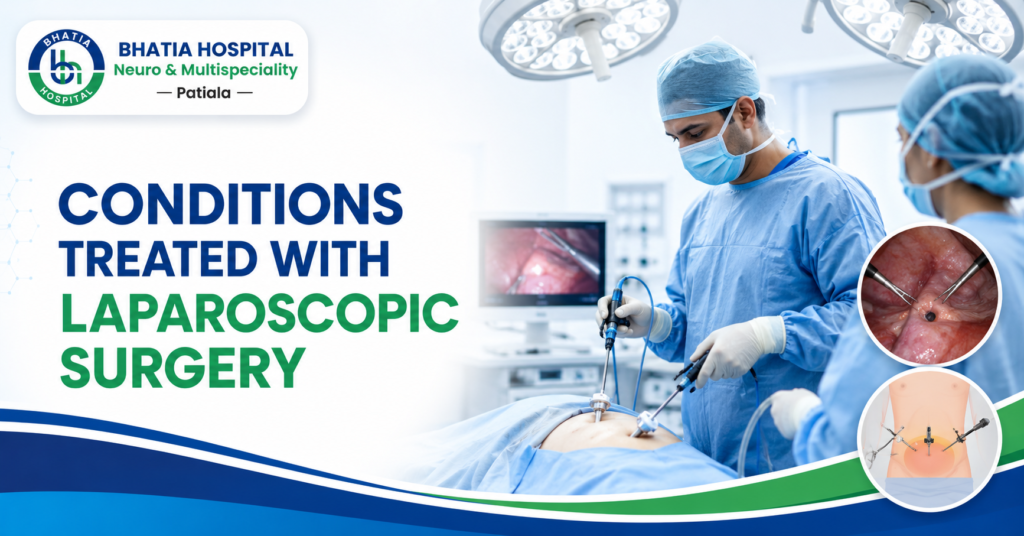
Many health conditions that once required large surgical cuts can now be treated with laparoscopic surgery, also known as keyhole surgery. This modern surgical method uses small incisions, a tiny camera, and specialized instruments to perform procedures with greater precision.
Today, Conditions Treated with Laparoscopic Surgery include gallstones, hernias, appendicitis, ovarian cysts, colorectal diseases, and several gynecological conditions. Because it is a minimally invasive surgery, patients usually experience less pain, reduced blood loss, shorter hospital stays, and faster recovery.
At Bhatia Hospital Neuro & Multispeciality Hospital, Patiala, experienced surgeons use advanced laparoscopic techniques to provide safe, effective, and patient-centered surgical care. Patients from Patiala, Punjab, and nearby districts trust our team for personalized treatment and modern surgical solutions.
What Is Laparoscopic Surgery?
Laparoscopic surgery is a modern surgical technique performed through small cuts instead of one large incision. A thin tube called a laparoscope, fitted with a high-definition camera and light, is inserted through a tiny incision. The camera sends real-time images to a monitor, allowing the surgeon to operate with precision.
Because the procedure causes less tissue damage than traditional open surgery, it is commonly called keyhole surgery or minimally invasive surgery.
Common Features of Laparoscopic Surgery:
- Small incisions
- High-definition camera guidance
- Specialized surgical instruments
- Minimal scarring
- Reduced pain
- Faster healing
- Earlier return to daily activities
This approach is widely used in general surgery, gynecology, urology, and colorectal surgery.
Why Is Laparoscopic Surgery Preferred?
| Benefit | How It Helps Patients |
|---|---|
| Smaller Incisions | Less damage to surrounding tissues |
| Less Pain | Reduced need for pain medication |
| Faster Recovery | Return to work and normal life sooner |
| Minimal Blood Loss | Lower risk of transfusion |
| Smaller Scars | Better cosmetic outcome |
| Lower Infection Risk | Smaller wounds heal more quickly |
| Shorter Hospital Stay | Many patients go home within 24–48 hours |
Conditions Treated with Laparoscopic Surgery
Laparoscopic surgery is used to diagnose and treat many conditions affecting the abdomen and pelvis. The exact procedure depends on the patient’s symptoms, diagnosis, and overall health.
Below are some of the most common conditions treated with laparoscopic surgery.
Gallstones (Gallbladder Disease)
Gallstones can block the flow of bile and cause severe pain, nausea, vomiting, and infection.
Laparoscopic cholecystectomy, or gallbladder removal, is considered the standard treatment for symptomatic gallstones. The procedure removes the diseased gallbladder through small incisions, helping patients recover faster with minimal discomfort.
Hernia
A hernia occurs when an internal organ or tissue pushes through a weak area in the muscle wall.
Laparoscopic hernia surgery is commonly performed for:
- Inguinal hernia
- Umbilical hernia
- Incisional hernia
- Femoral hernia
This approach often results in less pain and an earlier return to normal activities compared with open surgery.
Appendicitis
Appendicitis is a medical emergency that causes inflammation of the appendix.
Symptoms may include:
- Sudden abdominal pain
- Fever
- Nausea
- Loss of appetite
- Vomiting
Laparoscopic appendix surgery (appendectomy) allows surgeons to remove the inflamed appendix safely while reducing recovery time.
Ovarian Cysts
Some ovarian cysts disappear naturally, while others continue to grow or cause pain.
Laparoscopic surgery may be recommended when a cyst:
- Causes persistent pain
- Becomes large
- Twists the ovary
- Has suspicious features on imaging
The procedure aims to preserve healthy ovarian tissue whenever possible.
Uterine Conditions Requiring Hysterectomy
Women with severe gynecological conditions may benefit from a laparoscopic hysterectomy.
It may be recommended for:
- Large fibroids
- Heavy menstrual bleeding
- Endometriosis
- Adenomyosis
- Early-stage gynecological cancers (in selected patients)
Compared with traditional surgery, laparoscopic hysterectomy usually involves less pain and faster recovery.
Endometriosis
Endometriosis occurs when tissue similar to the lining of the uterus grows outside the uterus.
It can cause:
- Severe menstrual pain
- Pelvic pain
- Pain during intercourse
- Infertility
Laparoscopy helps both diagnose and treat endometriosis by removing abnormal tissue while protecting healthy organs.
Colorectal Diseases
Laparoscopic colorectal surgery is used for several conditions, including:
- Diverticular disease
- Colon polyps
- Colorectal cancer
- Inflammatory bowel disease (selected cases)
- Intestinal obstruction
Your surgeon will determine whether laparoscopic surgery is appropriate based on the stage and severity of the disease.
Gastroesophageal Reflux Disease (GERD)
Some patients with severe acid reflux do not improve with medicines.
In selected cases, laparoscopic anti-reflux surgery can strengthen the valve between the stomach and esophagus, reducing long-term reflux symptoms.
Diagnostic Laparoscopy
Sometimes imaging tests cannot clearly identify the cause of abdominal or pelvic pain.
Diagnostic laparoscopy allows doctors to directly examine the abdominal organs and identify conditions such as:
- Internal bleeding
- Adhesions
- Endometriosis
- Chronic pelvic pain
- Unexplained abdominal pain
It can also help guide further treatment.
Other Conditions That May Be Treated with Laparoscopy
Depending on the patient’s condition, laparoscopic surgery may also be used for:
- Adhesions (scar tissue)
- Certain liver cysts
- Splenic disorders
- Some kidney conditions
- Selected abdominal tumors
- Bariatric (weight-loss) surgery
- Certain pancreatic procedures
Not every condition can be treated laparoscopically. Your surgeon will recommend the most appropriate surgical approach based on your medical evaluation.
Signs You May Need a Surgical Consultation
You should consult a surgeon if you experience symptoms such as:
- Persistent abdominal pain
- Recurrent gallstone attacks
- A visible or painful hernia
- Severe pelvic pain
- Frequent acid reflux despite treatment
- Repeated appendicitis symptoms
- Large ovarian cysts
- Chronic digestive problems
- Blood in the stool
- Unexplained abdominal swelling
Early evaluation can help prevent complications and allow timely treatment.
Risk Factors for Conditions That May Require Laparoscopic Surgery
Several factors increase the likelihood of developing conditions that may need surgical treatment.
Common Risk Factors
- Obesity
- Family history of hernias or gallstones
- Aging
- Pregnancy
- Heavy lifting
- Smoking
- Diabetes
- High-fat diet
- Chronic constipation
- Previous abdominal surgery
- Hormonal changes
- Sedentary lifestyle
Managing these risk factors may lower the chance of developing certain surgical conditions.
How Are Conditions Diagnosed Before Laparoscopic Surgery?
Before recommending laparoscopic surgery, your surgeon will perform a detailed medical evaluation. This helps confirm the diagnosis, determine whether laparoscopy is suitable, and reduce the risk of complications. The evaluation usually includes:Medical History
Your doctor will ask about:
- Current symptoms
- Previous surgeries
- Existing medical conditions
- Family history
- Medicines you are taking
- Allergies
Physical Examination
A thorough physical examination helps identify signs such as:
- Abdominal tenderness
- Swelling
- Hernia
- Pelvic pain
- Signs of infection
Blood Tests
Blood investigations may include:
- Complete Blood Count (CBC)
- Blood sugar levels
- Kidney function tests
- Liver function tests
- Blood clotting profile
- Infection markers
Imaging Tests
Depending on the condition, your doctor may recommend:
- Ultrasound
- CT Scan
- MRI Scan
- X-rays
- Endoscopy (for selected digestive conditions)
These tests help locate the problem and plan the safest surgical approach.
Diagnostic Laparoscopy
If imaging results remain unclear, diagnostic laparoscopy allows the surgeon to directly examine the abdominal or pelvic organs. It can identify conditions such as endometriosis, adhesions, internal bleeding, or unexplained abdominal pain.
Treatment Options Using Laparoscopic Surgery
The treatment depends on the diagnosed condition, its severity, and the patient’s overall health.
Gallbladder Removal (Laparoscopic Cholecystectomy)
This procedure removes the gallbladder affected by painful gallstones or inflammation. It is one of the most common laparoscopic surgeries and usually allows patients to return home within a day or two.
Laparoscopic Hernia Repair
A surgical mesh is placed to strengthen the weakened abdominal wall. Compared with open surgery, laparoscopic hernia repair often results in:
- Less pain
- Smaller scars
- Faster recovery
- Lower risk of wound infection
Laparoscopic Appendectomy
An inflamed appendix is removed through small incisions using specialized instruments. Early surgery reduces the risk of appendix rupture and serious infection.Laparoscopic Hysterectomy
This procedure removes the uterus through minimally invasive techniques. It may be advised for conditions such as:
- Large fibroids
- Endometriosis
- Adenomyosis
- Abnormal uterine bleeding
- Certain early-stage gynecological cancers
Laparoscopic Ovarian Cyst Surgery
Persistent or large ovarian cysts can be removed while preserving healthy ovarian tissue whenever possible, helping maintain reproductive health.
Laparoscopic Colorectal Surgery
Selected diseases affecting the colon or rectum can be treated laparoscopically, including:
- Colon polyps
- Diverticular disease
- Colorectal cancer
- Inflammatory bowel disease (selected cases)
Your surgeon will determine whether a minimally invasive approach is appropriate.
Other Advanced Laparoscopic Procedures
Depending on the patient’s condition, laparoscopy may also be used for:
- Anti-reflux surgery (GERD)
- Adhesion removal
- Bariatric surgery
- Selected liver procedures
- Certain spleen surgeries
- Diagnostic abdominal procedures
Recovery After Laparoscopic Surgery
One of the biggest advantages of laparoscopic surgery is a quicker recovery compared with traditional open surgery.
Although recovery varies from person to person, most patients resume normal daily activities sooner.
Recovery Timeline:
| Time After Surgery | What You Can Expect |
|---|---|
| First 24 Hours | Walking with assistance, mild pain, light diet |
| 2–7 Days | Improved mobility and reduced discomfort |
| 1–2 Weeks | Return to office work for many patients |
| 2–4 Weeks | Gradual return to routine activities |
| 4–6 Weeks | Recovery after more complex procedures |
Always follow your surgeon’s instructions, as recovery depends on the type of surgery and your overall health.
Tips for a Smooth Recovery:
- Walk a little every day.
- Drink enough water.
- Eat a balanced, protein-rich diet.
- Take medicines exactly as prescribed.
- Keep surgical wounds clean and dry.
- Avoid heavy lifting until your doctor allows it.
- Attend all follow-up appointments.
- Contact your doctor if symptoms worsen.
When to Seek Immediate Medical Care After Surgery?
Contact your surgeon immediately if you experience:
- High fever
- Severe abdominal pain
- Heavy bleeding
- Persistent vomiting
- Difficulty breathing
- Increasing redness or pus around the incision
- Chest pain
- Swelling in the legs
Prompt medical attention can help prevent serious complications.
Why Choose Bhatia Hospital Neuro & Multispeciality Hospital, Patiala?
Choosing the right hospital is an important part of successful surgical treatment.
At Bhatia Hospital Neuro & Multispeciality Hospital, Patiala, patients receive comprehensive surgical care supported by experienced doctors and modern technology.
Why Patients Trust Bhatia Hospital:
- Experienced laparoscopic surgeons
- Advanced minimally invasive surgical techniques
- Modern operation theatres
- High-quality diagnostic facilities
- Personalized treatment plans
- Multidisciplinary care under one roof
- Patient-centered approach
- Focus on safety and faster recovery
- Comprehensive pre-operative and post-operative care
- Convenient access for patients from Patiala, Punjab, and nearby districts
Whether you need treatment for gallstones, hernia, appendicitis, gynecological conditions, or colorectal diseases, our team works to provide safe, evidence-based surgical care tailored to your needs.
Prevention Tips:
Not every condition requiring surgery can be prevented. However, healthy lifestyle habits may reduce the risk of several abdominal and digestive disorders.
Healthy Habits That May Help
- Maintain a healthy body weight.
- Eat a balanced diet rich in fruits and vegetables.
- Limit fried and high-fat foods.
- Exercise regularly.
- Stay well hydrated.
- Avoid smoking and tobacco.
- Manage diabetes and other chronic conditions.
- Do not ignore persistent abdominal pain.
- Seek medical advice early for digestive or pelvic symptoms.
- Attend regular health check-ups if you have ongoing medical conditions.
Early diagnosis often allows treatment before complications develop.
When Should You Consult a Doctor?
Schedule a surgical consultation if you experience:
- Recurrent gallstone pain
- Persistent abdominal discomfort
- A painful or enlarging hernia
- Severe pelvic pain
- Repeated vomiting
- Blood in the stool
- Unexplained weight loss
- Fever with abdominal pain
- Ongoing digestive problems
- Symptoms that interfere with daily life
Early evaluation by an experienced surgeon can help identify the cause and determine the most appropriate treatment.
When Should You Consult a Doctor?
Schedule a surgical consultation if you experience:
- Recurrent gallstone pain
- Persistent abdominal discomfort
- A painful or enlarging hernia
- Severe pelvic pain
- Repeated vomiting
- Blood in the stool
- Unexplained weight loss
- Fever with abdominal pain
- Ongoing digestive problems
- Symptoms that interfere with daily life
Early evaluation by an experienced surgeon can help identify the cause and determine the most appropriate treatment.
Quick Answers About Conditions Treated with Laparoscopic Surgery
What are Conditions Treated with Laparoscopic Surgery?
Why is laparoscopic surgery preferred?
How is laparoscopic surgery performed?
The surgeon makes a few small incisions and inserts a laparoscope, a thin tube with a camera, into the abdomen. Specialized instruments are then used to perform the surgery while viewing magnified images on a monitor. This allows precise treatment with minimal disruption to surrounding tissues.
Who is a suitable candidate for laparoscopic surgery?
Many patients with gallstones, hernias, appendicitis, ovarian cysts, colorectal diseases, or certain gynecological conditions may be suitable candidates. The decision depends on the patient’s health, diagnosis, previous surgeries, and the complexity of the condition. A surgical consultation is necessary to determine suitability.
When should you consider laparoscopic surgery?
You should consider laparoscopic surgery if your doctor recommends surgical treatment for conditions such as gallstones, hernia, appendicitis, persistent ovarian cysts, or other abdominal disorders. Early treatment can help prevent complications and improve recovery.
Can all diseases be treated with laparoscopy?
No. Although laparoscopy treats many conditions, some complex or advanced diseases still require open surgery. The choice depends on factors such as disease severity, anatomy, previous surgeries, and patient safety.
Is laparoscopic surgery safe?
Laparoscopic surgery is considered safe when performed by experienced surgeons in a well-equipped hospital. Like any operation, it carries some risks, but careful evaluation, modern surgical techniques, and proper post-operative care help minimize complications.
Conclusion:
Laparoscopic surgery has transformed the way many abdominal and pelvic conditions are treated. From gallstones and hernias to appendicitis, ovarian cysts, and colorectal diseases, this minimally invasive approach offers smaller incisions, less pain, shorter hospital stays, and faster recovery for many patients.
If you are experiencing symptoms that may require surgical treatment, early evaluation is important. An experienced surgeon can determine whether laparoscopic surgery is the right option based on your condition and overall health.
Book an appointment with the specialists at Bhatia Hospital, Patiala for expert diagnosis and personalized treatment.