
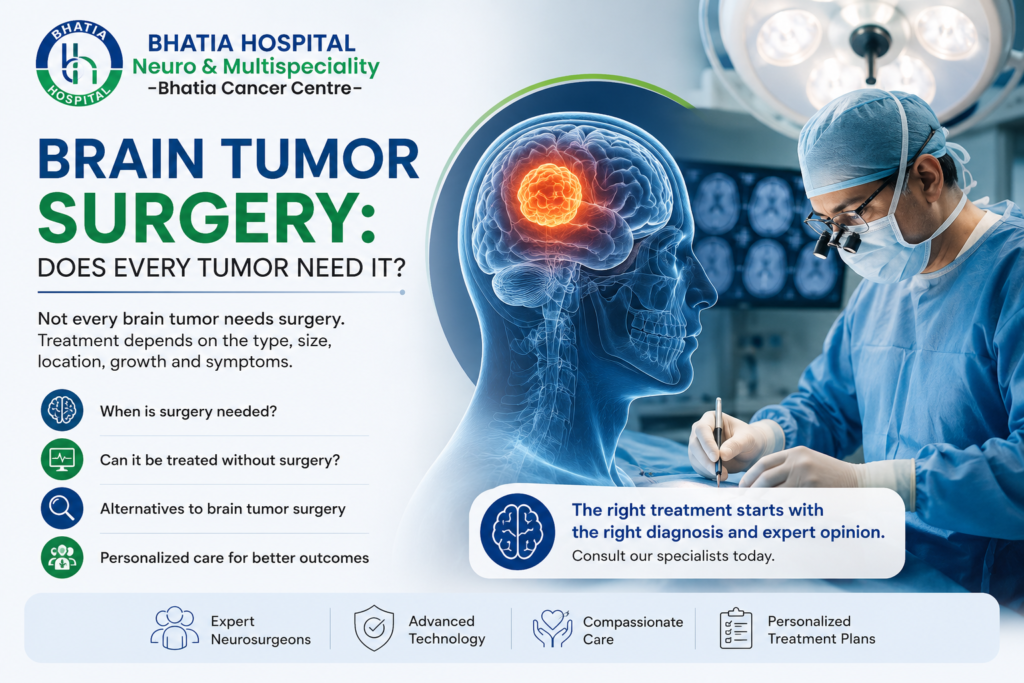
Brain Tumor Surgery: Does Every Tumor Need It?
A brain tumor diagnosis can be worrying for patients and families. However, not every brain tumor needs surgery. The right treatment depends on the tumor type, size, location, growth, and symptoms. Doctors also consider the patient’s age and overall health.
In some cases, doctors may suggest brain tumor surgery. In other cases, they may recommend regular scans, medicines, radiation, or other treatments. Therefore, every patient needs an individual treatment plan.
What Is Brain Tumor Surgery?
Brain tumor surgery aims to remove some or all of a brain tumor. Doctors may suggest surgery for several reasons. For example, a tumor may press on the brain and cause symptoms. Surgery can also help doctors collect a tumor sample. This sample can help confirm the exact type of tumor.
However, some tumors sit near important areas of the brain. These areas may control speech, movement, vision, or memory. In such cases, doctors carefully weigh the benefits and risks of surgery.
Does Every Brain Tumor Need Surgery?
No. Every brain tumor does not need surgery. Some tumors grow very slowly. They may also cause few or no symptoms. In these cases, doctors may suggest observation or active monitoring. Regular MRI scans can help track the tumor.
However, doctors may recommend treatment if the tumor grows or starts causing problems. So, the decision depends on the patient’s condition and the tumor’s features.
When Does a Brain Tumor Require Surgery?
Doctors may consider surgery when the tumor causes serious concerns.
Surgery may help when:
- The tumor puts pressure on the brain.
- The tumor causes worsening symptoms.
- The tumor grows during follow-up scans.
- Doctors need a tissue sample for diagnosis.
- The tumor causes seizures or other problems.
- Doctors believe they can remove it safely.
However, surgery does not suit every patient. A brain scan alone cannot decide the best treatment. A specialist needs to review the full medical picture.
Can a Brain Tumor Be Treated Without Surgery?
Yes, some brain tumors can receive treatment without traditional surgery.
Depending on the diagnosis, doctors may suggest:
- Regular MRI scans
- Active monitoring
- Radiation therapy
- Stereotactic radiosurgery
- Medicines
- Chemotherapy for certain tumors
- Other targeted treatments
The best option depends on the type and behavior of the tumor. Therefore, patients should not choose treatment based on general information alone.
What Happens If a Brain Tumor Is Not Removed?
Not removing a brain tumor does not always mean that the condition will get worse. Some tumors can stay stable for a long time. Doctors may monitor these tumors with regular scans. However, some tumors can grow over time. As a result, they may cause pressure or affect normal brain functions.
For example, patients may develop problems with:
- Movement
- Speech
- Vision
- Memory
- Balance
- Seizures
Therefore, regular follow-up remains important when doctors choose observation.
Can a Benign Brain Tumor Be Left Untreated?
Sometimes, doctors may monitor a benign brain tumor instead of treating it immediately. However, benign does not always mean harmless. A benign tumor can still cause problems if it grows or presses on an important part of the brain.
For this reason, doctors look at the tumor’s size, location, growth, and symptoms. If the tumor changes, doctors may recommend treatment.
What Are the Alternatives to Brain Tumor Surgery?
Brain tumor treatment can involve several options. The choice depends on the diagnosis.
Observation
Doctors may monitor small or slow-growing tumors. Regular MRI scans can show whether the tumor has changed.
Radiation Therapy
Radiation therapy uses focused radiation to target tumor cells. Doctors may recommend it for certain brain tumors.
Stereotactic Radiosurgery
Despite its name, stereotactic radiosurgery does not involve a traditional surgical cut. Instead, it uses focused radiation to treat specific areas. Doctors may consider this option for selected patients.
Medicines and Other Treatments
Some brain tumors may respond to medicines or other drug treatments. Doctors choose these treatments based on the tumor type and its specific features.
When Is Observation Recommended for a Brain Tumor?
Doctors may recommend observation for certain slow-growing tumors. This approach may suit patients who have few or no symptoms.
Regular scans help doctors check whether the tumor changes. Meanwhile, doctors also monitor any new symptoms. If the tumor grows or symptoms appear, the doctor may change the treatment plan.
What Factors Affect Brain Tumor Treatment?
Doctors consider several factors before choosing treatment.
These include:
- Tumor type
- Tumor size
- Tumor location
- Tumor growth
- Symptoms
- Patient’s age
- Overall health
- Previous treatment
- Possible treatment risks
Because of these factors, two patients with brain tumors may need different treatments. Therefore, specialist advice plays an important role.
Our Approach to Brain Tumor Care
Every brain tumor case is different. Therefore, doctors start with a detailed evaluation.
1. Medical Assessment
The doctor reviews symptoms, medical history, and previous reports.
2. Scan Review
MRI and other scans help doctors understand the tumor.
3. Diagnosis
Further tests may help identify the exact tumor type.
4. Treatment Planning
The specialist explains the suitable treatment options.
5. Follow-Up
Doctors monitor the patient’s progress and scan results. This approach helps patients understand their treatment choices.
When Should You Consult a Brain Tumor Specialist?
You should speak with a doctor about new or persistent neurological symptoms.
These may include:
- Frequent or worsening headaches
- Repeated seizures
- Vision changes
- Balance problems
- Weakness or numbness
- Speech problems
- Memory changes
- Changes in behavior
- Persistent nausea or vomiting
However, these symptoms can have many causes. They do not automatically mean that a person has a brain tumor. A specialist can assess the symptoms and suggest the right tests.
Frequently Asked Questions
Is surgery always necessary for a brain tumor?
No. Some brain tumors need monitoring or other treatments instead of surgery.
Can a brain tumor be treated without surgery?
Yes. Depending on the tumor, doctors may use monitoring, radiation, medicines, or other treatments.
When does a brain tumor require surgery?
Doctors may consider surgery when a tumor grows, causes symptoms, or needs tissue for diagnosis.
What happens if a brain tumor is not removed?
Some tumors can remain stable with regular monitoring. Others may grow and need treatment
Can a benign brain tumor be left untreated?
Sometimes, doctors may monitor a benign tumor. Regular scans help track changes.
Conclusion
Brain tumor surgery is not necessary for every patient. The right treatment depends on the tumor type, size, location, growth, and symptoms. Therefore, patients should discuss their diagnosis with a qualified specialist.
Early medical advice can help doctors understand the condition and choose the right next step. If you or someone in your family has a brain tumor diagnosis, speak with a specialist before choosing treatment.