
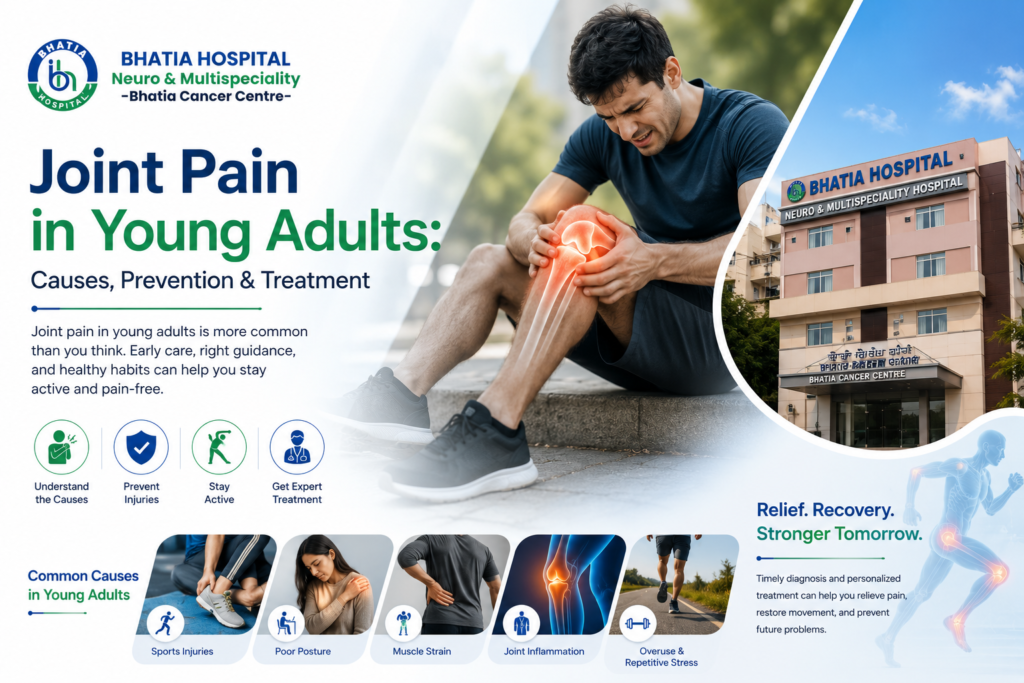
Joint Pain in Young Adults: Causes, Prevention & Treatment
Joint pain is not only a problem for older people. In fact, young adults can also have joint pain, swelling, stiffness, or trouble moving. If you are looking for ORTHOPEDIC TREATMENT IN PATIALA, it is important to first understand why the pain is happening. Joint pain can happen because of a sports injury, too much exercise, poor posture, or an old injury. It can also happen because of inflammation or another joint problem. Some problems get better with rest and care. However, some need a doctor’s help.
Muscle, bone, and joint problems can affect people of all ages. Therefore, young adults should not ignore pain that keeps coming back. At Bhatia Hospital Neuro & Multispeciality Hospital, Patiala, patients can talk to experienced doctors about ongoing joint pain. The doctor can check the symptoms and suggest the right next steps.
What Is Joint Pain?
Joint pain means pain or discomfort in a joint. A joint is the place where two or more bones meet. Joint pain can affect many parts of the body, such as:
- Knees
- Hips
- Shoulders
- Elbows
- Wrists
- Ankles
Sometimes, joint pain starts after an injury. In other cases, it may slowly develop over time. You may also have swelling, stiffness, tenderness, weakness, or trouble moving the joint.
Why Do I Have Joint Pain at a Young Age?
There is no one reason for joint pain in young adults. Different people can have different causes.
Some common causes include:
- Sports injuries
- Sprains and strains
- Repeated movements
- Old fractures or joint injuries
- Poor movement habits
- Sudden changes in exercise
- Weak muscles around a joint
- Extra body weight
- Inflammatory arthritis
- Some autoimmune conditions
- Abnormal joint structure
- Rare infections or other health problems
For example, a person who suddenly starts running long distances may put too much stress on the knees or ankles.
Also, an old injury may change the way a joint moves. As a result, the joint may hurt again later. Young adults can also develop osteoarthritis. This may happen after a joint injury, an unusual joint shape, or some cartilage problems.
Can Exercise Cause Joint Pain in Young Adults?
Yes, exercise can sometimes cause joint pain. This can happen when you exercise too hard or increase your workout too quickly. For example, suddenly running much farther than usual can put extra stress on your knees and ankles.
Poor exercise technique can also cause problems. In addition, shoes that do not fit well, too little rest, or an old injury may increase the risk of pain. However, exercise is still important for good joint health. Safe and gentle exercise can help keep your muscles strong and support your joints. So, do not stop all exercise because of mild discomfort. Instead, talk to a healthcare professional if pain continues or becomes worse.
Common Symptoms of Joint Problems
Joint problems can cause different symptoms. The symptoms may also depend on the cause.
Look out for:
- Pain when moving
- Pain after exercise
- Joint stiffness
- Swelling
- Warmth around the joint
- Tenderness
- Less movement
- Clicking or catching
- Joint weakness or instability
- Trouble walking
- Trouble using the affected body part
- Pain that keeps coming back after exercise
In addition, ongoing swelling, increasing pain, or stiffness in the morning may sometimes be linked to inflammation.
Risk Factors for Joint Pain in Young Adults
Some young adults may have a higher chance of developing joint pain. This can happen because of sports, lifestyle, old injuries, or family history.
Previous Injury
An injury to a ligament, cartilage, or bone can change how a joint works. Therefore, an old injury may sometimes cause joint problems later.
High-Impact Sports
Sports such as running, football, basketball, and weight training can put stress on your joints. However, this does not mean you should avoid sports. Instead, use the right technique and increase your training slowly.
Also, wear suitable protective equipment and give your body enough time to rest.
Extra Weight
Extra body weight can put more pressure on weight-bearing joints. These include the knees and hips. Therefore, maintaining a healthy weight can help support your joints.
Family History
Some types of inflammatory and autoimmune joint problems can run in families. So, tell your doctor if close family members have joint or autoimmune problems. This information can help during your medical check-up.
What Exercises Are Good for Joint Health?
The best exercise depends on your health, symptoms, fitness level, and past injuries. Some joint-friendly exercises include:
- Walking
- Cycling
- Swimming
- Water exercises
- Gentle movement exercises
- Strength training
- Stretching
- Low-impact aerobic exercise
If you have not exercised for a long time, start slowly. Then, increase your activity step by step. Adults are generally advised to get regular physical activity each week. They should also include muscle-strengthening activities on at least two days each week. However, if an exercise causes strong or ongoing pain, stop and talk to a healthcare professional.
How Can Young Adults Prevent Joint Pain?
Good daily habits can help protect your joints.
Here are some simple tips:
1. Warm Up Before Exercise
First, warm up before you start a workout.
A gentle warm-up gets your body ready for exercise. It may also help prepare your muscles and joints for movement.
2. Increase Exercise Slowly
Do not suddenly increase your running, lifting, or sports activity. Instead, increase your workout little by little. This gives your body time to adjust.
3. Strengthen Your Muscles
Strong muscles can help support your joints. Therefore, include safe strength exercises in your routine when suitable for you.
4. Wear Good Shoes
Choose shoes that fit well and support your feet. Good footwear is especially important when you walk, run, or play sports.
5. Give Your Body Time to Rest
Your body needs time to recover after hard exercise. Therefore, do not train hard every day without enough rest.
6. Maintain a Healthy Weight
A healthy diet and regular activity can help you maintain a healthy weight. This may also reduce extra stress on your knees and hips.
7. Do Not Ignore Injuries
If you get an injury, do not rush back into sports. Instead, allow your body to recover and seek medical advice when needed. Early care may help prevent a small problem from becoming a bigger one.
Diagnosis of Joint Pain
If your joint pain continues, an orthopedic doctor can check the problem. First, the doctor may ask about your health and symptoms.
For example, the doctor may ask:
- When did the pain start?
- Did the pain begin after an injury?
- Which movements make the pain worse?
- Is there swelling?
- Does the joint hurt when you rest?
- Do you have stiffness in the morning?
- Do more than one joint hurt?
- Which sports or exercises do you do?
- Have you had joint problems before?
Next, the doctor may examine the affected joint. Depending on what the doctor finds, you may need an X-ray or another scan. Sometimes, blood tests may also be needed. The main goal is not just to find where the pain is. Instead, the doctor wants to understand why you have the pain.
Treatment Options for Joint Pain
Treatment depends on the cause of your joint pain. Therefore, two people with similar pain may need different treatments.
Non-Surgical Treatment
Many joint problems can be treated without surgery. Depending on the problem, treatment may include:
- Changing activities
- Rest during a new injury
- Physiotherapy
- Strength exercises
- Mobility exercises
- Weight management
- Medicines when needed
- Braces or joint supports
- Injections for some conditions
- Treatment for inflammatory diseases
Physiotherapy and rehabilitation can also help people improve movement and strength. Your doctor will choose treatment based on your symptoms, diagnosis, and overall health.
Surgical Treatment
Joint pain does not always mean that you need surgery. However, surgery may be needed for some serious problems. These can include major ligament injuries, some cartilage problems, fractures, or serious joint damage. Before surgery, your doctor should explain the treatment, possible risks, other options, and expected recovery time. The final treatment choice should be based on a proper medical assessment.
Is Persistent Joint Pain Normal in Young Adults?
No. Young adults should not ignore joint pain that keeps coming back. For example, pain that affects sleep, exercise, work, or daily activities should be checked. Also, ongoing swelling or pain that keeps getting worse may need medical attention.
Therefore, if your joint pain does not improve or keeps returning, talk to a doctor.
When Should Young Adults See an Orthopedic Doctor for Joint Pain?
You should consider seeing an orthopedic doctor if:
- Your pain continues for a long time
- The pain keeps coming back
- Swelling does not go away
- Pain affects your sleep
- Daily activities become difficult
- Your joint feels weak or unstable
- You cannot move the joint normally
- Pain starts after a serious injury
- Your symptoms are getting worse
Also, get urgent medical care if a joint becomes very painful, hot, and swollen, especially if you have a fever or feel unwell. Severe pain after an injury, a joint that looks out of place, trouble putting weight on the limb, or loss of feeling also needs urgent medical attention.
Why Choose Bhatia Hospital in Patiala?
Bhatia Hospital Neuro & Multispeciality Hospital in Patiala provides healthcare services for patients from Patiala and across Punjab. If you are looking for ORTHOPEDIC TREATMENT IN PATIALA, getting the right diagnosis is an important first step.
Joint pain can have many causes. Therefore, treatment should be planned after understanding your symptoms and health needs. At Bhatia Hospital, patients can discuss their joint problems with experienced doctors. The team can guide patients about suitable tests and treatment options.
Also, because Bhatia Hospital is a multispeciality hospital, patients can get support for different health needs when required. For patients from Patiala and nearby areas of Punjab, the focus is on clear advice, proper diagnosis, suitable treatment, and safe follow-up.
Frequently Asked Questions
1. Why do I have joint pain at a young age?
Joint pain at a young age can happen for many reasons. For example, sports injuries, repeated stress, weak muscles, old injuries, inflammation, or arthritis can cause pain. Sometimes, other health problems may also be involved. If your pain continues or affects movement, an orthopedic doctor can check the cause.
2. What causes joint pain in young adults?
Common causes include sports injuries, sprains, strains, too much exercise, poor movement habits, and old joint injuries. In addition, some young adults may have inflammatory arthritis or other health conditions. Because the cause can be different for each person, a doctor may need to examine you and suggest tests.
3. Can exercise cause joint pain in young adults?
Yes, exercise can sometimes cause joint pain. This may happen when you increase your workout too quickly, use poor technique, or do not get enough rest. However, regular and safe exercise is good for your joints. So, start slowly and stop if you have strong or ongoing pain.
4. How can young adults prevent joint pain?
Young adults can help protect their joints by warming up before exercise and increasing workouts slowly. Also, wear good shoes, use proper sports equipment, and give your body enough rest. Strong muscles can also support your joints. Finally, do not ignore injuries or pain that keeps coming back.
5. Can joint pain in young adults be treated without surgery?
Yes. Many joint problems can be treated without surgery. Depending on the cause, your doctor may suggest rest, physiotherapy, exercises, activity changes, medicines, weight management, or other treatments. However, some serious injuries may need surgery. Therefore, treatment should always follow a proper medical check-up.
Conclusion
Joint pain can affect young adults too. So, do not assume that pain is always normal because you are young. Injuries, too much activity, inflammation, old injuries, weak muscles, and other problems can cause joint pain. The good news is that many joint problems can be managed with the right care. Therefore, warm up before exercise, increase activity slowly, stay active, maintain a healthy weight, and give your body enough time to rest.
If your pain continues, keeps coming back, or makes daily life difficult, speak with a doctor. For patients in Patiala and across Punjab, Bhatia Hospital Neuro & Multispeciality Hospital provides a multispeciality setting for orthopedic and other healthcare needs.
Book an appointment with the specialists at Bhatia Hospital, Patiala for expert diagnosis and personalized treatment.