
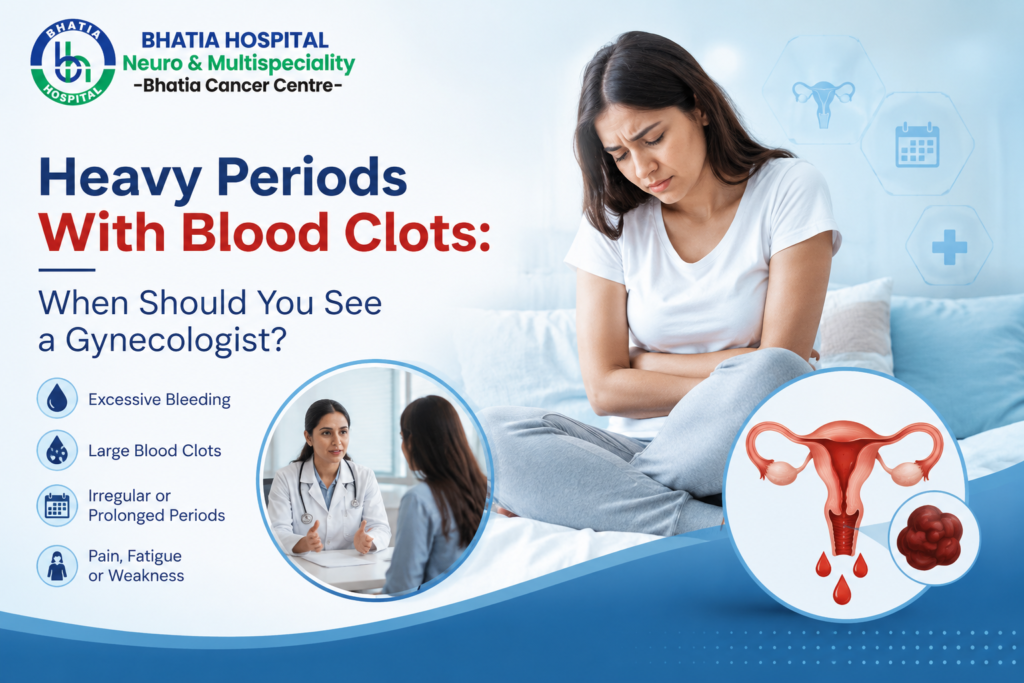
Heavy Periods With Blood Clots: When Should You See a Gynecologist?
Heavy periods can be hard to manage. Blood clots can also cause worry. Small clots may be normal during a period. However, large clots and very heavy bleeding need more attention. If you are looking for a gynaecology hospital in patiala, it is helpful to know when heavy bleeding needs medical care.
Heavy periods may happen for many reasons. Fibroids, hormone changes, PCOS, adenomyosis, and other health problems can cause heavy bleeding. At Bhatia Hospital Neuro & Multispeciality Hospital, Patiala, women can get expert care for period problems and other health concerns.
What Are Heavy Periods?
Heavy periods mean you lose more blood than usual during your period.
Your period may be too heavy if:
- You need to change your pad every one or two hours.
- Your period lasts more than seven days.
- You often pass large blood clots.
- You bleed through your clothes or bed sheets.
- You feel very tired or weak.
- You feel dizzy or short of breath.
- Heavy bleeding affects your daily life.
Not every heavy period means you have a serious illness. Still, regular heavy bleeding should not be ignored.
How much bleeding is too much during a period?
Bleeding may be too much if you need to change your pad every one or two hours. It can also be a concern if your period lasts more than seven days. Large clots, tiredness, dizziness, and weakness are other warning signs. If these problems happen often, see a gynecologist for a proper check-up.
Are Blood Clots During a Period Normal?
Small blood clots can happen during a period. They form when blood stays in the uterus for some time before leaving the body. So, a small clot once in a while may not be a problem.
Large or frequent clots are different. They may happen because your bleeding is very heavy. You should speak with a doctor if you often pass large clots.
Why Am I Passing Large Blood Clots During My Period?
There are many possible reasons for large blood clots. Some causes are simple. Others need medical treatment.
Common causes include:
1. Fibroids
Fibroids are growths in the uterus. They are usually not cancerous.
Some fibroids can cause:
- Heavy periods
- Large blood clots
- Pelvic pain
- Pressure in the lower belly
- Longer periods
2. Hormone Changes
Hormones control your menstrual cycle. A change in hormone levels can make the lining of the uterus thicker. This may lead to heavier bleeding.
3. PCOS
PCOS can make periods irregular. Some women may not get their period for several weeks or months. When the period comes, the bleeding may be heavier.
4. Adenomyosis
Adenomyosis happens when tissue from the inner lining of the uterus grows into the muscle of the uterus.
It can cause:
- Heavy periods
- Painful periods
- Pelvic pain
- Large blood clots
5. Endometriosis
Endometriosis can cause painful periods and pelvic pain. Some women may also have heavy or irregular bleeding.
6. Uterine Polyps
Polyps are small growths inside the uterus. They can cause unusual bleeding. Some women may bleed between periods.
7. Bleeding Problems
Some people have blood-clotting problems. Heavy periods can sometimes be an early sign of such a problem. This is more important if other family members also have unusual bleeding.
8. Certain Medicines
Some medicines can increase bleeding. Blood-thinning medicines are one example. Always tell your doctor about the medicines you take.
Heavy Periods With Clots and Stomach Pain
Heavy bleeding with stomach or pelvic pain can have several causes. For example, fibroids and adenomyosis can cause both pain and heavy periods.
You should see a gynecologist if:
- Your pain is severe.
- Your pain is getting worse.
- You pass large clots often.
- Your bleeding is much heavier than usual.
- You feel weak or dizzy.
- You have fever.
- You have unusual vaginal discharge.
Do not ignore pain that stops you from doing your normal work.
Heavy Periods Causing Weakness and Fatigue
Heavy bleeding can make you tired. This happens because your body may lose too much iron. Over time, this can lead to anaemia.
Common signs include:
- Feeling tired all the time
- Feeling weak
- Headaches
- Dizziness
- Pale skin
- Shortness of breath
- Poor focus
- Low energy
If you have heavy periods and feel weak, talk to a doctor. A blood test may be needed to check your haemoglobin and iron levels.
When Should I See a Gynecologist for Heavy Periods?
You should see a gynecologist if your periods are much heavier than usual.
Make an appointment if:
- Your period lasts more than seven days.
- You change your pad every one or two hours.
- You often pass large blood clots.
- You have severe period pain.
- You feel weak or very tired.
- You feel dizzy.
- You feel short of breath.
- You bleed between periods.
- Your periods suddenly become much heavier.
- Heavy bleeding affects your work or daily life.
Early care can help find the cause. It can also help you get the right treatment sooner.
When Is Heavy Bleeding an Emergency?
Very heavy bleeding can sometimes need urgent medical care.
Get urgent help if:
- You feel like you may faint.
- You actually faint.
- You feel very weak.
- You have severe dizziness.
- You have trouble breathing.
- You are soaking pads very quickly.
- You have severe pain.
- You may be pregnant and have unusual bleeding.
Do not wait for a routine appointment in these situations.
What Causes Abnormal Uterine Bleeding?
Abnormal uterine bleeding means bleeding that is not normal for your usual cycle.
It may include:
- Very heavy periods
- Periods lasting too long
- Bleeding between periods
- Bleeding after sex
- Very irregular periods
Many conditions can cause abnormal bleeding. Your doctor will look at your symptoms before deciding which tests you need.
Diagnosis of Abnormal Uterine Bleeding
Your gynecologist will first ask about your periods.
You may be asked:
- How long does your period last?
- How often do you change your pad?
- How large are the clots?
- How often do you pass clots?
- Do you have pain?
- Do you feel weak or dizzy?
- Are your periods regular?
- Do you bleed between periods?
- What medicines do you take?
- Could you be pregnant?
Your doctor may also suggest tests.
These may include:
- Blood tests
- Pregnancy testing
- Pelvic examination
- Ultrasound
- Other tests based on your symptoms
The exact tests depend on your age, symptoms, health history, and possible cause.
Treatment for Heavy Menstrual Bleeding
Treatment depends on the cause. Your doctor may suggest one or more options.
Medicines
Some medicines can help reduce heavy bleeding. The right medicine depends on your health and the cause of the bleeding.
Hormone Treatment
Hormone treatment may help some women. It can help control the growth of the uterine lining and reduce bleeding. Your doctor will decide if this option is safe for you.
Iron Treatment
Heavy bleeding can lower your iron level. If you have low iron or anaemia, your doctor may suggest iron treatment. Do not take high-dose iron without medical advice.
Treatment for Fibroids or Polyps
Fibroids or polyps may need special treatment. Some can be treated with medicines. Others may need a procedure.
Surgery
Some women may need surgery. This depends on the cause, the size of the problem, your symptoms, and your future pregnancy plans. Your doctor will discuss the safest option with you.
Is Heavy Bleeding With Blood Clots Normal?
It depends on how heavy the bleeding is. A small clot may be normal. However, heavy bleeding with large or frequent clots needs attention.
You should talk to a gynecologist if the problem happens often. Do not wait if you also have severe pain, dizziness, weakness, or shortness of breath.
Why Choose Bhatia Hospital in Patiala?
Bhatia Hospital Neuro & Multispeciality Hospital, Patiala provides care for women with many gynecological problems. The hospital offers gynecology and obstetrics services for patients in Patiala and nearby areas.
Patients can seek care for problems such as:
- Heavy periods
- Abnormal bleeding
- PCOS
- Fibroids
- Adenomyosis
- Menstrual problems
- Pelvic pain
- Other women’s health concerns
Bhatia Hospital also has support from other medical departments. This can be helpful when a patient needs care from more than one specialist.
The hospital focuses on:
- Experienced doctors
- Modern medical facilities
- Advanced technology
- Patient-centered care
- Multispeciality support
- Cancer Care
- Women’s health services
How Can You Track Heavy Periods?
Keeping a simple period record can help your doctor.
Write down:
- The date your period starts.
- The date your period ends.
- How many days you bleed heavily.
- How often you change your pad.
- How often you pass clots.
- Your pain level.
- Any dizziness or weakness.
- Any bleeding between periods.
This information can make your doctor visit more useful. It can also help you notice changes early.
Simple Tips for Better Period Health
You cannot prevent every cause of heavy bleeding. Still, some simple habits can help.
Track your periods
Keep a record of your cycle every month.
Do not ignore changes
Tell your doctor if your normal period suddenly changes.
Eat a balanced diet
Include iron-rich foods such as green vegetables, beans, lentils, and eggs.
Do not self-medicate
Do not start hormone medicines without medical advice.
Get help for ongoing symptoms
If heavy bleeding continues, get a proper medical check-up.
Frequently Asked Questions
1. How many days is a heavy period?
A period that lasts more than seven days may be considered prolonged. The amount of bleeding also matters. If you need to change your pad very often or pass large clots, speak with a doctor. Your usual period pattern is also important when deciding if the bleeding is abnormal.
2. Are large blood clots during periods dangerous?
Large clots are not always dangerous. Still, frequent large clots can be a sign of very heavy bleeding. The risk is greater when you also have severe pain, dizziness, weakness, or shortness of breath. A gynecologist can check why the clots are happening and whether treatment is needed.
3. Why are my periods suddenly very heavy?
Sudden heavy periods can have many causes. Hormone changes, fibroids, adenomyosis, polyps, medicines, thyroid problems, and other health conditions can play a role. Pregnancy-related problems can also cause unusual bleeding. If your bleeding suddenly becomes much heavier than normal, get medical advice.
4. What should I tell my gynecologist?
Tell your doctor how long your periods last and how often you change pads. Also mention the size and number of clots, pain, dizziness, tiredness, and bleeding between periods. Tell your doctor about medicines and health problems. This information can help find the cause faster.
5. Can stress cause heavy periods?
Stress can affect your menstrual cycle. It may change when your period comes or make your cycle irregular. However, very heavy bleeding should not always be blamed on stress. If you have heavy periods or large clots, a doctor should check for other possible causes.
Conclusion
Heavy periods with blood clots are common, but they should not always be ignored. Small clots may be normal. Large or frequent clots need more attention, especially when bleeding is very heavy.
You should see a gynecologist if your period lasts more than seven days, you change pads very often, or you feel weak or dizzy. Several conditions can cause heavy bleeding. These include fibroids, PCOS, adenomyosis, polyps, and hormone changes. The right treatment depends on the cause.
If you are looking for a gynaecology hospital in patiala, Bhatia Hospital Neuro & Multispeciality Hospital can provide gynecology care for patients from Patiala and nearby areas.
Book an appointment with the specialists at Bhatia Hospital, Patiala for expert diagnosis and personalized treatment.