
Fibroid vs Ovarian Cyst: What Is the Difference?
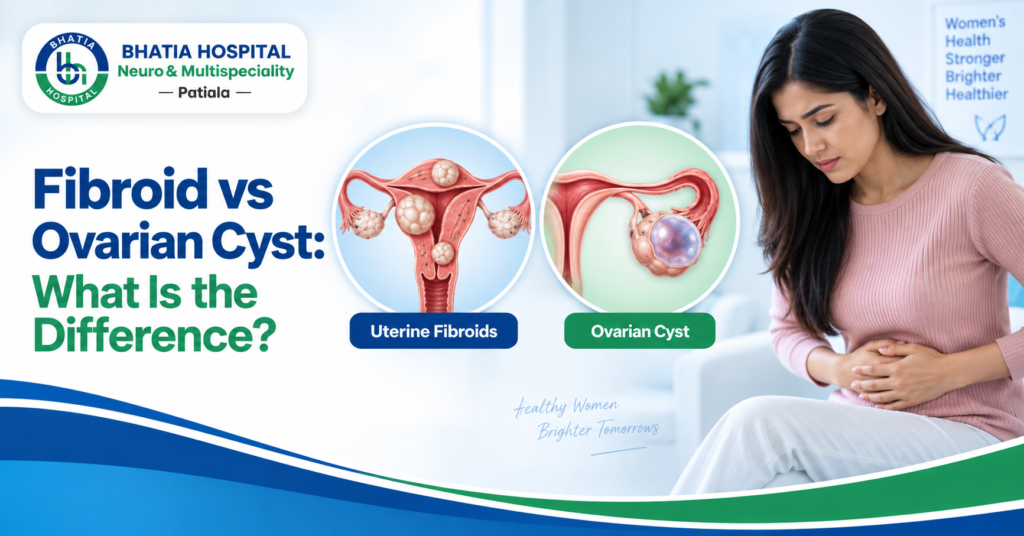
Pelvic pain, heavy periods, or abdominal discomfort can have many causes. Two common conditions are uterine fibroids and ovarian cysts. Understanding fibroids vs ovarian cysts can help you know when to seek medical advice.
Although both can affect women during their reproductive years, they are not the same condition. Fibroids grow in or around the uterus. Ovarian cysts develop on or inside an ovary. Their symptoms can sometimes overlap, making proper diagnosis important.
This guide explains the difference between fibroids and ovarian cysts, their symptoms, causes, diagnosis, treatment, and possible effects on fertility.
Fibroids vs Ovarian Cysts: What Is the Difference?
| Feature | Uterine Fibroids | Ovarian Cysts |
|---|---|---|
| Where they develop | In or around the uterus | On or inside an ovary |
| Common type | Non-cancerous muscle growth | Fluid-filled sac |
| Period changes | Heavy or painful periods are common | Periods may become irregular |
| Pain | Pelvic pressure or pain | Pelvic pain, sometimes sudden |
| Natural course | May remain stable or change with hormones | Many disappear within months |
| Fertility | Some fibroids can affect fertility | Fertility is usually unaffected |
| Treatment | Observation, medicines, procedures, or surgery | Often observation; surgery in selected cases |
What Are Uterine Fibroids?
Uterine fibroids are growths made from muscle and other tissue. They develop in the wall of the uterus or around it.
Many women have fibroids without any symptoms. Others may experience heavy bleeding, pelvic pressure, pain, or urinary symptoms.
What Are Ovarian Cysts?
An ovarian cyst is a fluid-filled sac that develops on an ovary. Ovarian cysts are common, especially during the reproductive years.
Many cysts develop naturally during the menstrual cycle. They often disappear without treatment. However, some cysts can become large, rupture, or twist the ovary.
Causes of Fibroids and Ovarian Cysts
Causes of Fibroids
The exact causes of fibroids are not fully understood. Hormonal and genetic factors appear to play a role.
Some factors are linked with a higher chance of developing fibroids. These include:
- Family history of fibroids
- Being in the reproductive years
- Certain hormonal influences
- Overweight or obesity
- High blood pressure
- Diabetes
Fibroids can grow during pregnancy and may shrink after menopause.
Causes of Ovarian Cysts
Ovarian cysts have several possible causes.
Common causes include:
- Normal changes during ovulation
- Hormonal changes
- Endometriosis
- Abnormal cell growth
- Certain medical conditions
Functional cysts related to the menstrual cycle are especially common and often resolve naturally.
Fibroid and Ovarian Cyst Symptoms
There is some overlap between fibroid and ovarian cyst symptoms. However, certain patterns can provide useful clues.
Common Fibroid Symptoms
Fibroid symptoms may include:
- Heavy menstrual bleeding
- Painful periods
- Pelvic pressure
- Lower abdominal discomfort
- Lower back pain
- Frequent urination
- Pain during sex
- Difficulty getting pregnant
Heavy bleeding can also contribute to iron-deficiency anaemia.
Common Ovarian Cyst Symptoms
Ovarian cyst symptoms may include:
- Pelvic pain
- Abdominal discomfort
- Bloating
- Pain during sex
- Heavy or irregular periods
- Frequent urination
- Feeling full quickly
- Difficulty getting pregnant in some cases
Some symptoms become more severe if a cyst ruptures or causes ovarian twisting.
Which causes heavy periods, fibroids or ovarian cysts?
Heavy menstrual bleeding is a common symptom of uterine fibroids. Ovarian cysts can also cause changes in menstrual bleeding, but their symptoms vary by cyst type. Heavy periods alone cannot confirm fibroids. A gynecological examination and appropriate imaging can help identify the actual cause.
Risk Factors
Fibroid Risk Factors
The likelihood of developing fibroids may increase with:
- A family history of fibroids
- Reproductive age
- Obesity
- High blood pressure
- Diabetes
- Certain hormonal influences
Risk factors do not mean that a woman will definitely develop fibroids.
Ovarian Cyst Risk Factors
Ovarian cysts may be more likely with:
- Ovulation
- Hormonal changes
- Endometriosis
- Certain fertility medicines
- Previous ovarian cysts
The risk and significance can vary based on age and whether a woman has reached menopause.
How Are Fibroids and Ovarian Cysts Diagnosed?
A doctor usually begins with your symptoms and medical history. A physical examination may also be needed.Fibroid Diagnosis
An ultrasound can help identify fibroids. It can show their number, size, and location. Additional imaging may be recommended in selected cases.
Ovarian Cyst Diagnosis
A pelvic ultrasound is commonly used to identify an ovarian cyst. Doctors may recommend follow-up scans to check whether the cyst changes or disappears.
Some patients may need blood tests or additional investigations if the cyst has unusual features.
How can doctors tell the difference?
Doctors use the patient’s symptoms, examination, and imaging findings to distinguish fibroids from ovarian cysts. Ultrasound is especially useful because it can show whether a growth comes from the uterus or an ovary. Additional tests may be needed when the diagnosis remains unclear or concerning features are present.
Can Fibroids and Ovarian Cysts Occur Together?
Yes, fibroids and ovarian cysts can occur in the same person. They develop in different reproductive organs, so having one does not prevent the other. If both are present, symptoms can overlap. Proper imaging helps determine which condition is causing the symptoms and whether either condition needs treatment.
Can fibroids or ovarian cysts affect fertility?
Both conditions can sometimes be associated with fertility problems, but many women with either condition become pregnant naturally. Fibroids are more likely to affect fertility when they alter the shape of the uterine cavity or interfere with reproductive structures. Most ovarian cysts do not affect fertility.
Certain fibroids can interfere with implantation or affect the shape of the uterus. Therefore, women planning pregnancy should discuss their diagnosis with a gynecologist.
Treatment for Fibroids and Ovarian Cysts
Treatment depends on several factors. These include symptoms, size, location, age, overall health, and pregnancy plans.
Fibroid Treatment
Fibroids do not always require treatment.
If symptoms are mild, doctors may recommend monitoring. Medicines can help manage symptoms in some patients.
When symptoms are severe or fibroids are large, treatment options may include:
- Medicines
- Uterine artery embolization
- Myomectomy
- Hysterectomy
- Other selected procedures
The best option depends on the individual patient. Women who want future pregnancies should discuss fertility-preserving options before treatment.
Ovarian Cyst Treatment
Most ovarian cysts do not require immediate treatment. Doctors may recommend observation and repeat ultrasound.
Surgery may be considered when a cyst:
- Is large
- Persists over time
- Causes significant symptoms
- Has concerning features
- Creates a risk of complications
Laparoscopic surgery may be suitable for many cysts. Larger or suspicious cysts may require a different surgical approach.
Do fibroids or ovarian cysts always need surgery?
No. Neither condition automatically requires surgery. Many fibroids cause no symptoms and can be monitored. Many ovarian cysts also disappear without treatment. Surgery may become appropriate when symptoms are significant, growths are large or persistent, complications occur, or test results raise concern.
When Should You See a Gynecologist?
You should arrange a gynecological consultation if you experience:
- Very heavy menstrual bleeding
- Persistent pelvic pain
- Repeatedly irregular periods
- Pain during sex
- Abdominal swelling or pressure
- Unexplained anaemia
- Difficulty becoming pregnant
- A known ovarian cyst or fibroid
Seek urgent medical care for sudden, severe pelvic or abdominal pain, especially when it occurs with nausea or vomiting. These symptoms can occur with complications such as ovarian torsion.
Why Choose Bhatia Hospital for Women’s Healthcare?
Women’s health concerns need careful evaluation and individual treatment planning.
Bhatia Hospital Neuro & Multispeciality Hospital, Patiala provides multispeciality healthcare with a patient-centered approach. Women can seek gynecological evaluation for menstrual problems, pelvic pain, fibroids, ovarian cysts, pregnancy-related concerns, and other reproductive health conditions.
The hospital’s multidisciplinary environment allows patients to access experienced doctors and advanced technology when further evaluation is required.
Bhatia Hospital in Patiala also serves patients from Punjab and nearby areas who need accessible specialist healthcare.
For patients considering fibroid treatment in Patiala or ovarian cyst treatment in Patiala, the first step should be an appropriate gynecological assessment rather than choosing treatment based only on symptoms.
Prevention and Healthy Habits
There is no guaranteed way to prevent all fibroids or ovarian cysts. However, maintaining good reproductive health can help with early detection.
Helpful habits include:
- Attend recommended gynecological check-ups.
- Track your menstrual cycle.
- Report unusual bleeding.
- Do not ignore persistent pelvic pain.
- Maintain a healthy lifestyle.
- Discuss fertility concerns early.
- Follow your doctor’s advice after an abnormal scan.
Regular medical care can help identify problems before symptoms become more difficult to manage.
Frequently Asked Questions
Are fibroids and ovarian cysts the same?
No. Fibroids and ovarian cysts are different conditions. Fibroids are growths that develop in or around the uterus. Ovarian cysts are usually fluid-filled sacs that develop on an ovary. Their symptoms can overlap, but their causes, locations, diagnosis, and treatment options differ.
Which is more likely to cause heavy periods?
Fibroids are commonly associated with heavy or painful periods. Ovarian cysts can also cause changes in menstrual bleeding, including heavy or irregular periods. However, bleeding patterns alone cannot confirm the cause. An evaluation by a gynecologist can help identify the underlying problem.
Can ovarian cysts cause pelvic pain?
Yes. Ovarian cysts can cause pelvic pain, especially when they become large, rupture, or twist the ovary. Pain can range from mild discomfort to sudden and severe pain. Severe pain with nausea or vomiting requires urgent medical assessment.
Can fibroids cause pelvic pain?
Yes. Fibroids can cause pelvic pain or pressure, particularly when they become large. They may also cause heavy periods, lower back pain, frequent urination, or discomfort during sex. However, many women with fibroids have no symptoms.
Can fibroids and ovarian cysts occur together?
Yes. A woman can have both fibroids and an ovarian cyst at the same time. Because both conditions can cause pelvic discomfort or menstrual changes, imaging is important. A gynecologist can determine whether one or both conditions require treatment.
Do ovarian cysts always need surgery?
No. Most ovarian cysts do not require immediate surgery. Many disappear naturally within a few months. Doctors may recommend monitoring with ultrasound. Surgery may be considered for large, persistent, painful, or suspicious cysts.
Do all fibroids require treatment?
No. Fibroids without symptoms may not require treatment. Doctors may recommend monitoring them over time. Treatment becomes more important when fibroids cause heavy bleeding, significant pain, pressure symptoms, fertility concerns, or other complications.
Can fibroids affect pregnancy?
Many women with fibroids become pregnant without major problems. However, some fibroids can affect fertility or pregnancy, especially when they alter the uterine cavity. Women with fibroids who are planning pregnancy should discuss their individual situation with a qualified healthcare professional.
How are fibroids and ovarian cysts diagnosed?
Doctors usually consider symptoms, medical history, physical examination, and imaging. Ultrasound is commonly used to identify both conditions. It can help determine whether a growth is located in the uterus or ovary. Additional tests may be recommended when findings are unclear or concerning.
Where can I get gynecological care in Patiala?
Women seeking gynecological care in Patiala can consult the specialists at Bhatia Hospital Neuro & Multispeciality Hospital, Patiala. Patients from Patiala, Punjab, and nearby districts can seek evaluation for fibroids, ovarian cysts, menstrual problems, pelvic pain, and other women’s health concerns.