
Protein in Urine: What Does It Mean for Your Kidneys?
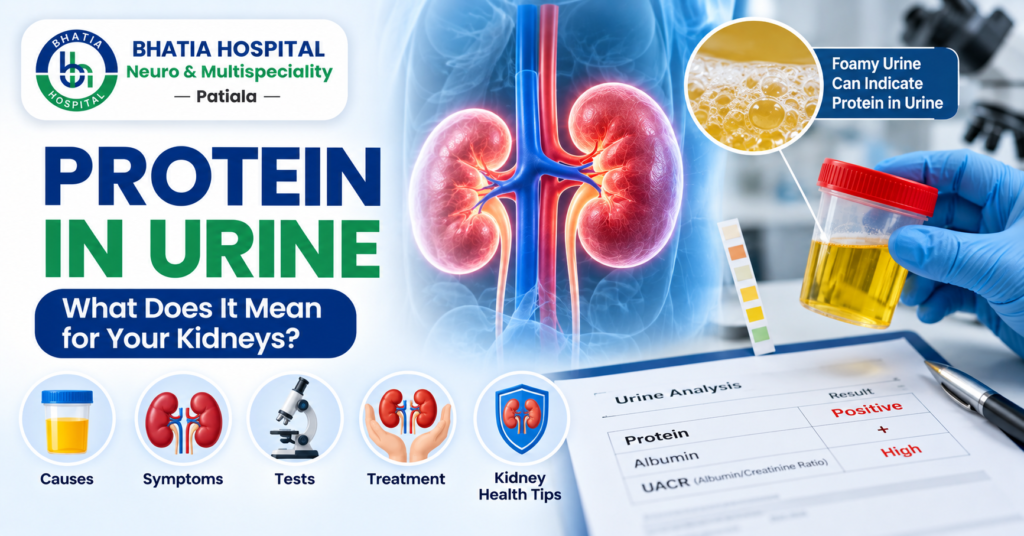
Finding protein in urine can be worrying, especially when you see it on a laboratory report.
Protein normally stays in your blood because healthy kidneys prevent large amounts from passing into urine. When protein leaks into urine, doctors may call it proteinuria. When the protein measured is albumin, the condition is called albuminuria.
Proteinuria does not always mean permanent kidney damage. Temporary changes can occur after strenuous exercise, dehydration, fever, or other conditions. However, persistent protein in urine can be an early sign of kidney disease.
This guide explains the proteinuria causes, symptoms, tests, treatment options, and when to see a kidney specialist.
Patients in Patiala, Punjab, and nearby areas can also consult a qualified doctor for proper evaluation.
What Does Protein in Urine Mean?
Protein in urine means that more protein than expected is being detected in your urine. The kidneys normally filter waste while keeping useful proteins in the bloodstream. If kidney filters become more permeable, proteins such as albumin can pass into urine. Persistent albuminuria may indicate kidney damage and can occur before other signs become obvious.
Protein is important for:
- Building and repairing tissues
- Supporting the immune system
- Maintaining muscles
- Performing many body functions
Therefore, significant protein loss in urine should not be ignored.
Is Protein in Urine a Sign of Kidney Disease?
Kidney disease and protein in urine are closely related, but one abnormal urine test does not always mean permanent kidney damage. Temporary proteinuria can occur with dehydration, strenuous exercise, fever, or certain illnesses. Temporary proteinuria can occur with dehydration, strenuous exercise, fever, or certain illnesses. Persistent protein or albumin in urine needs further testing because it may indicate chronic kidney disease or another medical condition.
This distinction is important.
A doctor may repeat the test and order a UACR test and blood tests to understand the cause.
Protein in Urine Causes
There are many possible causes.
Diabetes:
Diabetes can damage the tiny blood vessels inside the kidneys over time.
This may allow albumin to leak into urine.
People with diabetes should have regular kidney screening because albuminuria can appear before obvious kidney symptoms.
High Blood Pressure:
Long-term high blood pressure can damage kidney blood vessels and filtering structures.
This creates a connection between high blood pressure and kidney disease.
Controlling blood pressure is an important part of protecting kidney health.
Chronic Kidney Disease:
Chronic kidney disease can affect the kidney’s filtering ability.
Protein or albumin in urine may be one of the earliest signs.
Doctors usually assess urine albumin together with kidney function, including eGFR.
Temporary Causes:
Proteinuria can sometimes occur temporarily.
Possible triggers include:
- Dehydration
- Strenuous exercise
- Fever
- Acute illness
- Certain infections
- Physical stress
In these situations, protein levels may return to normal after the underlying problem improves.
Other Kidney Conditions:
Some diseases directly affect the kidney’s filtering units.
Examples include:
- Glomerular diseases
- Inflammatory kidney conditions
- Certain autoimmune diseases
- Some genetic kidney disorders
Further testing helps identify the underlying cause.
Proteinuria Symptoms
One important fact about proteinuria symptoms is that many people have none.
Early kidney disease may remain silent.
A urine test may detect the problem before noticeable symptoms develop.
When kidney disease becomes more advanced, symptoms may include:
- Foamy urine
- Swelling around the eyes
- Swelling in the feet or ankles
- Fatigue
- Changes in urination
- Loss of appetite
- Nausea
- Muscle cramps
- Shortness of breath
These symptoms can have many causes. They do not prove kidney disease by themselves.
Is Foamy Urine Always Caused by Protein?
No.
Occasional bubbles or foam in urine can occur for several reasons.
However, persistent foamy urine and protein may deserve medical evaluation, especially when swelling or abnormal urine tests are also present.
A urine test can help determine whether protein or albumin is actually present.
Who Has a Higher Risk of Proteinuria?
Certain people have a higher risk of developing kidney disease and albuminuria.
Risk factors include:
- Diabetes
- High blood pressure
- Heart disease
- Family history of kidney disease
- Previous kidney problems
- Older age
- Certain autoimmune conditions
- Some medicines or toxins
People with diabetes, high blood pressure, heart disease, or a family history of kidney disease may benefit from regular kidney health screening.
How Is Proteinuria Diagnosed?
Doctors use urine and blood tests to understand whether proteinuria is temporary or persistent.
Urine Dipstick Test:
A dipstick can detect protein in a urine sample.
It is useful as an initial screening test.
However, a positive result may need further testing to measure albumin more accurately.
UACR Test:
The urine albumin-creatinine ratio, or UACR, measures albumin in relation to creatinine in a urine sample.
It is commonly used to detect and monitor albuminuria.
Common UACR Categories
| UACR | Category |
|---|---|
| Less than 30 mg/g | Normal to mildly increased |
| 30–300 mg/g | Moderately increased |
| More than 300 mg/g | Severely increased |
These categories are used in current kidney disease guidance.
One abnormal result does not automatically establish chronic kidney disease. Doctors may repeat testing and look for persistence over time.
Kidney Function Test:
A blood test measuring creatinine helps calculate eGFR.
eGFR estimates how well your kidneys filter blood.
Doctors often consider UACR and eGFR together when assessing kidney health.
What Does a High Protein in Urine Result Mean?
It’s result means more protein is being detected than expected.
However, the result needs context.
Your doctor may consider:
- How high the level is
- Whether albumin is present
- Your UACR result
- Your eGFR
- Blood pressure
- Blood sugar
- Other urine findings
- Your medical history
Therefore, do not assume that one positive report means permanent kidney damage.
Protein in Urine Treatment
There is no single protein in urine treatment.
Treatment depends on the underlying cause.
Treating Diabetes:
If diabetes contributes to kidney damage, controlling blood glucose is important.
Your doctor may recommend lifestyle changes and medicines based on your health needs.
Controlling Blood Pressure:
Blood pressure control can help protect kidney function.
Doctors may prescribe medicines that reduce albumin leakage in selected patients, including ACE inhibitors or ARBs.
Never start or stop these medicines without medical advice.
Managing Chronic Kidney Disease:
If proteinuria occurs with CKD, treatment may focus on:
- Protecting remaining kidney function
- Controlling blood pressure
- Managing diabetes
- Reducing cardiovascular risk
- Reviewing medicines
- Monitoring UACR and eGFR
Treatment should be personalized to the patient’s kidney function and other health conditions.
How Can You Protect Your Kidney Health?
There is no single protein in urine treatment.
Treatment depends on the underlying cause.
Healthy habits can support kidney health and reduce several kidney disease risk factors.
Helpful steps include:
- Keep blood pressure under control.
- Manage blood sugar if you have diabetes.
- Limit excess salt.
- Maintain a healthy weight.
- Exercise regularly.
- Avoid smoking.
- Stay appropriately hydrated.
- Take medicines as prescribed.
- Avoid unnecessary painkillers.
- Attend recommended kidney check-ups.
If you have kidney disease, ask your doctor before making major diet or fluid changes.
When Should You See a Kidney Specialist?
You should consider medical evaluation if you have:
- Repeated protein-positive urine tests
- Persistent foamy urine
- Swelling around your eyes
- Swollen feet or ankles
- Diabetes with abnormal urine results
- High blood pressure with kidney concerns
- Reduced eGFR
- Blood in urine
- Unexplained changes in urination
- A family history of kidney disease
A nephrologist in Patiala can evaluate persistent proteinuria and determine whether further kidney testing is required.
Why Choose Bhatia Hospital, Patiala?
Bhatia Hospital Neuro & Multispeciality Hospital, Patiala provides multispeciality healthcare for patients from Patiala, Punjab, and nearby areas.
Kidney problems often require more than one type of medical assessment. A multispeciality setting can support coordination between experienced doctors and other departments when needed.
For patients seeking kidney treatment in Patiala, the evaluation may include:
- Clinical assessment
- Urine testing
- Kidney function testing
- Blood pressure assessment
- Diabetes evaluation
- Specialist consultation
- Follow-up monitoring
The goal is to identify the underlying problem and develop an appropriate treatment plan.
Patients searching for a kidney specialist in Patiala, kidney hospital in Patiala, or proteinuria treatment in Patiala should seek professional evaluation rather than relying only on online information.
Quick Answers About Protein in Urine:
What is protein in urine?
Protein in urine means that protein is being detected in the urine at a higher-than-expected level. The condition is called proteinuria. When the protein is specifically albumin, doctors use the term albuminuria. Persistent albuminuria can indicate kidney damage, although temporary causes such as exercise, dehydration, or fever can also increase urine protein.Why does protein appear in urine?
Protein can appear in urine when kidney filters allow more protein to pass through. Diabetes, high blood pressure, kidney diseases, inflammation, and some temporary conditions can cause proteinuria. Dehydration, fever, and strenuous exercise may also cause temporary increases. Further testing helps determine whether the finding is persistent or temporary.How is protein in urine tested?
Doctors may begin with a urine dipstick test. They can then use a urine albumin-creatinine ratio, or UACR, to measure albumin more accurately. A blood test for creatinine and eGFR may also be performed to assess kidney function. Doctors may repeat testing to confirm persistent abnormalities.Who should be tested for protein in urine?
People with diabetes, high blood pressure, heart disease, or a family history of kidney disease may need regular kidney screening. Testing can detect albuminuria before symptoms appear. Your doctor can recommend the appropriate testing schedule based on your risk factors and existing health conditions.When should protein in urine be taken seriously?
Persistent or repeatedly high protein levels deserve medical evaluation. You should also seek care if proteinuria occurs with swelling, blood in urine, reduced urination, high blood pressure, abnormal kidney function, or other concerning symptoms. A single abnormal result does not always mean permanent kidney disease.Can Proteinuria go away?
Yes, proteinuria can sometimes be temporary. Exercise, dehydration, fever, and acute illness may cause short-term increases. However, persistent proteinuria may indicate an underlying kidney or medical condition. Doctors may repeat urine testing to determine whether the protein remains elevated.