
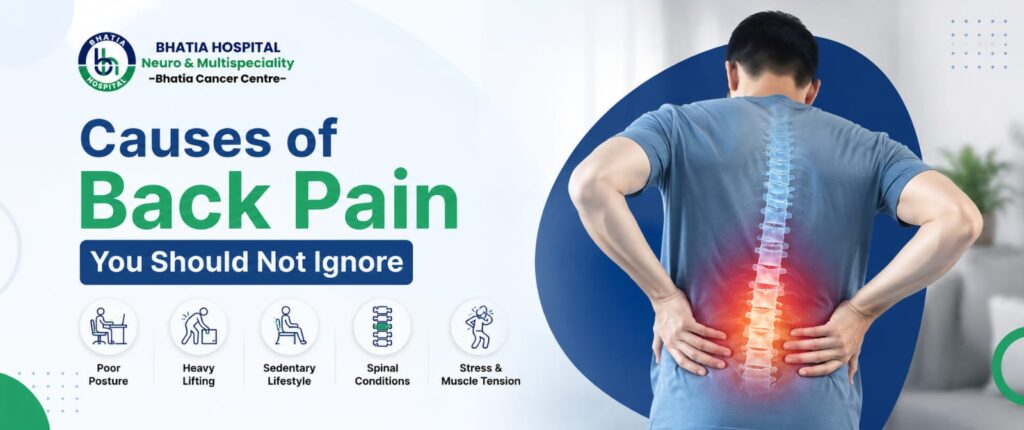
Causes of Back Pain You Should Not Ignore
Back pain is one of the most common health problems affecting people of all ages. While many cases improve with rest, some types of back pain may be a sign of a serious medical condition. Therefore, understanding the possible causes can help you know when it is time to seek medical attention.
At Bhatia Hospital, our experienced orthopedic specialists and spine care experts provide accurate diagnosis and personalized treatment for all types of back pain. As a result, we help patients recover safely and return to their daily activities with confidence.
What Is Back Pain?
Back pain refers to discomfort, stiffness, or aching anywhere along the spine, including the neck, upper back, middle back, or lower back. It may develop suddenly after an injury or gradually over time because of aging, poor posture, or underlying health conditions.
Although mild back pain often gets better within a few days, severe or long-lasting pain should never be ignored.
Common Causes of Back Pain
1. Muscle or Ligament Strain
First of all, one of the most common causes of back pain is a strained muscle or ligament. This can happen after lifting heavy objects, sudden twisting movements, or overusing the back muscles.
Symptoms may include:
- Muscle stiffness
- Pain that gets worse with movement
- Muscle spasms
- Difficulty bending or lifting
2. Poor Posture
Sitting for long hours, using mobile phones incorrectly, or working at a desk without proper support can place extra pressure on the spine. Consequently, poor posture often leads to chronic back pain.
3. Herniated (Slipped) Disc
The discs between the bones of the spine act as cushions. However, when one of these discs slips or bulges, it can press on nearby nerves and cause significant pain.
Common symptoms include:
- Sharp lower back pain
- Pain spreading to the legs (sciatica)
- Tingling or numbness
- Muscle weakness
4. Arthritis
As people age, the joints of the spine may wear down. As a result, arthritis can cause ongoing back pain, stiffness, and reduced flexibility.
5. Osteoporosis
Osteoporosis weakens the bones, making them more likely to break. Therefore, even a small fall or minor injury can lead to spinal fractures and severe back pain.
6. Sciatica
Sciatica occurs when the sciatic nerve becomes irritated or compressed. Consequently, pain usually starts in the lower back and travels down one leg.
7. Kidney Problems
Sometimes, back pain is not related to the spine at all. Instead, kidney infections or kidney stones may cause pain in the lower back or side.
Additional symptoms may include:
- Fever
- Pain during urination
- Blood in urine
- Nausea or vomiting
8. Spinal Infections or Tumors
Although uncommon, infections or tumors affecting the spine can also cause persistent back pain. Therefore, any unexplained pain lasting several weeks should be evaluated by a doctor.
Warning Signs You Should Not Ignore
While many cases of back pain are harmless, certain symptoms require immediate medical attention.
Visit a doctor if you experience:
- Severe back pain that lasts more than two weeks
- Pain after a fall, accident, or injury
- Pain spreading to one or both legs
- Numbness or weakness in the arms or legs
- Difficulty walking or standing
- Loss of bladder or bowel control
- Fever along with back pain
- Unexplained weight loss
- Pain that becomes worse at night or while resting
Early diagnosis can prevent complications and improve recovery.
Who Is at Higher Risk?
Some people are more likely to develop back pain than others.
Risk factors include:
- Increasing age
- Poor posture
- Heavy lifting at work
- Obesity
- Lack of physical activity
- Smoking
- Pregnancy
- Long hours of sitting
- Previous back injuries
How Is Back Pain Diagnosed?
At Bhatia Hospital, our specialists carefully identify the exact cause of your back pain.
Diagnosis may include:
- Detailed medical history
- Physical examination
- X-rays
- MRI scan
- CT scan
- Blood tests (if infection is suspected)
- Nerve function tests in selected cases
An accurate diagnosis allows us to recommend the most effective treatment plan.
Treatment Options for Back Pain
Treatment depends on the underlying cause and the severity of symptoms.
Your doctor may recommend:
- Pain-relieving medications
- Anti-inflammatory medicines
- Muscle relaxants
- Physiotherapy
- Exercise and stretching programs
- Lifestyle and posture correction
- Heat or cold therapy
- Spine injections in selected cases
- Surgery for severe spinal conditions when necessary
Our team focuses on reducing pain, improving movement, and preventing future problems.
Tips to Prevent Back Pain
Although back pain cannot always be prevented, healthy habits can reduce your risk.
You should:
- Maintain proper posture while sitting and standing.
- Lift heavy objects correctly.
- Exercise regularly to strengthen your back muscles.
- Maintain a healthy body weight.
- Avoid sitting for long periods without breaks.
- Sleep on a supportive mattress.
- Quit smoking.
- Stretch before physical activities.
Why Choose Bhatia Hospital?
At Bhatia Hospital, we are committed to providing comprehensive care for spine and orthopedic conditions. Our experienced doctors use advanced diagnostic technology and personalized treatment plans to help every patient achieve the best possible outcome.
Whether your back pain is mild or severe, our team is here to provide expert evaluation and effective treatment.
Conclusion
Back pain is common, but it should never be ignored if it is severe, persistent, or accompanied by other warning signs. Fortunately, early diagnosis and proper treatment can prevent long-term complications and improve your quality of life.
If you are experiencing ongoing back pain, visit Bhatia Hospital for expert consultation and comprehensive spine care. Our specialists are dedicated to helping you find relief and return to a healthy, active lifestyle. Follow up Instagram and Facebook for more information.
Frequently Asked Questions (FAQs)
When should I see a doctor for back pain?
You should see a doctor if your back pain lasts more than two weeks, becomes severe, spreads to your legs, or is accompanied by numbness, fever, weakness, or loss of bladder or bowel control.
Can poor posture cause long-term back pain?
Yes. Poor posture places continuous stress on the spine and muscles, which can eventually lead to chronic back pain if left uncorrected.
Is back pain always caused by a spine problem?
No. Sometimes, kidney infections, kidney stones, or other medical conditions can also cause pain in the back.
What tests are used to diagnose back pain?
Doctors may recommend a physical examination, X-rays, MRI, CT scan, blood tests, or nerve studies depending on your symptoms.
Can back pain be prevented?
In many cases, yes. Maintaining good posture, exercising regularly, lifting objects properly, staying active, and maintaining a healthy weight can significantly reduce the risk of back pain.