
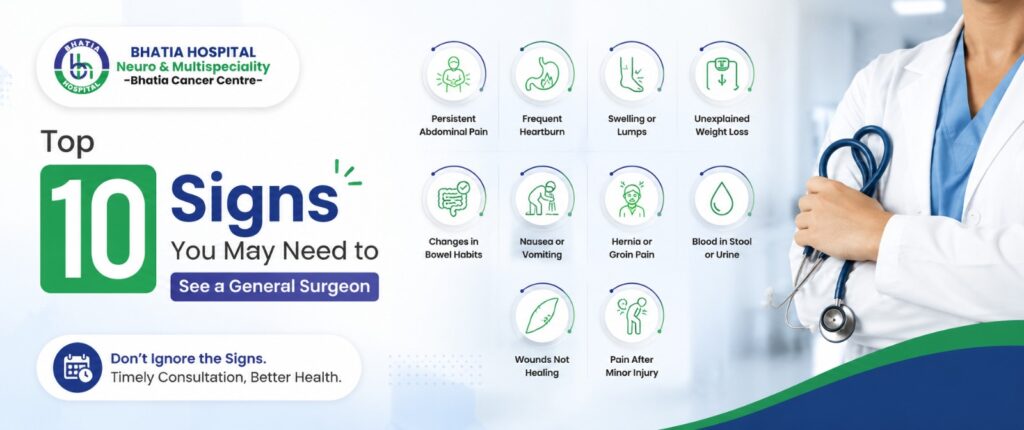
Top 10 Signs You May Need to See a General Surgeon
Many people ignore health problems, thinking they will get better on their own. However, some conditions need early surgical treatment to ignore more serious health issues. A general surgeon is train to identify and treat many conditions that affect the stomach, digestive system, skin, soft tissues, and other parts of the body.
At Bhatia Hospital, our skilled general surgeons carefully diagnose health problems and provide advanced surgical treatment with personalized care to help patients recover quickly and safely.
What Does a General Surgeon Treat?
A general surgeon treats many medical conditions that may require surgery. These include:
- Hernias
- Gallbladder stones
- Appendicitis
- Piles (Hemorrhoids)
- Breast lumps
- Skin cysts and lipomas
- Abscesses
- Thyroid conditions
- Digestive tract problems
- Minor and major surgical emergencies
Therefore, knowing the warning signs can help you get medical care before the problem becomes more serious.
Top 10 Signs You May Need to See a General Surgeon
1. Continuous Abdominal Pain
Stomach pain that lasts for hours or keeps returning should not be ignored. Mild stomach pain may get better with rest and home care. However, severe pain or pain that does not go away could be a sign of appendicitis, gallstones, or another problem that may require surgery.
If your stomach pain gets more serious and you have a fever, vomiting, or swelling, visit a doctor as soon as possible.
2. A Lump or Swelling That Keeps Growing
If you find a lump on your body, especially in the neck, breast, abdomen, or under the skin, do not ignore it. Visit a doctor for a proper check-up.
Most lumps are not serious, but some may require surgery or additional tests. That is why an early medical check-up is important.
3. A Hernia That Causes Pain or Bulging
A hernia occurs when part of an internal organ pushes through a weak area in the muscles. It often appears as a soft bulge in the groin or abdomen, especially when coughing, lifting heavy objects, or standing.
A small hernia may not cause any problems in the beginning, but it will not go away by itself. In most cases, surgery is the most effective treatment.
4. Severe Pain from Gallstones
If you have gallstones, you may feel sudden pain in the upper right side of your stomach, especially after eating fatty foods. In addition, you may experience nausea, vomiting, bloating, or fever.
If gallstones cause pain again and again, your doctor may advise removing the gallbladder to avoid future problems.
5. Signs of Appendicitis
Appendicitis is a serious condition that needs quick medical care. The pain often begins near the belly button and later moves to the lower right side of the stomach.
Other signs may include:
- Fever
- Loss of appetite
- Nausea
- Vomiting
- Pain that becomes worse while walking or coughing
Prompt surgery is often necessary to prevent the appendix from bursting.
6. Chronic Piles or Rectal Bleeding
Piles may get better with medicines and healthy habits. But if you have heavy bleeding, severe pain, swelling, or piles that remain outside the anus, surgery may be needed.
Furthermore, rectal bleeding should always be check by a doctor because it may be a sign of other digestive problems.
7. Non-Recovery Wounds or Repeated Abscesses
A wound that does not recover properly or keeps getting infect should not be ignore.
If you have a painful swelling fill with pus, it may need to be drain through a small surgical procedure to prevent the infection from getting serious.
8. Breast Changes or Unusual Lumps
If you notice a new breast lump, nipple discharge, changes in the skin, or persistent breast pain, see a doctor as early as possible.
Most breast lumps are not cancer, but getting them check early helps doctors find the cause and decide if more tests or surgery are necessary.
9. Skin Growths, Lipomas, or Cysts
Fatty lumps (lipomas), cysts, and unusual skin growths may increase in size, become painful, or develop an infection over time.
In such cases, a general surgeon can safely remove them using minor surgical procedures.
10. Digestive Problems That Do Not Change
Long-lasting digestive signs should never be change. These may include:
- Difficulty swallowing
- Frequent vomiting
- Regular constipation
- Severe abdominal bloating
- Ongoing abdominal discomfort
If these signs continue despite medication, further health check-up by a general surgeon may be required.
When Should You Seek Emergency Surgical Care?
Some signs require quick medical attention. Visit the nearest emergency department if you experience:
- Quick severe abdominal pain
- High fever with abdominal swelling
- Regular vomiting
- Heavy rectal bleeding
- A painful hernia that cannot be push back
- Severe injury requiring surgical care
- Signs of intestinal blockage, such as inability to pass stool or gas
Early treatment can significantly less the risk of serious health problems.
How General Surgeons Diagnose Surgical Conditions
Before advising surgery, your doctor will carefully check your signs. Depending on your condition, the checking may include:
- Physical examination
- Blood tests
- Ultrasound scan
- X-rays
- CT scan
- MRI scan (if required)
- Endoscopy or colonoscopy for digestive conditions
After reviewing the results, your surgeon will discuss the most safe treatment options.
Treatment Options
Not every condition requires quick surgery. In many cases, conservative treatment may be advice first. However, when surgery becomes necessary, modern techniques offer faster recovery and less discomfort.
Treatment options may include:
- Laparoscopic (keyhole) surgery
- Open surgery
- Minor day-care surgical procedures
- Emergency surgery
- Post-operative recover and follow-up care
At Bhatia Hospital, we focus on safe surgical care using modern tool and patient-centered treatment.
Why Choose Bhatia Hospital for General Surgery?
Choosing the right surgical team can make a significant difference in your recovery. At Bhatia Hospital, we offer:
- Experienced general surgeons
- Advanced diagnostic facilities
- Modern operation theatres
- Minimally invasive surgical options
- Personalized treatment plans
- Comprehensive pre- and post-operative care
- Compassionate support throughout your recovery
Our goal is to provide safe, effective, and timely surgical treatment for every patient.
Conclusion
Do not ignore ongoing pain, unusual lumps, digestive problems, or other warning signs. Getting medical care early can help prevent serious health problems. Getting checked by a general surgeon early can help find the problem quickly, provide the right treatment, and improve your recovery.
If you notice any of these warning signs, book an appointment with the expert general surgery team at Bhatia Hospital. Early diagnosis and expert care can help protect your health and change your quality of life.
Frequently Asked Questions (FAQs)
When should I see a general surgeon instead of a physician?
You should see a general surgeon if your doctor suspects a condition that may require surgical treatment, such as a hernia, gallstones, appendicitis, piles, or certain lumps.
Does every surgical condition require an operation?
No. Many conditions can at first be treat with medication or lifestyle changes. Surgery is advice only when it offers the best treatment or prevents complications.
Is laparoscopic surgery better than open surgery?
Laparoscopic surgery often results in smaller cuts, less pain, and faster recovery. However, the best way depends on your medical condition.
How long does recovery take after general surgery?
Recovery depends on the type of surgery performed. Minor procedures may require only a few days, while major surgeries may take several weeks.
Can I delay surgery if my signs are mild?
Some conditions can be monitor, but delaying treatment for problems like appendicitis, painful hernias, or gallstones may increase the risk of complications. Your surgeon will guide you on the right timing.