
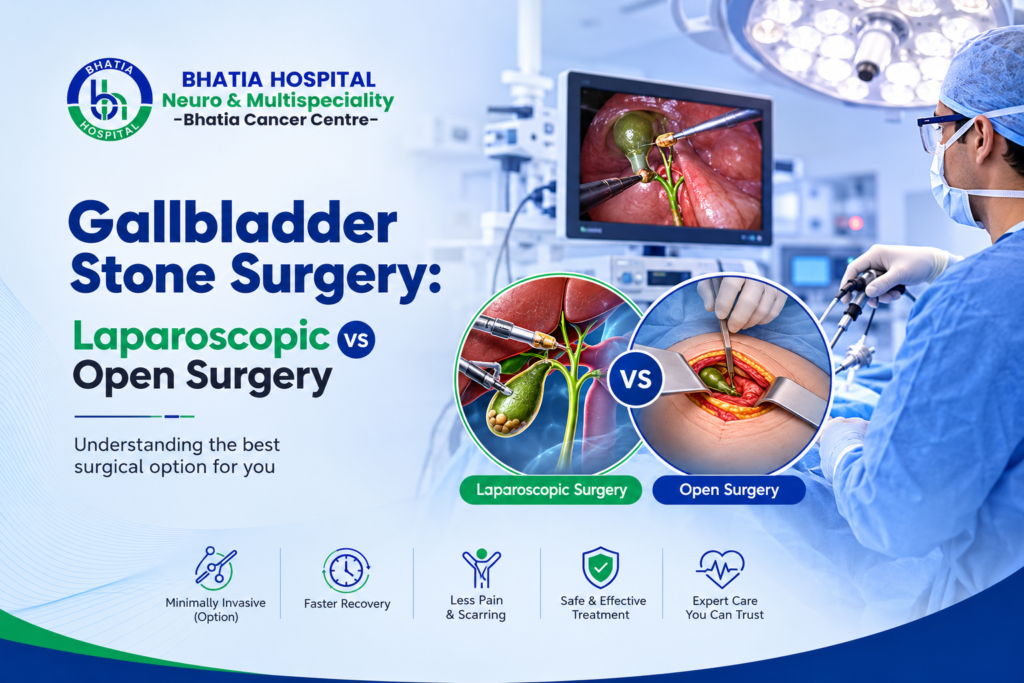
Gallbladder Stone Surgery: Laparoscopic vs Open Surgery
Gallstones can cause pain, nausea, and vomiting. They can also lead to other health problems. When stones cause pain again and again, your doctor may suggest surgery. Many people search for laproscopic surgery in patiala when looking for gallstone treatment. The correct medical term is laparoscopic surgery in Patiala.
Laparoscopic surgery uses small cuts in the abdomen. As a result, many patients have less pain and recover sooner. However, this method does not suit every patient. In some cases, open surgery may offer a safer choice.
At Bhatia Hospital Neuro & Multispeciality Hospital, Patiala, experienced doctors can check your condition. They can also explain your treatment choices and recovery plan.
What Are Gallstones?
Gallstones are hard pieces that form inside the gallbladder. The gallbladder stores bile. Bile helps your body digest fat. Sometimes, gallstones cause no problems. Doctors call these silent gallstones. However, a stone can block the flow of bile. When this happens, it can cause pain and other problems.
Common gallstone problems include:
- Stomach pain
- Nausea
- Vomiting
- Gallbladder swelling
- Infection
- Bile duct blockage
- Pancreatitis
So, you should see a doctor if you have repeated symptoms.
What Causes Gallstones?
Gallstones can form when the balance of substances in bile changes. Several things can raise your risk. For example:
- Too much cholesterol in bile
- Poor gallbladder emptying
- High bilirubin levels
- Family history of gallstones
- Older age
- Obesity
- Fast weight loss
- Some health conditions
Still, these factors do not mean you will surely develop gallstones.
What Are the Symptoms of Gallstones?
Some people have gallstones without any symptoms. Others may feel pain after meals.
Common symptoms include:
- Pain in the upper-right stomach
- Pain after fatty meals
- Pain that moves to the back
- Pain that moves to the right shoulder
- Nausea
- Vomiting
- Bloating
- Indigestion
If the pain keeps coming back, talk to a doctor. Also, seek quick medical care if you have severe pain, fever, or yellow skin. These signs may point to a more serious problem.
When Do You Need Gallstone Surgery?
Not every person with gallstones needs surgery.
Your doctor may suggest gallbladder stone removal surgery when stones cause:
- Repeated pain
- Gallbladder swelling
- Infection
- Bile duct blockage
- Pancreatitis
- Other serious problems
The common operation is called cholecystectomy. During this operation, the surgeon removes the gallbladder.
First, your doctor will check your symptoms. Next, the doctor will review your test results. Then, the doctor will discuss the best treatment for you.
How Are Gallstones Diagnosed?
Your doctor will first ask about your symptoms and health history. After that, you may need some tests.
Physical Examination
The doctor may ask about your pain and other symptoms.
For example, the doctor may ask about:
- When the pain started
- How long the pain lasts
- Food that makes it worse
- Vomiting
- Fever
- Previous pain attacks
Ultrasound
An ultrasound can help doctors find gallstones. It can also show signs of swelling or inflammation.
Blood Tests
Blood tests can help doctors check for infection and inflammation. They can also show changes in liver function.
Other Tests
Sometimes, you may need more tests. For example, your doctor may suggest another scan when a bile duct stone seems possible. Your doctor will choose the tests based on your symptoms.
Laparoscopic Surgery in Patiala
What Is Laparoscopic Gallbladder Stone Surgery?
Laparoscopic gallbladder surgery uses small cuts in the abdomen. First, the surgeon makes a few small cuts. Next, the surgeon places a small camera inside the abdomen. The camera helps the surgeon see the gallbladder.
Then, the surgeon uses small tools to remove the gallbladder. Doctors call this procedure laparoscopic cholecystectomy. Many patients with painful gallstones can have this type of surgery.
What Are the Benefits of Laparoscopic Gallbladder Surgery?
Laparoscopic surgery can offer several benefits.
For example, patients may have:
- Smaller cuts
- Less pain
- Smaller scars
- Earlier movement
- A shorter hospital stay
- Faster return to daily activities
Because every patient is different, recovery can vary. Your age, health, and type of surgery can affect your recovery.
What Is Open Gallbladder Surgery?
Open gallbladder surgery uses one larger cut in the abdomen. The surgeon removes the gallbladder through this cut. Doctors may choose open cholecystectomy when a case looks difficult.
For example, open surgery may help when a patient has:
- Severe swelling
- Infection
- Heavy scar tissue
- Previous abdominal surgery
- Difficult anatomy
- Other safety concerns
Sometimes, the surgeon starts with laparoscopic surgery. However, the surgeon may change to open surgery if it offers better safety. The surgeon makes this choice to protect the patient.
Laparoscopic vs Open Gallbladder Surgery
Both procedures remove the gallbladder. However, they use different methods.
Feature | Laparoscopic Surgery | Open Surgery |
Cuts | Several small cuts | One larger cut |
Pain | Usually less | Usually more |
Hospital stay | Often shorter | Usually longer |
Recovery | Usually faster | Usually slower |
Scars | Smaller | Larger |
Complex cases | May not suit every case | May suit some difficult cases |
Which Surgery Is Better?
For many patients, laparoscopic surgery offers several benefits. It uses smaller cuts. It can also help many patients return to daily life sooner. However, open surgery may suit some complex cases better. So, doctors do not use the same method for everyone.
Your doctor will look at your:
- Symptoms
- Test results
- Medical history
- Overall health
- Gallbladder condition
After that, the surgeon can suggest the safest option.
Gallbladder Surgery Recovery Time
Recovery time can vary from person to person. After simple laparoscopic surgery, many patients return to normal activity within about a week. Open surgery usually needs more healing time. Some patients may need around a month before they return to normal activity. However, your recovery may take more or less time.
Your doctor will tell you when you can:
- Return to work
- Drive
- Exercise
- Lift heavy items
- Return to your normal routine
Recovery After Gallbladder Surgery
After surgery, during recovery your doctor may ask you to:
- Rest after anesthesia.
- Start food and fluids slowly.
- Walk when your doctor allows it.
- Keep the wound clean.
- Take your medicines on time.
- Return to normal activities slowly.
- Attend follow-up visits.
Also, drink enough fluids unless your doctor gives you different advice. Most importantly, follow your doctor’s instructions.
What Are the Risks of Gallbladder Stone Surgery?
Gallbladder surgery is common. Still, every operation has some risks.
Possible risks include:
- Bleeding
- Infection
- Blood clots
- Bile leakage
- Bile duct injury
- Injury to nearby organs
- Wound problems
- Problems from anesthesia
Serious problems do not happen often. However, you should understand the risks before surgery. Your surgeon will explain these risks. You can also ask questions before the operation.
Is Gallbladder Surgery Safe?
Gallbladder removal is a common operation. For many suitable patients, laparoscopic surgery can treat painful gallstones effectively. However, no operation is completely risk-free.
Therefore, your doctor will check your health before surgery. The doctor will also explain the benefits and possible risks. If you have any concerns, discuss them with your surgeon.
What Are the Gallstone Treatment Options?
Treatment depends on your symptoms and your health.
Your doctor may suggest:
- No treatment for silent gallstones
- Diet and symptom control
- Laparoscopic cholecystectomy
- Open cholecystectomy
- Endoscopic treatment for some bile duct stones
- Other treatment in selected cases
So, the best treatment for gallstones depends on your condition. Do not choose a treatment only because it worked for someone else.
Gallbladder Surgery Cost
Many patients ask about gallbladder surgery cost before treatment. The cost can vary from one patient to another.
Several factors can affect the cost, such as:
- Type of surgery
- Doctor’s consultation
- Anesthesia
- Blood tests
- Scans
- Hospital stay
- Medicines
- Your health condition
- Any complications
Therefore, ask the hospital for a cost estimate after your doctor checks your condition. Patients from Patiala and nearby areas can discuss the treatment plan with the team at Bhatia Hospital in Patiala.
Gallbladder Stone Surgery: Laparoscopic vs Open Surgery
Gallstones can cause pain, nausea, and vomiting. They can also lead to other health problems. When stones cause pain again and again, your doctor may suggest surgery. Many people search for laproscopic surgery in patiala when looking for gallstone treatment. The correct medical term is laparoscopic surgery in Patiala.
Laparoscopic surgery uses small cuts in the abdomen. As a result, many patients have less pain and recover sooner. However, this method does not suit every patient. In some cases, open surgery may offer a safer choice.
At Bhatia Hospital Neuro & Multispeciality Hospital, Patiala, experienced doctors can check your condition. They can also explain your treatment choices and recovery plan.
What Are Gallstones?
Gallstones are hard pieces that form inside the gallbladder. The gallbladder stores bile. Bile helps your body digest fat. Sometimes, gallstones cause no problems. Doctors call these silent gallstones. However, a stone can block the flow of bile. When this happens, it can cause pain and other problems.
Common gallstone problems include:
- Stomach pain
- Nausea
- Vomiting
- Gallbladder swelling
- Infection
- Bile duct blockage
- Pancreatitis
So, you should see a doctor if you have repeated symptoms.
What Causes Gallstones?
Gallstones can form when the balance of substances in bile changes. Several things can raise your risk. For example:
- Too much cholesterol in bile
- Poor gallbladder emptying
- High bilirubin levels
- Family history of gallstones
- Older age
- Obesity
- Fast weight loss
- Some health conditions
Still, these factors do not mean you will surely develop gallstones.
What Are the Symptoms of Gallstones?
Some people have gallstones without any symptoms. Others may feel pain after meals.
Common symptoms include:
- Pain in the upper-right stomach
- Pain after fatty meals
- Pain that moves to the back
- Pain that moves to the right shoulder
- Nausea
- Vomiting
- Bloating
- Indigestion
If the pain keeps coming back, talk to a doctor. Also, seek quick medical care if you have severe pain, fever, or yellow skin. These signs may point to a more serious problem.
When Do You Need Gallstone Surgery?
Not every person with gallstones needs surgery.
Your doctor may suggest gallbladder stone removal surgery when stones cause:
- Repeated pain
- Gallbladder swelling
- Infection
- Bile duct blockage
- Pancreatitis
- Other serious problems
The common operation is called cholecystectomy. During this operation, the surgeon removes the gallbladder.
First, your doctor will check your symptoms. Next, the doctor will review your test results. Then, the doctor will discuss the best treatment for you.
How Are Gallstones Diagnosed?
Your doctor will first ask about your symptoms and health history. After that, you may need some tests.
Physical Examination
The doctor may ask about your pain and other symptoms.
For example, the doctor may ask about:
- When the pain started
- How long the pain lasts
- Food that makes it worse
- Vomiting
- Fever
- Previous pain attacks
Ultrasound
An ultrasound can help doctors find gallstones. It can also show signs of swelling or inflammation.
Blood Tests
Blood tests can help doctors check for infection and inflammation. They can also show changes in liver function.
Other Tests
Sometimes, you may need more tests. For example, your doctor may suggest another scan when a bile duct stone seems possible. Your doctor will choose the tests based on your symptoms.
Laparoscopic Surgery in Patiala
What Is Laparoscopic Gallbladder Stone Surgery?
Laparoscopic gallbladder surgery uses small cuts in the abdomen. First, the surgeon makes a few small cuts. Next, the surgeon places a small camera inside the abdomen. The camera helps the surgeon see the gallbladder.
Then, the surgeon uses small tools to remove the gallbladder. Doctors call this procedure laparoscopic cholecystectomy. Many patients with painful gallstones can have this type of surgery.
What Are the Benefits of Laparoscopic Gallbladder Surgery?
Laparoscopic surgery can offer several benefits.
For example, patients may have:
- Smaller cuts
- Less pain
- Smaller scars
- Earlier movement
- A shorter hospital stay
- Faster return to daily activities
Because every patient is different, recovery can vary. Your age, health, and type of surgery can affect your recovery.
What Is Open Gallbladder Surgery?
Open gallbladder surgery uses one larger cut in the abdomen. The surgeon removes the gallbladder through this cut. Doctors may choose open cholecystectomy when a case looks difficult.
For example, open surgery may help when a patient has:
- Severe swelling
- Infection
- Heavy scar tissue
- Previous abdominal surgery
- Difficult anatomy
- Other safety concerns
Sometimes, the surgeon starts with laparoscopic surgery. However, the surgeon may change to open surgery if it offers better safety. The surgeon makes this choice to protect the patient.
Laparoscopic vs Open Gallbladder Surgery
Both procedures remove the gallbladder. However, they use different methods.
Feature | Laparoscopic Surgery | Open Surgery |
Cuts | Several small cuts | One larger cut |
Pain | Usually less | Usually more |
Hospital stay | Often shorter | Usually longer |
Recovery | Usually faster | Usually slower |
Scars | Smaller | Larger |
Complex cases | May not suit every case | May suit some difficult cases |
Which Surgery Is Better?
For many patients, laparoscopic surgery offers several benefits. It uses smaller cuts. It can also help many patients return to daily life sooner. However, open surgery may suit some complex cases better. So, doctors do not use the same method for everyone.
Your doctor will look at your:
- Symptoms
- Test results
- Medical history
- Overall health
- Gallbladder condition
After that, the surgeon can suggest the safest option.
Gallbladder Surgery Recovery Time
Recovery time can vary from person to person. After simple laparoscopic surgery, many patients return to normal activity within about a week. Open surgery usually needs more healing time. Some patients may need around a month before they return to normal activity. However, your recovery may take more or less time.
Your doctor will tell you when you can:
- Return to work
- Drive
- Exercise
- Lift heavy items
- Return to your normal routine
Recovery After Gallbladder Surgery
After surgery, your doctor may ask you to:
- Rest after anesthesia.
- Start food and fluids slowly.
- Walk when your doctor allows it.
- Keep the wound clean.
- Take your medicines on time.
- Return to normal activities slowly.
- Attend follow-up visits.
Also, drink enough fluids unless your doctor gives you different advice. Most importantly, follow your doctor’s instructions.
What Are the Risks of Gallbladder Stone Surgery?
Gallbladder surgery is common. Still, every operation has some risks.
Possible risks include:
- Bleeding
- Infection
- Blood clots
- Bile leakage
- Bile duct injury
- Injury to nearby organs
- Wound problems
- Problems from anesthesia
Serious problems do not happen often. However, you should understand the risks before surgery. Your surgeon will explain these risks. You can also ask questions before the operation.
Is Gallbladder Surgery Safe?
Gallbladder removal is a common operation. For many suitable patients, laparoscopic surgery can treat painful gallstones effectively. However, no operation is completely risk-free.
Therefore, your doctor will check your health before surgery. The doctor will also explain the benefits and possible risks. If you have any concerns, discuss them with your surgeon.
What Are the Gallstone Treatment Options?
Treatment depends on your symptoms and your health.
Your doctor may suggest:
- No treatment for silent gallstones
- Diet and symptom control
- Laparoscopic cholecystectomy
- Open cholecystectomy
- Endoscopic treatment for some bile duct stones
- Other treatment in selected cases
So, the best treatment for gallstones depends on your condition. Do not choose a treatment only because it worked for someone else.
Gallbladder Surgery Cost
Many patients ask about gallbladder surgery cost before treatment. The cost can vary from one patient to another.
Several factors can affect the cost, such as:
- Type of surgery
- Doctor’s consultation
- Anesthesia
- Blood tests
- Scans
- Hospital stay
- Medicines
- Your health condition
- Any complications
Therefore, ask the hospital for a cost estimate after your doctor checks your condition. Patients from Patiala and nearby areas can discuss the treatment plan with the team at Bhatia Hospital in Patiala.
Why Choose Bhatia Hospital in Patiala?
Choosing the right hospital is an important step. Patients need proper care, experienced doctors, good facilities, and clear information. At Bhatia Hospital Neuro & Multispeciality Hospital, Patiala, the medical team focuses on patient care.
The hospital offers:
- Experienced doctors
- Surgical care
- Diagnostic services
- Advanced technology
- Anesthesia support
- Infection control
- Emergency support when needed
- Follow-up care
- Patient-centered care
Bhatia Hospital serves patients from Patiala and nearby areas of Punjab. If you have gallstones, talk to a qualified doctor before choosing surgery.
How Can You Reduce the Risk of Gallstones?
You cannot prevent every case of gallstones. However, healthy habits can support your health.
Try to:
- Keep a healthy weight.
- Avoid crash diets.
- Avoid very fast weight loss.
- Eat a balanced diet.
- Eat enough fibre.
- Stay active.
- Follow your doctor’s advice.
These steps cannot fully prevent gallstones. Still, they can support a healthy lifestyle.
When Should You See a Doctor?
Do not ignore repeated stomach pain. See a doctor if you have pain in the upper abdomen that keeps coming back.
Also, seek medical help quickly if you have:
- Severe stomach pain
- Fever or chills
- Yellow eyes or skin
- Repeated vomiting
- Dark urine
- Pale stools
- Severe weakness
These signs can point to a gallbladder or bile duct problem. So, quick medical care can help prevent serious problems.
Frequently Asked Questions
1. Can You Live Without a Gallbladder?
Yes, you can live without a gallbladder. The gallbladder stores bile. However, your body can work without it. After surgery, your liver still makes bile. The bile then moves into your small intestine. Most people return to their normal routine after recovery.
2. What Is Laparoscopic Cholecystectomy?
Laparoscopic cholecystectomy removes the gallbladder through small cuts in the abdomen. First, the surgeon places a small camera inside the abdomen. Next, the surgeon uses special tools to remove the gallbladder. Many patients with painful gallstones can have this surgery.
3. Is Laparoscopic Surgery Always Possible?
No. Laparoscopic surgery does not suit every patient. For example, severe swelling, infection, scar tissue, previous surgery, or difficult anatomy can affect the choice. Sometimes, the surgeon may start with laparoscopic surgery. Later, the surgeon may change to open surgery if it offers better safety.
4. How Long Does Gallbladder Surgery Recovery Take?
Recovery depends on the surgery and your health. After simple laparoscopic surgery, some patients return to normal activities in about a week. Open surgery usually takes longer. Some patients may need about a month before they return to normal activity.
5. What Are the Common Gallbladder Surgery Complications?
Gallbladder surgery can cause some problems. These may include bleeding, infection, bile leakage, bile duct injury, blood clots, wound problems, or anesthesia problems. Serious problems are not common. Still, every patient should understand the possible risks before surgery.
Conclusion
Gallstones do not always need surgery. However, repeated pain, infection, swelling, bile duct blockage, or pancreatitis may require treatment. For many patients, laparoscopic gallbladder surgery offers smaller cuts and a faster recovery. However, open surgery may offer a safer choice in some difficult cases.
So, do not choose surgery based only on another person’s experience. First, see a qualified doctor. Next, complete the needed tests. Then, discuss your options with your surgeon. Your doctor will choose the treatment based on your symptoms, test results, health, and medical needs.
Book an appointment with the specialists at Bhatia Hospital, Patiala for expert diagnosis and personalized treatment.