
When Do Doctors Recommend Laparoscopic Surgery?
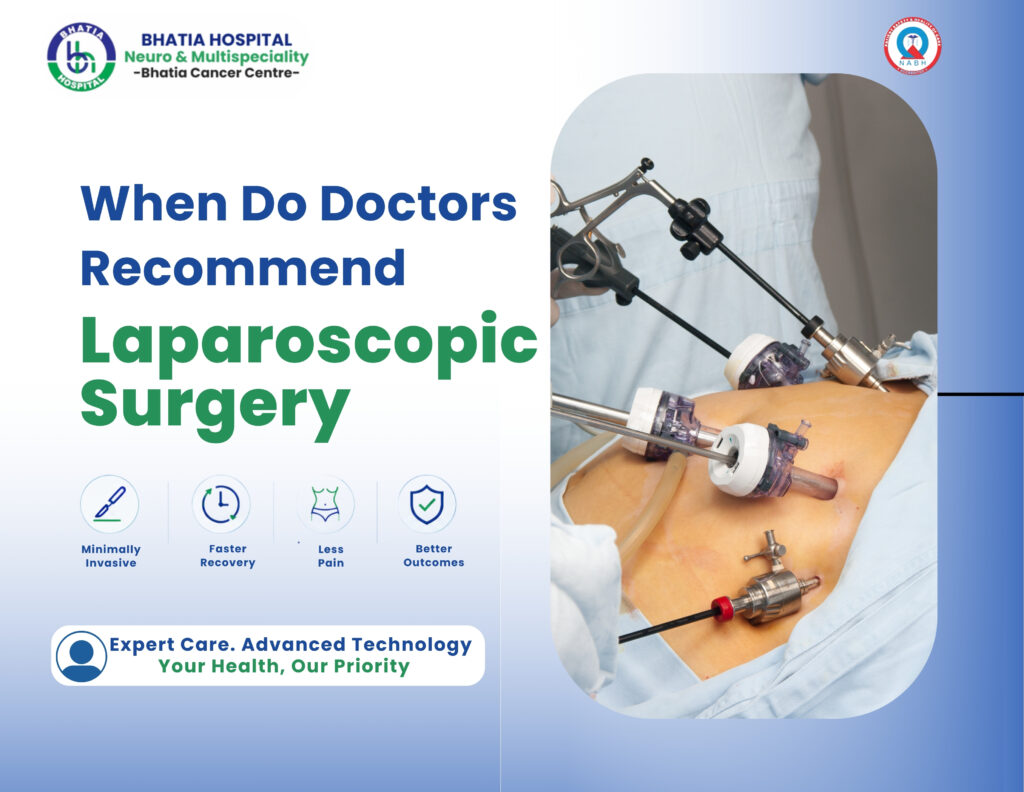
Many patients feel anxious when a doctor recommends surgery. However, modern surgical techniques have made many procedures safer and less invasive. One such advancement is laparoscopic surgery.
Doctors often recommend laparoscopic surgery because it uses small incisions, causes less pain, and helps patients recover faster. This approach has become a preferred option for treating several medical conditions.
In this guide, we explain when doctors recommend laparoscopic surgery, its benefits, the recovery process, and who may be a suitable candidate.
What Is Laparoscopic Surgery?
Laparoscopic surgery, also called keyhole surgery or minimally invasive surgery, is a surgical technique that uses small cuts instead of one large incision.
During the procedure, the surgeon inserts a thin tube with a camera called a laparoscope. The camera sends images to a monitor, allowing the surgeon to perform the operation with precision.
Because the incisions are small, patients usually experience less discomfort and a quicker recovery.
Quick Answer:
Doctors recommend laparoscopic surgery when a condition can be treated safely through small incisions while reducing pain, hospital stay, and recovery time.
When Do Doctors Recommend Laparoscopic Surgery?
Doctors recommend laparoscopic surgery when it offers better outcomes than traditional open surgery.
Several factors influence this decision:
- Type of medical condition
- Patient’s overall health
- Severity of disease
- Previous surgeries
- Expected recovery time
- Risk of complications
The goal is always to provide safe and effective treatment with minimal disruption to daily life.
Common Conditions Treated With Laparoscopic Surgery
Gallbladder Stones:
Gallbladder stones are one of the most common reasons for laparoscopic surgery.
Doctors may recommend laparoscopic gallbladder removal when patients experience:
- Repeated abdominal pain
- Nausea after meals
- Gallbladder inflammation
- Gallstone-related complications
This procedure often allows patients to return home within a short period.
Appendix Problems:
Acute appendicitis requires timely treatment.
Laparoscopic appendectomy helps surgeons remove the inflamed appendix while minimizing tissue damage and reducing recovery time.
Hernia Repair:
Doctors frequently use laparoscopic techniques for hernia repair.
Benefits include:
- Smaller scars
- Less post-operative pain
- Faster return to normal activities
- Lower risk of wound-related complications
Gastrointestinal Conditions:
Certain digestive system conditions may require surgery.
Examples include:
- Intestinal obstruction
- Gastroesophageal reflux disease (GERD)
- Colon disorders
- Selected stomach conditions
Your surgeon will determine whether a laparoscopic approach is appropriate.
Gynecological Conditions:
Women may undergo laparoscopic surgery for:
- Ovarian cysts
- Endometriosis
- Fibroids
- Diagnostic evaluation of pelvic pain
The procedure often reduces hospital stay and promotes faster recovery.
What Are the Benefits of Laparoscopic Surgery?
Many doctors prefer laparoscopic surgery because it offers several patient-centered benefits.
Key Benefits
Smaller incisions
- Less pain after surgery
- Reduced blood loss
- Lower infection risk
- Shorter hospital stay
- Faster recovery
- Minimal scarring
- Earlier return to routine activities
These advantages make laparoscopic surgery a popular choice whenever medically appropriate.
Who Is a Good Candidate for Laparoscopic Surgery?
Many patients qualify for laparoscopic surgery, but not everyone is an ideal candidate.
Doctors evaluate:
- Medical history
- Current health status
- Body weight
- Previous abdominal surgeries
- Severity of the condition
A detailed consultation helps determine the safest treatment plan.
When Might Open Surgery Be Preferred?
Although laparoscopic surgery offers many advantages, doctors may recommend open surgery in certain situations.
These may include:
- Extensive scar tissue
- Complex cancers
- Severe infections
- Emergency complications
- Uncontrolled bleeding
Patient safety remains the top priority during surgical planning.
How Long Does Recovery Take?
Recovery varies depending on the procedure and individual health.
Many patients can:
- Walk within hours after surgery
- Resume light activities within a few days
- Return to work within one to two weeks
- Recover fully within several weeks
Following your surgeon’s instructions supports a smooth recovery.
How Should Patients Prepare for Laparoscopic Surgery?
Proper preparation helps improve surgical outcomes.
Before Surgery:
Follow fasting instructions
Follow fasting instructions
- Discuss medications with your doctor
- Share your complete medical history
- Arrange transportation after discharge
- Follow pre-surgery guidelines carefully
Good preparation can reduce complications and support faster healing.
Why Choose Expert Surgical Care?
Successful outcomes depend on accurate diagnosis, surgical expertise, and comprehensive post-operative care. At Bhatia Hospital Neuro & Multispeciality, Patiala, experienced specialists evaluate each patient individually and recommend the most appropriate treatment approach. The focus remains on patient safety, advanced surgical techniques, and personalised care throughout the treatment journey.
Conclusion
Laparoscopic surgery has transformed modern healthcare by offering a minimally invasive option for many common conditions. Doctors often recommend it because it typically causes less pain, smaller scars, and faster recovery compared to traditional surgery.
However, every patient is different. The best treatment approach depends on the condition being treated, overall health, and surgical evaluation. If you have been advised to undergo surgery, consult an experienced specialist to understand whether laparoscopic surgery is right for you.
Key Takeaways:
- Laparoscopic surgery uses small incisions and a camera-guided approach.
- Doctors commonly recommend it for gallstones, appendicitis, hernias, and several digestive and gynecological conditions.
- Benefits include less pain, faster recovery, and smaller scars.
- Not every patient is a suitable candidate.
- A specialist consultation helps determine the safest surgical option.
- Advanced surgical care is available at Bhatia Hospital Neuro & Multispeciality, Patiala.
FAQs:
What is laparoscopic surgery?
Laparoscopic surgery is a minimally invasive procedure that uses small incisions and a camera to perform surgery.
Why do doctors recommend laparoscopic surgery?
Doctors recommend it because it often causes less pain, smaller scars, and faster recovery.
Is laparoscopic surgery safer than open surgery?
Both methods can be safe. The best option depends on the patient’s condition and medical history.
How long does laparoscopic surgery take?
Procedure time varies, but many surgeries are completed within one to three hours.
How long is recovery after laparoscopic surgery?
Many patients return to light activities within a few days and recover fully within several weeks.
Can gallstones be treated with laparoscopic surgery?
Yes. Laparoscopic gallbladder removal is one of the most common treatments for symptomatic gallstones.
Is laparoscopic surgery painful?
Patients usually experience less pain compared to traditional open surgery.
Will laparoscopic surgery leave scars?
Small scars may remain, but they are generally less noticeable than those from open surgery.
Can elderly patients undergo laparoscopic surgery?
Many older adults can safely undergo laparoscopic procedures after proper medical evaluation.
Where can I get laparoscopic surgery in Patiala?
Patients can consult experienced surgeons at Bhatia Hospital Neuro & Multispeciality, Patiala for evaluation and treatment guidance.