
Difference Between Open and Laparoscopic Surgery
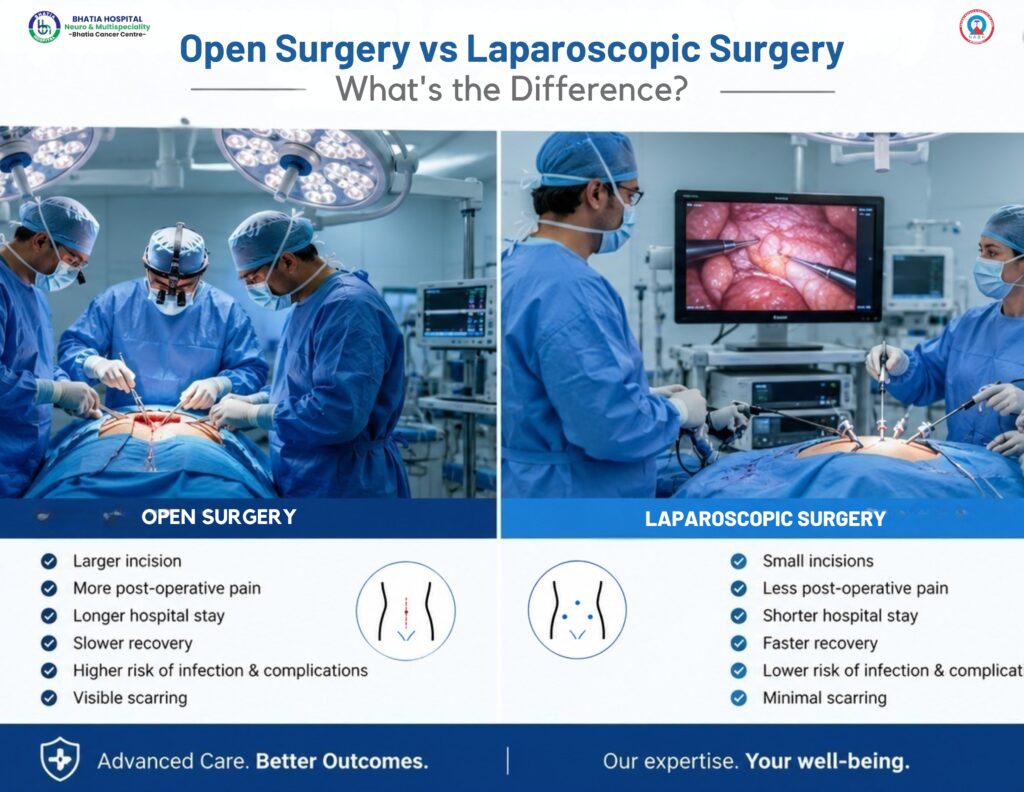
Many people feel confused before surgery. They often hear two common terms. One is open surgery. The other is laparoscopic surgery. Both methods help doctors treat health problems. But both methods work differently. This blog explains both surgeries in simple words. You will learn the key difference between open and Laparoscopic Surgery.
What is Open Surgery?
Open surgery is the traditional surgery method. Doctors make one large cut on the body. This cut helps doctors reach the affected organ directly. Doctors use open surgery for many serious conditions. It has been used for many years worldwide. The cut size depends on the health problem. Some cuts may stay small. Some may become larger. After surgery, doctors close the cut with stitches. The patient then starts the recovery process.
What Is Laparoscopic Surgery?
Laparoscopic surgery is a modern surgery method. Doctors make very small cuts on the body. A thin tube with a camera enters the body. This tube is called a laparoscope. The camera shows clear images on a screen. Doctors perform surgery while watching the screen. Doctors also use small surgical instruments. These instruments pass through tiny cuts. Many people call this keyhole surgery. It causes less damage to the body.
Main Difference Between Both Surgeries
The biggest difference is the cut size. Open surgery uses one large cut. Laparoscopic surgery uses small cuts. Recovery time also differs greatly. Laparoscopic surgery usually heals faster. Pain levels also change after surgery. Most patients feel less pain after laparoscopic surgery. Hospital stay may also become shorter. Many patients return home earlier.
Size of the Surgical Cut
Open surgery needs a bigger opening. Doctors need more space during treatment. Laparoscopic surgery needs tiny openings only. These cuts are usually very small. Smaller cuts leave smaller marks on the skin. Many patients prefer this advantage.
Pain After Surgery
Open surgery often causes more pain. The body needs more healing time. Laparoscopic surgery usually causes less pain. Small cuts heal faster and easier. Doctors may give fewer pain medicines afterward.
Recovery Time
Recovery is slower after open surgery. Patients may need several weeks for healing. Laparoscopic surgery offers quicker recovery. Many patients return to normal life sooner. Some patients restart daily work within days.
Hospital Stay
Open surgery may require a longer hospital stay. Doctors monitor healing carefully after surgery. Laparoscopic surgery often reduces hospital stay. Some patients go home the same day. This depends on the health condition too.
Risk of Infection
Large cuts may increase infection risk. Open surgery sometimes needs more wound care. Laparoscopic surgery lowers this risk slightly. Small wounds heal more quickly. Good hygiene still remains very important.
Blood Loss During Surgery
Open surgery may cause more blood loss. Doctors work through a larger opening. Laparoscopic surgery often causes less bleeding. Small cuts help reduce blood loss.
Scars After Surgery
Open surgery leaves larger scars sometimes. The scar depends on the cut size. Laparoscopic surgery leaves tiny scars usually. Many scars become less visible later.
Which Surgery Is Safer?
Both surgeries are generally safe today. Experienced surgeons perform both methods carefully. The safer option depends on the patient. It also depends on the medical condition. Doctors choose the best method carefully. They study the patient’s health first.
When Do Doctors Prefer Open Surgery?
Doctors may choose open surgery in serious cases. Some conditions need direct access to organs. Open surgery may help during emergencies. It may also help in complex surgeries. Large tumours sometimes require open surgery. Heavy internal bleeding may also need it.
When Do Doctors Prefer Laparoscopic Surgery?
Doctors prefer laparoscopic surgery for many conditions today. It offers faster recovery in many cases. Doctors often use it for gallbladder surgery. It also helps in appendix surgery. Many hernia surgeries use this method too. Some gynaecological surgeries also use it.
Benefits of Laparoscopic Surgery:
Laparoscopic surgery offers many advantages.
- Smaller Cuts: Small cuts heal faster. They also leave smaller scars.
- Less Pain: Patients usually feel less discomfort afterward.
- Faster Recovery: Patients often return to daily life quickly.
- Lower Infection Risk: Small wounds lower infection chances slightly.
- Shorter Hospital Stay: Many patients return home earlier.
- Lower Infection Risk: Small wounds lower infection chances slightly.
Benefits of Open Surgery:
Open surgery also has important advantages.
- Better Access for Surgeons: Doctors see organs directly during surgery.
- Useful for Complex Cases: Some serious problems need open surgery.
- Helpful During Emergencies: Patients often return to daily life quickly.
Are There Any Risks?
Every surgery carries some risks. Doctors explain these risks before treatment. Common risks may include pain and infection. Bleeding may also happen rarely. Some patients may react to anaesthesia. Doctors monitor patients carefully during surgery. Choosing an experienced surgeon is very important.
How Should Patients Prepare?
Patients should follow doctor instructions carefully. Doctors may ask for blood tests first. Some patients may need scans too. Patients should share their medical history honestly. They should mention medicines and allergies clearly. Smoking should stop before surgery. Healthy eating also supports recovery.
What Happens After Surgery?
Recovery starts immediately after surgery. Doctors monitor the patient closely. Patients may feel Minor pain in the beginning. Doctors provide medicines for comfort. Walking slowly helps recovery sometimes. Patients should avoid heavy lifting early. Follow-up visits are also very important.
Which Surgery Costs More?
The cost depends on many factors. Hospital charges may differ by location. Laparoscopic surgery may cost more initially. It uses modern instruments and technology. But a faster recovery may reduce overall expenses later.
Final Thoughts:
Both surgeries help treat serious health problems. Both methods save lives every day. Open surgery remains important for complex cases. Laparoscopic surgery offers faster healing benefits. Doctors choose the safest option carefully. Patients should discuss everything openly with their surgeon. Understanding both methods reduces fear and confusion. Good knowledge helps patients make better decisions. If you need surgical guidance, consult experienced specialists at Bhatia Hospital. Expert care and proper advice greatly improve treatment outcomes.
Frequently Asked Questions (FAQs)
Which surgery heals faster, open or laparoscopic?
Laparoscopic surgery usually heals faster. Small cuts help the body recover quickly. Many patients return to normal life sooner.
Is laparoscopic surgery less painful?
Yes, most patients feel less pain afterward. The cuts remain very small during surgery. Smaller wounds usually cause less discomfort.
Is laparoscopic surgery safer than open surgery?
Both surgeries are safe in experienced hands. The best option depends on the health condition. Doctors choose the safest method carefully.
Why do some patients still need open surgery?
Some health problems need direct organ access. Complex surgeries may require larger openings. Emergency conditions may also need open surgery.
How long does hospital stay take after surgery?
Hospital stay depends on the surgery type. Laparoscopic surgery often needs shorter stays. Open surgery may need extra recovery time.
Will surgery leave scars on the body?
Open surgery may leave larger scars sometimes. Laparoscopic surgery usually leaves tiny marks only. Many scars fade slowly with time.