
What Creatinine Level Is Considered Dangerous? Understanding High Creatinine Levels
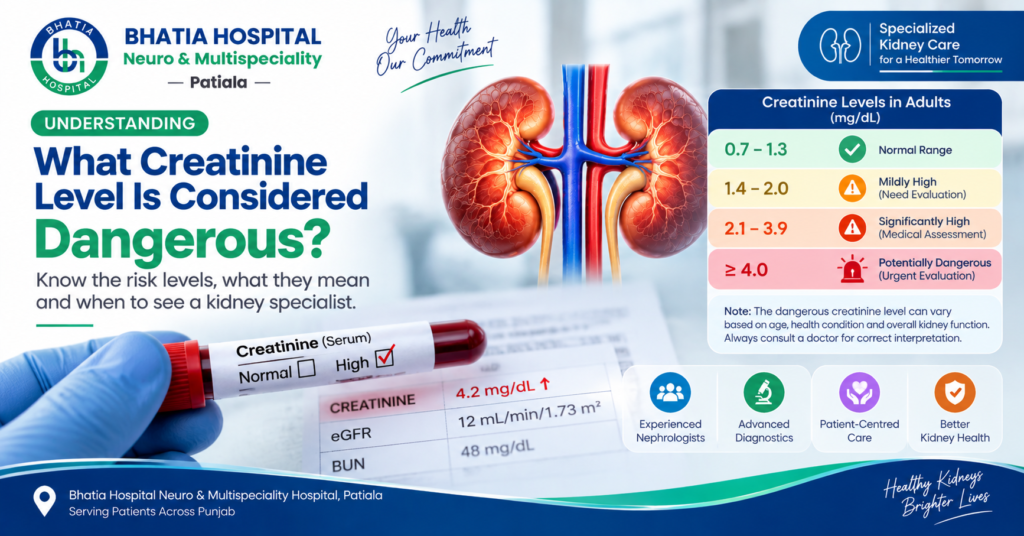
A dangerous creatinine level cannot be defined by one number alone. Creatinine results need to be interpreted alongside eGFR, previous creatinine values, urine output, symptoms, age, muscle mass, hydration and the speed at which creatinine has increased. A sudden rise can indicate acute kidney injury (AKI), while a persistently high level may suggest chronic kidney disease or another underlying problem.
If your creatinine is unexpectedly high, especially with reduced urination, swelling, breathlessness, vomiting, confusion or severe weakness, medical evaluation should not be delayed.
What Creatinine Level Is Considered Dangerous?
There is no single creatinine number that is dangerous for everyone.
However, in adults with acute kidney injury, a serum creatinine of 4.0 mg/dL or higher can meet one of the criteria for Stage 3 AKI, depending on the clinical context and baseline creatinine. A rise of 0.3 mg/dL or more within 48 hours, or a rise to at least 1.5 times baseline within 7 days, can also indicate AKI.
Importantly, 4.0 mg/dL should not be treated as a universal “danger zone.” Someone with long-standing kidney disease may have a stable creatinine around this level, while another person’s rapid increase from 1.0 to 2.0 mg/dL could represent an urgent kidney problem.
What Does a High Creatinine Level Mean?
Creatinine is a waste product produced from normal muscle metabolism. Healthy kidneys filter creatinine from the blood and remove it through urine.
When kidney filtration decreases, creatinine can accumulate in the bloodstream. However, creatinine is also influenced by muscle mass, diet, physical activity and other factors, so a high result does not automatically mean kidney failure.
This is why doctors generally look at creatinine together with other measurements, particularly eGFR.
Creatinine Levels: When Should You Be Concerned?
Instead of asking only, “Is my creatinine dangerous?”, doctors usually consider several questions.
1. How high is the creatinine?
A very high result deserves medical attention, but the number must be interpreted according to the person’s baseline and overall health.
2. Did it rise suddenly?
A rapid increase can be more concerning than a stable elevated result.
For example:
Creatinine 1.0 → 1.5 mg/dL in a short period
may be clinically important even though 1.5 mg/dL may not appear extremely high.
KDIGO criteria recognize an increase of 0.3 mg/dL within 48 hours or a substantial increase from baseline as part of the diagnosis of AKI.
3. What is the eGFR?
eGFR estimates how effectively the kidneys are filtering blood. It is generally more informative for assessing kidney function than creatinine alone.
4. Are there symptoms?
Symptoms such as significantly reduced urine, swelling, breathlessness, persistent vomiting or confusion may indicate a more serious problem.
5. Is there a reversible cause?
Dehydration, urinary obstruction, certain medicines, intense exercise and muscle injury can all affect creatinine levels.
What Creatinine Level Indicates Severe Acute Kidney Injury?
For acute kidney injury, the degree of increase from baseline is extremely important.
A commonly used KDIGO staging framework considers Stage 3 AKI when there is, among other criteria:
- Serum creatinine reaching 4.0 mg/dL or higher
- Creatinine increasing to 3 times the baseline
- Initiation of kidney replacement therapy
- Certain severe reductions in urine output
Therefore, a creatinine of 4 mg/dL can represent severe acute kidney injury when it meets the relevant clinical criteria.
It does not mean that every person with creatinine of 4 mg/dL has permanent kidney failure. The cause, duration, previous kidney function and response to treatment all matter.
Is Creatinine 2.0 mg/dL Dangerous?
A creatinine level of 2.0 mg/dL can be concerning, but it cannot be classified as dangerous based on the number alone.
For one person, it may represent a significant sudden rise from a previous value of 1.0 mg/dL. For someone with established chronic kidney disease, it may be their stable baseline.
Doctors may repeat the creatinine test and evaluate:
- eGFR
- Urine routine examination
- Urine albumin-to-creatinine ratio
- Electrolytes
- Blood urea nitrogen (BUN)
- Blood pressure
- Medication history
- Hydration status
- Kidney ultrasound when indicated
A single abnormal creatinine result generally cannot establish the exact cause by itself.
Is Creatinine 3.0 mg/dL Dangerous?
Creatinine of 3.0 mg/dL is significantly elevated for many adults and warrants medical evaluation, particularly if it is new or rising.
But again, there is no universal interpretation.
A doctor needs to know:
Was the previous creatinine 1.0, 2.8 or 3.1 mg/dL?
That difference can completely change the clinical interpretation.
A sudden increase may indicate AKI caused by dehydration, infection, reduced blood flow to the kidneys, medication effects or urinary obstruction.
Is Creatinine 4.0 mg/dL Dangerous?
A creatinine of 4.0 mg/dL is a serious result that requires prompt medical assessment, particularly when it represents a sudden increase.
In the KDIGO AKI framework, reaching 4.0 mg/dL is one criterion used for Stage 3 AKI when the clinical circumstances meet the definition.
However, creatinine alone does not determine whether a person needs dialysis or other emergency treatment.
Doctors also consider:
- Urine output
- Potassium level
- Acid-base balance
- Fluid accumulation
- Blood pressure
- Breathing difficulty
- Uremic symptoms
- Overall kidney function
- Underlying cause
What Is a Dangerous Creatinine Level in Chronic Kidney Disease?
With chronic kidney disease (CKD), doctors usually focus more on eGFR, urine albumin and changes over time rather than using one creatinine value to define danger.
For example, an eGFR below 60 for 3 months or longer, or an eGFR above 60 accompanied by evidence of kidney damage such as albumin in the urine, can meet criteria for CKD.
This is why two people with the same creatinine can have very different kidney-function assessments.
Why eGFR Is Important When Creatinine Is High
Creatinine is used to calculate estimated glomerular filtration rate (eGFR).
The calculation takes factors such as creatinine and age and, depending on the equation, sex into account. eGFR provides a better overall estimate of kidney filtration than creatinine alone.
A simplified view of eGFR:
| eGFR | General interpretation |
|---|---|
| 90 or above | Generally normal/high, but kidney damage can still exist |
| 60–89 | Mildly reduced; context matters |
| 30–59 | Moderately reduced |
| 15–29 | Severely reduced |
| Below 15 | Kidney failure range |
These categories should not be interpreted without medical context. CKD requires persistence or other evidence of kidney damage, and eGFR can be affected by several factors.
What Can Cause Creatinine to Become Dangerous?
A high creatinine level can have many causes.
1. Acute kidney injury
A sudden reduction in kidney function can cause creatinine to rise rapidly.
Possible triggers include:
- Severe dehydration
- Infection or sepsis
- Low blood pressure
- Reduced blood flow to the kidneys
- Certain medicines
- Urinary tract obstruction
- Severe illness
2. Chronic kidney disease
Long-term conditions can gradually reduce kidney filtration.
Common causes include:
- Diabetes
- High blood pressure
- Chronic kidney inflammation
- Certain inherited kidney conditions
- Recurrent kidney problems
3. Urinary obstruction
A blockage affecting urine flow can cause kidney function to deteriorate.
Possible causes include kidney stones, prostate enlargement or other urinary tract problems.
4. Dehydration
Significant fluid loss from vomiting, diarrhea, fever, excessive sweating or inadequate fluid intake can temporarily increase creatinine.
5. Muscle injury
Severe muscle injury or breakdown can increase creatinine and may also cause serious kidney complications.
6. Medicines and other factors
Some medicines can affect kidney function or alter creatinine levels. Your doctor may need to review your medications when creatinine rises unexpectedly.
Symptoms That May Occur With Dangerous Kidney Dysfunction
High creatinine itself may not cause symptoms. Symptoms are often related to the underlying kidney problem or reduced kidney function.
Possible warning signs include:
- Much less urine than usual
- Swelling of the feet, ankles or face
- Breathlessness
- Persistent nausea or vomiting
- Severe weakness or fatigue
- Confusion or difficulty thinking clearly
- Blood in the urine
- Foamy urine
- Significant changes in urination
- Severe flank or back pain
- High blood pressure
Kidney problems can sometimes progress without obvious symptoms, particularly in the early stages.
When Should You Seek Urgent Medical Care?
Do not wait for a routine appointment if a high creatinine result occurs together with concerning symptoms.
Seek urgent medical attention if you have:
- Very little or no urine
- Severe breathlessness
- New confusion or unusual drowsiness
- Severe or persistent vomiting
- Significant swelling with breathing difficulty
- Severe weakness
- Blood in the urine with other concerning symptoms
- A rapidly rising creatinine level
- A known kidney problem with sudden worsening
These symptoms can occur with serious acute kidney problems and require prompt assessment.
What Tests Are Done When Creatinine Is Very High?
Your doctor may recommend several tests rather than relying on creatinine alone.
Blood tests:
These may include:
- Serum creatinine
- eGFR
- Blood urea nitrogen
- Sodium
- Potassium
- Bicarbonate
- Other electrolytes
Urine tests:
These can look for:
- Protein
- Albumin
- Blood
- Infection
- Other signs of kidney damage
Imaging:
A kidney and urinary tract ultrasound may be recommended when obstruction or structural problems are suspected.
Repeat creatinine testing:
A repeat test can help determine whether creatinine is:
- Improving
- Stable
- Slowly increasing
- Rising rapidly
The trend can be extremely important.
Can High Creatinine Come Down?
Yes, in some situations.
If the cause is reversible, creatinine may improve after the underlying problem is treated.
For example, treatment of dehydration, urinary obstruction or another reversible cause may allow kidney function to recover.
However, recovery depends on the cause and severity of kidney injury. Some patients may have persistent kidney damage despite treatment.
That is why identifying the cause early is important.
Does a High Creatinine Level Always Mean Kidney Failure?
No. A high creatinine result does not automatically mean kidney failure. Creatinine can increase because of dehydration, intense exercise, muscle injury, dietary factors and certain other conditions. It can also increase because of kidney disease or acute kidney injury. Doctors therefore consider the complete clinical picture, rather than diagnosing kidney failure from one creatinine number.Creatinine vs eGFR: Which Is More Important?
Both are useful, but they answer slightly different questions.
Creatinine:
Shows the amount of creatinine in the blood.
eGFR:
Uses creatinine and other patient information to estimate kidney filtration.
Urine albumin:
Can provide evidence of kidney damage that may not be obvious from creatinine alone.
Using these measurements together gives a more complete picture of kidney health.
How Can You Protect Your Kidney Health?
You can reduce your risk of kidney problems by:
- Keeping blood pressure under control
- Managing diabetes effectively
- Staying appropriately hydrated
- Avoiding unnecessary medicines or supplements
- Discussing potentially kidney-affecting medicines with your doctor
- Maintaining a healthy weight
- Following recommended kidney tests if you are at increased risk
- Getting unexplained changes in creatinine evaluated promptly
People with diabetes, high blood pressure or a family history of kidney disease may need regular kidney-function monitoring.
How Can You Protect Your Kidney Health?
You can reduce your risk of kidney problems by:
- Keeping blood pressure under control
- Managing diabetes effectively
- Staying appropriately hydrated
- Avoiding unnecessary medicines or supplements
- Discussing potentially kidney-affecting medicines with your doctor
- Maintaining a healthy weight
- Following recommended kidney tests if you are at increased risk
- Getting unexplained changes in creatinine evaluated promptly
People with diabetes, high blood pressure or a family history of kidney disease may need regular kidney-function monitoring.
What Creatinine Level Is Considered Dangerous?
Is creatinine 2.0 dangerous?
A creatinine of 2.0 mg/dL is elevated for many adults and should be medically evaluated, but it is not automatically an emergency. Previous results, eGFR, symptoms and the cause of the elevation are important.Is creatinine 3.0 dangerous?
Creatinine of 3.0 mg/dL is significantly elevated and needs medical assessment, particularly if it has risen quickly or is associated with reduced urine, swelling, vomiting or breathlessness.
Is creatinine 4.0 dangerous?
A creatinine of 4.0 mg/dL can indicate severe acute kidney injury when it meets the relevant clinical criteria. It requires prompt medical evaluation, but the number alone does not determine whether dialysis is needed.What creatinine level indicates kidney failure?
There is no single creatinine value that universally defines kidney failure. Doctors use eGFR, symptoms, urine output, laboratory findings and the overall clinical situation to determine kidney function and treatment needs.
Can dehydration cause high creatinine?
Yes. Significant dehydration can temporarily increase blood creatinine. However, a high result should not automatically be attributed to dehydration without appropriate assessment.
Frequently Asked Questions:
What is the most dangerous creatinine level?
There is no universal dangerous creatinine level. In acute kidney injury, reaching 4.0 mg/dL can meet a Stage 3 AKI criterion, but the clinical context and change from baseline are essential.
Is creatinine 1.5 mg/dL dangerous?
It can be abnormal depending on the person’s age, sex, muscle mass and laboratory range. A sudden increase may be more concerning than a stable result.
Is creatinine 2.5 mg/dL dangerous?
A creatinine of 2.5 mg/dL is significantly elevated for many people and should be evaluated, particularly if it is new or accompanied by symptoms.
Is creatinine 4 mg/dL a medical emergency?
It can represent severe kidney dysfunction, particularly when it has risen rapidly. Urgent medical assessment is appropriate, especially if symptoms or reduced urine output are present.
Can high creatinine return to normal?
Sometimes. If the cause is reversible, kidney function may improve. Recovery depends on the underlying cause and extent of kidney injury.
What is more important, creatinine or eGFR?
Both are useful, but eGFR generally provides a better estimate of kidney filtration than creatinine alone.
Does high creatinine always mean kidney disease?
No. Dehydration, intense exercise, muscle injury, dietary factors and certain medicines can also affect creatinine.
Can a person have kidney disease with normal creatinine?
Yes. Kidney disease can exist even when creatinine is within the laboratory reference range, which is why doctors may also use eGFR and urine albumin testing.
When should I see a nephrologist for high creatinine?
Consider a kidney specialist when creatinine is persistently elevated, rising unexpectedly, accompanied by reduced eGFR, significant protein or blood in urine, difficult-to-control blood pressure, or other signs of kidney dysfunction.
Should I worry about one abnormal creatinine test?
Do not panic, but do not ignore it. A single high result cannot identify the exact cause. Your doctor may repeat the test and order additional blood, urine or imaging tests.
When to See a Kidney Specialist:
A nephrologist can help evaluate unexplained or persistent increases in creatinine and determine whether the problem is acute, chronic or potentially reversible.
Consider specialist evaluation if you have:
- Repeatedly high creatinine
- A rapidly increasing creatinine level
- Reduced eGFR
- Protein or albumin in urine
- Blood in urine
- Persistent swelling
- Difficult-to-control blood pressure
- Recurrent kidney problems
- A history of acute kidney injury
- Diabetes or other conditions that increase kidney disease risk
Why Choose Bhatia Hospital for Kidney Care in Patiala?
Bhatia Hospital Neuro & Multispeciality Hospital, Patiala provides comprehensive medical care for patients who need evaluation of abnormal kidney-function tests and related health concerns.
The focus is on understanding the cause behind an abnormal creatinine result, assessing kidney function appropriately and developing a treatment plan based on the patient’s individual condition.
If your creatinine level has increased unexpectedly or you are concerned about your kidney function, seek professional medical evaluation rather than judging the result from the creatinine number alone.
Book an appointment with the specialists at Bhatia Hospital, Patiala for expert diagnosis and personalized treatment.
Conclusion:
A dangerous creatinine level cannot be determined by one number alone. The most important factors include your previous creatinine, how quickly it has changed, eGFR, urine output, symptoms and the underlying cause.
A creatinine level of 4.0 mg/dL or higher can be part of the criteria for Stage 3 acute kidney injury, but even lower levels can be clinically important when they represent a rapid rise.
If you have a high creatinine result, do not panic—but do not ignore it either. Proper evaluation can help identify reversible causes and determine whether there is an underlying kidney problem.