
Creatinine Is High: Does It Always Mean Kidney Disease?
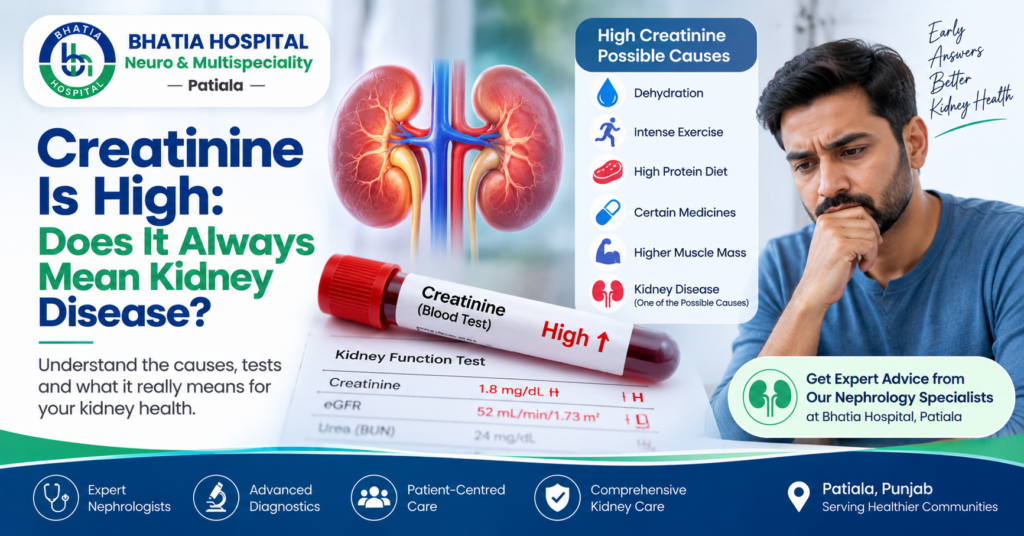
Seeing high creatinine levels on a blood test can be worrying. Many people immediately assume that they have kidney disease.
But a high creatinine result does not always mean kidney disease.
Creatinine is a waste product linked to normal muscle activity. Your kidneys normally remove it from your blood. When kidney filtration falls, creatinine can rise. However, dehydration, intense exercise, high meat intake, muscle mass, supplements, and certain medicines can also affect the result.
So, what does high creatinine mean?
The answer depends on your eGFR, urine tests, symptoms, medical history, previous results, and overall health. This article explains what an elevated creatinine result may mean and when you should see a kidney specialist.
What Is Creatinine?
Creatinine is a waste product produced naturally by muscles.
Your muscles use creatine for energy. Creatinine forms during this normal process and enters the bloodstream.
Healthy kidneys filter creatinine from the blood. The body then removes it through urine.
Therefore, doctors use a creatinine blood test as one way to assess kidney function. However, creatinine alone does not provide the complete picture.
Does High Creatinine Always Mean Kidney Disease?
No. High creatinine does not always mean kidney disease.
Kidney problems are one important cause of elevated creatinine. However, temporary factors can also increase creatinine.
These include:
- Dehydration
- Intense exercise
- High meat intake before testing
- High muscle mass
- Creatine supplements
- Certain medicines
- Muscle injury or breakdown
Doctors therefore interpret creatinine alongside other tests. These include eGFR, urine albumin, blood pressure, medical history, and previous results.
High Creatinine Levels: What Could Be Causing Them?
There are several possible causes of high creatinine causes.
Kidney Disease or Kidney Injury:
Reduced kidney filtration can cause creatinine to build up in the blood.
Possible kidney-related causes include:
- Chronic kidney disease
- Acute kidney injury
- Kidney infection
- Reduced blood flow to the kidneys
- Urinary obstruction
- Some medication-related kidney injuries
Diabetes and high blood pressure are major causes of chronic kidney disease.
Dehydration:
Can dehydration cause high creatinine? Yes.
When the body loses too much fluid, blood flow to the kidneys can decrease. This can temporarily raise creatinine.
Dehydration may occur after:
- Vomiting
- Diarrhea
- Heavy sweating
- Fever
- Not drinking enough fluids
The cause still needs medical assessment, especially if creatinine rises significantly.
Intense Exercise:
Hard exercise can temporarily affect creatinine levels.
This is especially relevant after strenuous workouts involving large muscle groups.
Recent high-intensity exercise can affect creatinine and may make kidney function estimates less accurate in some situations.
Diet and High Protein Intake:
Eating a large amount of cooked meat shortly before testing can temporarily increase creatinine.
Creatine supplements may also increase measured creatinine.
Therefore, tell your doctor about supplements and recent dietary changes before interpreting your result.
Muscle Mass and Muscle Injury:
Creatinine production is partly related to muscle mass.
People with greater muscle mass may naturally have higher creatinine levels.
Severe muscle injury can also cause creatinine to rise.
This is one reason why creatinine should not be interpreted without considering the patient’s body composition and clinical history.
Certain Medicines:
Some medicines can affect creatinine measurements or kidney function.
Examples include certain antibiotics and other medicines used for different health conditions.
Never stop a prescribed medicine because of a high creatinine result without speaking with your doctor first.
What Does High Creatinine Mean for Kidney Function?
A high creatinine result may indicate reduced kidney filtration, but doctors need more information.
One important calculation is the estimated glomerular filtration rate (eGFR).
eGFR estimates how effectively the kidneys filter waste from the blood.
Doctors may also check urine albumin because albumin in urine can indicate kidney damage.
Together, these tests provide more information than creatinine alone.
High Creatinine but Normal Kidney Function: Is It Possible?
Yes, it is possible to have high creatinine but no significant kidney disease. For example, creatinine can be affected by muscle mass, intense exercise, diet, creatine supplements, dehydration, and certain medicines. However, this should not be assumed without evaluation. Your doctor may repeat the test and compare it with your previous results. They may also check eGFR, urine albumin, electrolytes, blood pressure, and other tests.What Symptoms Can High Creatinine Cause?
High creatinine itself may not cause symptoms.
Instead, symptoms may occur because of the underlying condition affecting kidney function.
Possible symptoms of significant kidney problems include:
- Swelling around the eyes or ankles
- Changes in urination
- Foamy or bloody urine
- Fatigue
- Nausea or vomiting
- Loss of appetite
- Muscle cramps
- Itching
- Shortness of breath
- Difficulty concentrating
Early chronic kidney disease may cause few or no symptoms. This makes appropriate testing important for people at risk.
Who Is at Higher Risk of Kidney Disease?
Some people have a greater risk of developing kidney disease.
Important risk factors include:
- Diabetes
- High blood pressure
- Heart disease
- Family history of kidney disease
- Obesity
- Smoking
- Older age
- Previous kidney problems
- Certain long-term medicines
Diabetes and high blood pressure are the two leading causes of chronic kidney disease in adults.
How Is a High Creatinine Level Diagnosed?
A doctor does not diagnose kidney disease from one creatinine number alone.
The evaluation may include several steps.
Step 1 — Review the Creatinine Result:
Your doctor checks the creatinine value and the laboratory’s reference range. Normal ranges can vary between laboratories and individuals.Step 2 — Check eGFR:
eGFR provides an estimate of kidney filtration.
Doctors use it to help assess kidney function and identify possible chronic kidney disease.
Step 3 — Check Urine:
A urine test may look for:
- Albumin
- Blood
- Protein
- Signs of infection
The urine albumin-to-creatinine ratio, or UACR, can help detect kidney damage.
Step 4 — Review Other Factors:
Your doctor may ask about:
- Fluid intake
- Recent exercise
- Diet
- Supplements
- Medicines
- Diabetes
- Blood pressure
- Previous creatinine results
Step 5 — Additional Tests:
Depending on the situation, your doctor may recommend:
- Blood tests
- Ultrasound
- CT or other imaging
- Electrolyte testing
- Additional urine tests
- Specialist evaluation
How Is High Creatinine Treated?
There is no single treatment for high creatinine. Treatment targets the underlying cause.If dehydration is responsible
Your doctor may recommend appropriate fluid replacement.
If a medicine affects kidney function
Your doctor may adjust the medicine when appropriate. Do not change prescribed medicines yourself.If an infection is present
The underlying infection requires appropriate medical treatment.
If there is urinary obstruction
The obstruction may require urgent evaluation and treatment.If chronic kidney disease is present
Treatment may focus on controlling the underlying cause and protecting remaining kidney function.
This may include management of:
- Blood pressure
- Diabetes
- Cholesterol
- Medication risks
- Diet
- Other medical conditions
How Can You Protect Your Kidney Health?
You cannot prevent every kidney condition. However, several habits support long-term kidney health.
Practical Kidney Care Tips
- Keep blood pressure under control.
- Manage diabetes carefully.
- Drink adequate fluids.
- Avoid unnecessary medicines.
- Do not overuse painkillers.
- Maintain a healthy weight.
- Exercise regularly.
- Avoid smoking.
- Follow your doctor’s dietary advice.
- Get kidney tests when medically recommended.
People with diabetes, hypertension, or other risk factors may need regular kidney monitoring.
When Should You See a Kidney Specialist?
Consider seeing a nephrologist if you have:
- Persistently elevated creatinine
- A declining eGFR
- Protein or albumin in urine
- Blood in urine
- Repeated abnormal kidney tests
- Swelling
- Significant changes in urination
- Unexplained electrolyte abnormalities
- A history of acute kidney injury
Urgent medical care may be needed for severe symptoms such as very low urine output, severe breathing difficulty, confusion, chest symptoms, or rapidly worsening illness.
Why Choose Bhatia Hospital for Kidney Care?
Bhatia Hospital Neuro & Multispeciality Hospital, Patiala provides comprehensive healthcare for patients from Patiala, Punjab, and nearby districts.
Kidney problems can involve several aspects of health. A multispeciality setting can help coordinate evaluation when patients have diabetes, hypertension, heart conditions, or other medical concerns.
Patients seeking kidney care in Patiala can discuss abnormal creatinine results with experienced doctors.
The focus includes:
- Detailed clinical evaluation
- Appropriate kidney function testing
- Modern diagnostic technology
- Experienced doctors
- Patient-centered care
- Individualized treatment planning
- Follow-up monitoring
Patients from across Punjab can seek medical guidance when they have concerns about creatinine or kidney function.
Quick Answers About High Creatinine Levels:
1. What is a high creatinine level?
A high creatinine level means the amount of creatinine in your blood is above the reference range used by the laboratory. It can occur when kidney filtration decreases, but other factors can also raise creatinine. Doctors usually interpret the result with eGFR, urine tests, medical history, and previous results.
2. Why can creatinine levels rise?
Creatinine can rise because of kidney disease or acute kidney injury. It may also increase with dehydration, intense exercise, high meat intake, high muscle mass, creatine supplements, muscle injury, or certain medicines. Therefore, one elevated result does not automatically establish a specific kidney disease.3. How is kidney function checked when creatinine is high?
Doctors usually look beyond creatinine. They may assess eGFR, urine albumin-to-creatinine ratio, urinalysis, blood pressure, electrolytes, and previous results. Imaging may also be needed. These tests help distinguish temporary changes from possible kidney disease or kidney injury.4.Who should see a nephrologist for high creatinine?
A nephrologist may be appropriate when creatinine remains elevated, eGFR is reduced, urine contains significant protein or blood, or kidney function is changing unexpectedly. People with complex kidney problems may also benefit from specialist care. The need for referral depends on the complete clinical picture.
5. When should high creatinine be checked again?
The timing depends on why creatinine is high and how abnormal the result is. A doctor may repeat testing after addressing a temporary factor or sooner when acute kidney injury is suspected. Persistent abnormalities require further evaluation rather than simply waiting for symptoms.6. Can dehydration cause high creatinine?
Yes. Dehydration can reduce fluid volume and affect blood flow to the kidneys, which may raise creatinine. However, dehydration should not automatically be assumed to be the cause. Significant or persistent elevation requires medical assessment to rule out kidney disease and other causes.7. Is high creatinine always a sign of kidney disease?
No. High creatinine can occur without chronic kidney disease. Exercise, diet, muscle mass, dehydration, supplements, and medicines can affect the result. However, kidney disease remains an important possible cause. Your doctor should interpret creatinine together with eGFR and other clinical information.Frequently Asked Questions:
What does high creatinine mean?
High creatinine means the blood contains more creatinine than the laboratory’s expected range. It may suggest reduced kidney filtration, but it can also result from dehydration, exercise, diet, muscle mass, supplements, or medicines. One result cannot identify the exact cause. Doctors usually assess eGFR and other kidney tests alongside creatinine.
Does high creatinine mean kidney disease?
Not necessarily. Kidney disease is an important cause of elevated creatinine, but it is not the only one. Temporary changes can occur with dehydration, intense exercise, high meat intake, or certain medicines. Persistent elevation deserves medical evaluation, especially when eGFR is reduced or urine tests are abnormal.
Can creatinine be high while eGFR is normal?
It can happen, particularly when factors unrelated to kidney filtration affect creatinine. Muscle mass, diet, supplements, and some medicines can influence the measurement. However, the result should still be reviewed by a doctor. eGFR is an estimate and can also be less accurate in certain situations.
What is the normal creatinine level?
There is no single normal value that applies to everyone. Laboratory ranges vary, and creatinine is influenced by factors such as age, sex, and muscle mass. Some commonly used adult ranges are around 0.7–1.3 mg/dL for men and 0.5–0.95 mg/dL for women, but your laboratory’s range should be used.
Can exercise increase creatinine?
Yes. Intense exercise can temporarily increase creatinine because creatinine production is related to muscle activity. Recent strenuous exercise can also affect interpretation of kidney function estimates. Tell your doctor about heavy exercise before interpreting an unexpected result.
Can high protein intake increase creatinine?
A large amount of cooked meat can temporarily increase blood creatinine. Creatine supplements can also affect creatinine measurements. This does not automatically mean kidney damage. However, people with known kidney disease should discuss protein intake and supplements with their healthcare team.
What tests are needed when creatinine is high?
Doctors may check eGFR, urine albumin-to-creatinine ratio, urinalysis, electrolytes, blood pressure, and repeat creatinine. Imaging may be needed when obstruction or another structural problem is suspected. The exact tests depend on your symptoms, history, and the degree and duration of the abnormal result.
When should I see a nephrologist?
A nephrologist can help when kidney tests remain abnormal or kidney function appears to be declining. Referral may be especially useful with reduced eGFR, significant urine protein, blood in urine, repeated abnormal results, acute kidney injury, or complex medical conditions affecting the kidneys.
Can high creatinine return to normal?
Sometimes. If the elevation results from a temporary problem such as dehydration or another reversible cause, creatinine may improve after the underlying problem is treated. Chronic kidney disease is different because long-term kidney damage may not fully reverse. Follow-up testing helps determine the trend.
Is high creatinine an emergency?
Not every high creatinine result is an emergency. However, a sudden increase can indicate acute kidney injury, which needs prompt assessment. Seek urgent care for severe weakness, very low urine output, breathing difficulty, confusion, chest symptoms, or rapidly worsening illness.
Conclusion:
High creatinine levels do not always mean kidney disease. Creatinine is an important kidney marker, but many factors can affect the result.
Dehydration, intense exercise, diet, muscle mass, supplements, and medicines may cause temporary or misleading elevations. At the same time, persistent high creatinine can indicate kidney disease or acute kidney injury and should not be ignored.
The best interpretation comes from looking at creatinine, eGFR, urine tests, symptoms, medical history, and previous results together.
If your kidney test is abnormal, avoid self-diagnosis. A qualified doctor can identify the cause and recommend appropriate follow-up.
Book an appointment with the specialists at Bhatia Hospital, Patiala for expert diagnosis and personalized treatment.