
How Soon Can You Walk, Eat and Work After Laparoscopic Surgery?
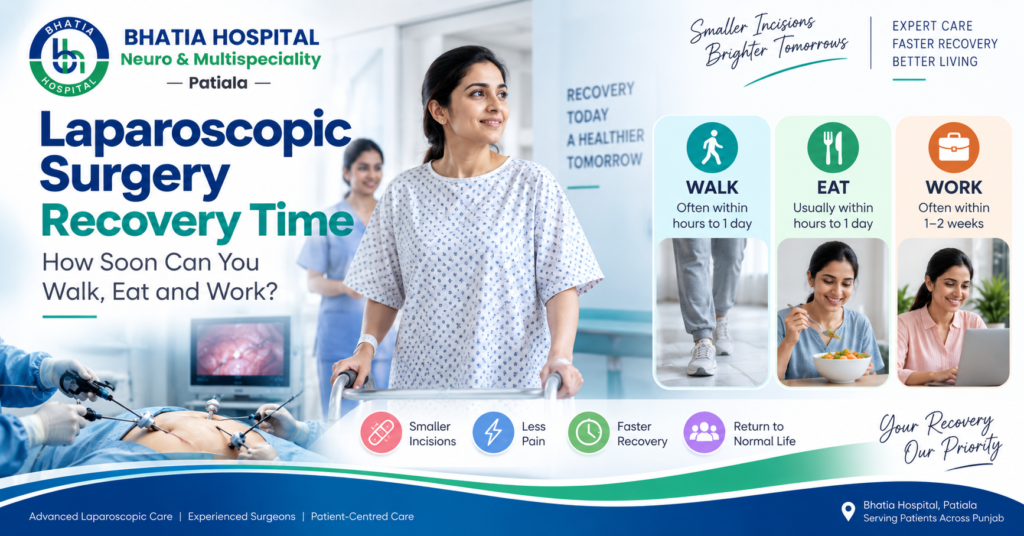
Laparoscopic Surgery Recovery Time varies from person to person. It also depends on the procedure you had.
Many patients can start walking soon after surgery. Some can begin drinking fluids within hours. Light work may be possible within days or a few weeks.
However, complete healing takes longer.
A simple diagnostic laparoscopy may have a shorter recovery than complex bowel, hernia, or cancer surgery. Your age, health, surgical findings, and complications can also affect recovery.
This guide explains what you can usually expect after laparoscopic surgery. It also covers walking, eating, driving, working, exercising, pain, and home care.
Important: Your surgeon’s instructions always take priority over general recovery timelines.
What Is Laparoscopic Surgery?
Laparoscopic surgery is a minimally invasive surgical technique. It uses small abdominal incisions instead of one large opening.
A surgeon inserts a thin camera called a laparoscope through one incision. Small instruments enter through other incisions.
The surgeon then performs the required procedure while viewing the abdomen on a monitor.
Laparoscopy is used for procedures such as:
- Gallbladder removal
- Appendix removal
- Hernia repair
- Some colorectal operations
- Gynecological procedures
- Diagnostic abdominal surgery
Because the incisions are smaller, recovery can be faster than after many open procedures. However, recovery still depends on the operation performed.
Laparoscopic Surgery Recovery Time: What Should You Expect?
There is no single recovery time for every laparoscopic operation.
For some diagnostic procedures, recovery may take around 10 days. After more extensive laparoscopic surgery, complete recovery can take several weeks. The NHS notes that recovery after laparoscopic surgery can sometimes take 6–8 weeks, depending on the operation.
| Recovery Stage | What You May Be Able to Do |
|---|---|
| First few hours | Rest, drink fluids when allowed, and begin movement |
| First day | Sit up and walk with assistance |
| Days 2–3 | Walk more and eat as tolerated |
| First week | Perform light daily activities |
| 1–2 weeks | Many patients can resume light work |
| 2–6 weeks | Gradually increase activity |
| 6–8 weeks | Some complex procedures may reach full recovery |
When Can I Walk After Laparoscopic Surgery?
Walking usually begins early after laparoscopic surgery.
Your healthcare team may encourage you to sit up and walk once you are awake and medically stable.
Early movement can help reduce stiffness and support recovery.
Start Slowly
You may begin with:
- Sitting on the edge of the bed
- Standing with support
- Walking a short distance
- Walking around your room
- Gradually increasing your distance
SAGES patient guidance encourages walking after several laparoscopic procedures, with activity increased according to how the body feels.
Do not push through significant pain or dizziness.
When Can I Eat After Laparoscopic Surgery?
The answer depends on the operation and your recovery.
After many uncomplicated laparoscopic procedures, patients can gradually restart fluids and food once they are awake and able to tolerate them.
Some patients may initially experience:
- Nausea
- Bloating
- Reduced appetite
- Mild abdominal discomfort
SAGES notes that laparoscopic surgery can allow diet advancement relatively early in many procedures. However, specific operations may require different dietary plans.
Foods During Early Recovery
Choose foods recommended by your healthcare team.
Depending on the procedure, you may start with:
- Water and clear fluids
- Light meals
- Soft foods
- Protein-rich foods
- Fruits and vegetables
- Easily digested foods
Avoid suddenly eating heavy or very fatty meals if they worsen nausea or discomfort.
When Can I Return to Work After Laparoscopic Surgery?
When you can return to work after laparoscopic surgery depends on your procedure and job.
Someone with a desk job may return earlier than someone who lifts heavy objects.
For uncomplicated procedures, some patients resume light work within one to two weeks. More complex operations may require longer recovery.
The NHS notes that return to work can take up to three weeks after some laparoscopic procedures.
Return-to-Work Guide
| Type of Work | General Consideration |
|---|---|
| Desk work | Often possible within 1–2 weeks |
| Light physical work | May require several weeks |
| Heavy lifting | Usually requires longer restriction |
| Manual labour | Return only after surgical clearance |
| Long driving jobs | Require adequate mobility and comfort |
When Can I Drive After Laparoscopic Surgery?
Do not drive immediately after surgery while anesthesia is still affecting you.
You should also avoid driving if:
- You are taking sedating or opioid pain medicines.
- You cannot comfortably sit.
- You cannot turn or move quickly.
- Pain limits your movements.
- You cannot perform an emergency stop safely.
Some SAGES guidance allows driving about 24 hours after anesthesia for selected procedures, provided the patient is not taking narcotic pain medicine and feels comfortable.
Always follow your surgeon’s advice and local driving requirements.
When Can I Exercise After Laparoscopic Surgery?
Light walking is usually encouraged early.
However, strenuous exercise and heavy lifting should wait until your surgeon gives clearance.
Activities to Avoid After Laparoscopic Surgery
Depending on your procedure, you may need to temporarily avoid:
- Heavy lifting
- Weight training
- Running
- High-impact exercise
- Vigorous abdominal exercises
- Strenuous household work
- Activities that cause pain
Restrictions vary greatly by procedure.
For example, SAGES guidance for laparoscopic GERD surgery advises light activity but restricts heavy lifting and strenuous activity during early recovery.
How Long Does Pain Last After Laparoscopic Surgery?
Mild pain and soreness are common during early recovery.
You may feel discomfort around the incision sites. You may also experience shoulder pain caused by the gas used during laparoscopy.
This shoulder discomfort usually improves within a few days. Pain should generally improve rather than become progressively worse.
Contact Your Doctor If:
- Pain suddenly becomes severe.
- Pain keeps getting worse.
- Pain medicine does not help.
- You develop fever.
- Your abdomen becomes increasingly swollen.
- Your wound becomes red or starts draining.
Laparoscopic Surgery Recovery at Home
Good laparoscopic surgery aftercare can support a smoother recovery.
1. Keep Moving
Take short walks several times a day if your surgeon allows it.
2. Protect Your Incisions
Keep your wounds clean and follow the dressing instructions provided by your medical team.
3. Eat According to Your Instructions
Gradually return to your normal diet as tolerated.
4. Take Medicines Correctly
Use prescribed medicines exactly as directed.
5. Rest When Needed
Feeling tired after surgery is normal. Balance activity with adequate rest.
6. Attend Follow-Up Visits
Your surgeon can check your wounds and recovery progress.
What Happens During the First Week?
The first week usually focuses on gradual recovery.
Days 1–2
You may experience:
Tiredness
Mild abdominal soreness
Bloating
Shoulder discomfort
Reduced appetite
Short walks are usually encouraged when medically appropriate.
Days 3–4
Many patients begin feeling more comfortable.
You may gradually increase walking and daily activities.
Days 5–7
You may be able to perform more routine tasks.
However, avoid heavy lifting unless your surgeon has cleared it.
Recovery after major laparoscopic surgery may take longer.
Your surgeon can check your wounds and recovery progress.
Laparoscopic vs Open Surgery Recovery Time
Laparoscopic surgery often allows faster recovery than traditional open surgery because it uses smaller incisions.
Patients may experience less wound discomfort and smaller scars. However, the difference depends on the operation.
A complex laparoscopic procedure can still require several weeks of recovery.
Therefore, do not compare your recovery directly with another patient’s experience.
Factors That Can Affect Laparoscopic Surgery Recovery
Your recovery may take longer because of:
- Complex surgery
- Longer operating time
- Older age
- Diabetes
- Obesity
- Smoking
- Poor nutrition
- Previous abdominal surgery
- Infection
- Other medical conditions
- Conversion to open surgery
Your surgeon can provide a more accurate recovery estimate based on your specific procedure.
When Should You Contact Your Doctor?
Contact your surgeon if you develop:
- High fever
- Increasing abdominal pain
- Persistent vomiting
- Increasing abdominal swelling
- Heavy bleeding
- Redness or pus around an incision
- Difficulty breathing
- Persistent cough
- Difficulty urinating
- Pain that medication does not control
These symptoms require medical assessment. SAGES specifically advises patients to contact their doctor for symptoms such as fever, wound problems, persistent vomiting, increasing swelling, breathing problems, or uncontrolled pain.
Why Choose Bhatia Hospital for Laparoscopic Surgery?
Bhatia Hospital Neuro & Multispeciality Hospital, Patiala provides surgical care for patients from Patiala, Punjab, and nearby districts.
Laparoscopic surgery requires careful planning before surgery and appropriate monitoring afterward.
The hospital’s multispeciality environment supports:
- Experienced doctors
- Modern diagnostic facilities
- Advanced surgical technology
- Pre-operative assessment
- Post-operative monitoring
- Personalized recovery guidance
- Patient-centered care
Patients looking for laparoscopic surgery in Patiala can consult the surgical team to understand their diagnosis, treatment options, expected recovery, and aftercare requirements.
Prevention Tips for a Safer Recovery
You cannot prevent every surgical complication. However, good aftercare can support healing.
Follow These Recovery Tips:
- Walk regularly as advised.
- Avoid heavy lifting until cleared.
- Keep your wounds clean.
- Eat nutritious meals.
- Drink enough fluids.
- Take medicines as prescribed.
- Avoid smoking.
- Attend follow-up appointments.
- Report unusual symptoms early.
- Follow your surgeon’s activity restrictions.
Quick Answers About Laparoscopic Surgery Recovery
What is laparoscopic surgery recovery time?
Laparoscopic surgery recovery time varies by procedure. Some patients return to light activities within several days or one to two weeks. More complex operations can require several weeks. Full recovery may take 6–8 weeks in some cases. Your surgeon’s instructions are more important than a general timeline.Why is walking encouraged after laparoscopic surgery?
Walking supports mobility and helps prevent prolonged inactivity after surgery. Patients are often encouraged to begin short walks once they are medically stable. Start slowly and increase activity gradually. Stop if you develop significant pain, dizziness, or other concerning symptoms.How soon can I eat after laparoscopic surgery?
Many patients can gradually restart fluids and food once they are awake and able to tolerate them. The exact timing depends on the procedure, anesthesia recovery, and digestive function. Some complex surgeries require specific dietary restrictions. Always follow your surgeon’s instructions.
Who decides when I can return to work?
Your surgeon should decide when you are ready to return to work. The decision depends on the procedure, healing, pain, mobility, and type of job. Desk work may be possible earlier than physically demanding work that requires lifting, bending, or prolonged standing.
When can I exercise after laparoscopic surgery?
Light walking often begins early. Strenuous exercise, weight training, and heavy lifting usually require more recovery time. The exact restriction depends on the operation. Do not restart intense exercise simply because you feel better. Ask your surgeon when your specific activity is safe.
Can I drive after laparoscopic surgery?
Driving should wait until anesthesia has worn off, you are not taking medicines that impair driving, and you can safely control the vehicle. Some procedures allow driving after about 24 hours under specific conditions. Your surgeon should confirm when driving is appropriate for you.