
Sudden Dizziness: When Is It a Neurological Emergency?
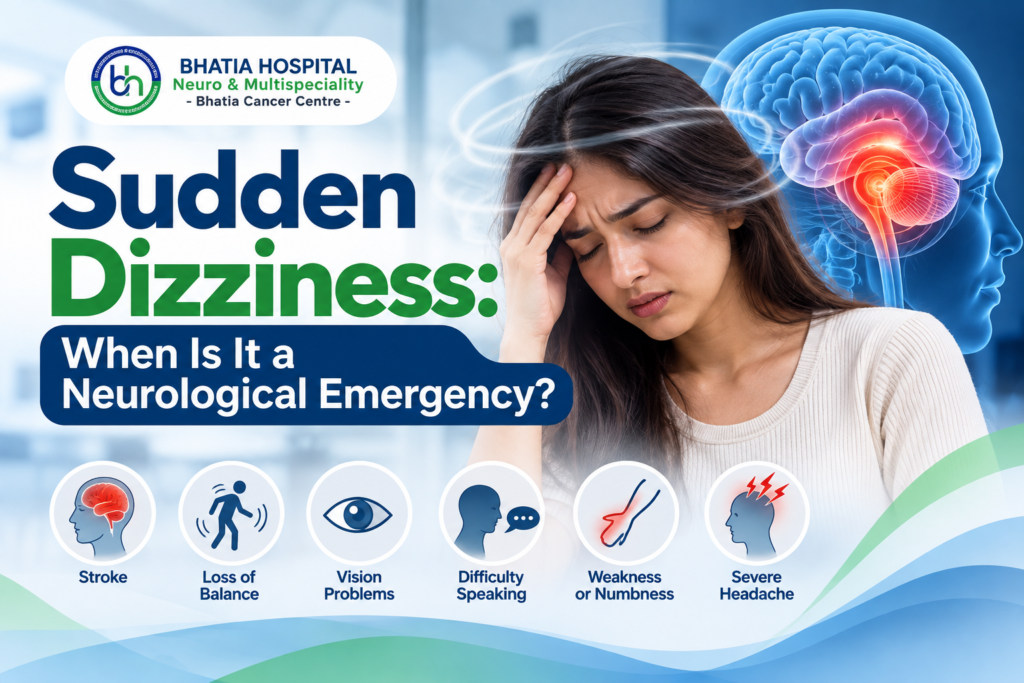
Sudden dizziness can feel frightening, especially when it starts without warning. Sudden dizziness neurological causes that range from migraine and balance disorders to serious problems affecting the brain.
In some cases, dizziness may occur with a stroke, particularly when the back part of the brain is affected. However, dizziness alone does not always mean a stroke. The symptoms that occur with dizziness matter greatly.
It causes trouble walking, double vision, weakness, numbness, speech problems, or severe headache which needs urgent medical assessment.
If these symptoms are happening now, do not wait for a blog or home remedy. Seek emergency medical care immediately.
What Is Sudden Dizziness?
Dizziness is a broad term. It can mean feeling lightheaded, unsteady, faint, or as if the room is spinning.
Vertigo is a specific type of dizziness. It creates a false feeling of movement or spinning.
It can come from the inner ear, migraine, dehydration, medicines, blood pressure changes, or neurological conditions. Therefore, doctors need to assess the complete symptom pattern.
Sudden Dizziness Neurological Causes:
Several neurological conditions can cause sudden dizziness or vertigo.
1. Stroke
A stroke can affect areas of the brain that control balance, coordination, eye movement, and movement.
Strokes involving the posterior circulation can cause vertigo, imbalance, nausea, vomiting, vision problems, and difficulty speaking.
A brainstem stroke can sometimes cause severe dizziness and imbalance without obvious one-sided weakness. This makes some cases difficult to recognize.
2. Transient Ischemic Attack
A transient ischemic attack, or TIA, happens when blood flow to part of the brain is temporarily disrupted.
Symptoms can include sudden dizziness, balance problems, weakness, numbness, speech problems, or vision changes.
Even when symptoms disappear, urgent assessment is important. A TIA can be a warning of a future stroke.
3. Vestibular Migraine
Vestibular migraine can cause repeated episodes of vertigo or dizziness. Headache may occur, but it is not always present.
Episodes can also involve nausea, sensitivity to light or sound, or visual symptoms.
Doctors consider the patient’s migraine history and symptom pattern before making this diagnosis.
4. Other Central Nervous System Causes
Other neurological problems can affect balance and cause dizziness.
These may involve the cerebellum, brainstem, or pathways that control eye and body coordination.
The exact cause cannot be confirmed from dizziness alone. A neurological examination may help determine whether further testing is needed.
When Is Sudden Dizziness a Neurological Emergency?
Sudden dizziness becomes more concerning when it appears with other neurological symptoms.
Seek emergency medical care immediately if dizziness starts suddenly with:
- Difficulty speaking or understanding speech
- New weakness or numbness
- Facial drooping
- Double vision or sudden vision loss
- Severe difficulty walking
- New loss of coordination
- Severe or unusual headache
- Trouble swallowing
- New confusion or reduced alertness
- Repeated vomiting with severe vertigo
- Loss of consciousness
These symptoms can occur with stroke and other serious neurological conditions. CDC
Remember B.E. F.A.S.T.
B — Balance: Sudden loss of balance or coordination
E — Eyes: Sudden vision changes
F — Face: Facial drooping
A — Arms: Sudden weakness or numbness
S — Speech: Slurred or unusual speech
T — Time: Get emergency medical help immediately
The CDC and American Stroke Association use balance and eye changes alongside traditional FAST symptoms to help identify possible strokes.
Can Dizziness Alone Mean a Stroke?
Dizziness alone is not usually enough to diagnose a stroke. Many non-serious conditions can cause dizziness.
However, some posterior circulation or brainstem strokes can initially present with vertigo and severe imbalance.
Therefore, sudden severe dizziness should not be dismissed when it is new, persistent, or associated with difficulty walking or other neurological symptoms.
Other Causes of Sudden Dizziness
| Possible cause | Typical clues |
|---|---|
| Inner-ear disorder | Spinning sensation, hearing symptoms |
| BPPV | Vertigo triggered by head movement |
| Vestibular migraine | Vertigo with migraine-related symptoms |
| Dehydration | Dizziness with thirst or weakness |
| Low blood sugar | Sweating, shakiness, weakness |
| Blood pressure changes | Dizziness after standing |
| Medication effects | Symptoms after starting or changing medicine |
| Stroke or TIA | Sudden dizziness with neurological signs |
What Symptoms Should You Watch For?
Pay attention to how the dizziness began and what happened at the same time.
Important warning symptoms include:
Dizziness With Trouble Walking
Sudden inability to walk normally or severe loss of balance can indicate a neurological problem.Dizziness With Vision Problems
Double vision, sudden vision loss, or major changes in vision need urgent assessment.Dizziness With Speech Problems
Slurred speech or difficulty finding or understanding words can be a stroke warning sign.Dizziness With Weakness or Numbness
New weakness or numbness, especially on one side, requires emergency assessment.Dizziness With Severe Headache
A sudden, extremely severe headache with neurological symptoms can indicate a serious brain or blood-vessel problem.How Is Sudden Dizziness Diagnosed?
Doctors first ask about the timing and nature of the symptoms.
They may ask:
- Did the dizziness begin suddenly?
- Does the room feel like it is spinning?
- How long did it last?
- Can you walk normally?
- Did you develop weakness or numbness?
- Did your speech or vision change?
- Did you have a headache?
- Have you experienced similar episodes?
- Do you have stroke risk factors?
A neurological evaluation for dizziness may follow to check balance, coordination, eye movements, reflexes, and other neurological signs.Depending on the findings, doctors may recommend blood tests, brain imaging, blood-vessel imaging, or other tests.
CT and MRI can play important roles when stroke or another serious brain condition is suspected. However, imaging choices depend on the clinical situation.
Treatment Options for Sudden Dizziness
Treatment depends entirely on the underlying cause.
If Stroke Is Suspected
Stroke treatment must begin quickly after appropriate assessment.
The emergency team determines whether the symptoms are caused by a blocked or bleeding blood vessel. Treatment then depends on the stroke type, timing, imaging findings, and overall health.
If TIA Is Suspected
A TIA requires urgent evaluation even if symptoms have disappeared. Doctors may investigate blood vessels, the heart, and other stroke risk factors. Treatment aims to reduce the risk of a future stroke.If Vestibular Migraine Is Diagnosed
Treatment may involve migraine management, lifestyle changes, and medicines when appropriate.If an Inner-Ear Problem Is Found
Treatment depends on the specific vestibular disorder. For example, BPPV may respond to specific repositioning exercises. Other vestibular conditions may need different treatments.What Should You Do During Sudden Severe Dizziness?
If the dizziness is severe or accompanied by warning signs:
- Sit or lie down safely.
- Do not drive yourself.
- Note when the symptoms started.
- Check for speech, vision, balance, weakness, or numbness changes.
- Seek emergency medical assessment.
- Take your current medicines and medical information if possible.
Do not wait for symptoms to disappear when stroke or TIA is possible. Symptoms can improve temporarily while the underlying risk remains.
Who Has a Higher Risk of Neurological Causes?
Stroke and TIA risk increases with factors such as:
- High blood pressure
- Diabetes
- Heart disease
- Atrial fibrillation
- Smoking
- Previous stroke or TIA
- Increasing age
However, neurological emergencies can occur in people without obvious risk factors. New severe symptoms should therefore receive appropriate medical attention.
Why Choose Bhatia Hospital, Patiala?
Bhatia Hospital Neuro & Multispeciality Hospital provides a multispeciality setting for neurological assessment and medical care.
Patients from Patiala, Punjab, and nearby areas can seek specialist evaluation when dizziness is sudden, recurrent, severe, or associated with neurological symptoms.
A neurological assessment can help doctors distinguish between possible causes and determine whether further investigations are needed.
The hospital’s multispeciality approach can also support patients when dizziness occurs alongside other medical conditions.
Prevention Tips:
Not every cause of dizziness can be prevented. However, several steps can reduce some health risks.
- Monitor blood pressure regularly.
- Keep diabetes under medical control.
- Do not smoke.
- Follow prescribed medicines correctly.
- Maintain regular medical check-ups.
- Discuss repeated dizziness with a doctor.
- Manage known heart conditions.
- Follow your doctor’s advice about cholesterol and other stroke risks.
Never stop prescribed medicines without speaking with your doctor.
When to Consult a Doctor?
Arrange a medical consultation if dizziness:
- Keeps returning
- Lasts longer than expected
- Interferes with walking
- Comes with hearing changes
- Comes with headaches or migraine symptoms
- Causes repeated falls
- Occurs after starting a new medicine
- Is accompanied by vision changes
Seek emergency care instead when sudden dizziness occurs with stroke warning signs such as weakness, speech problems, severe imbalance, or sudden vision changes.
Quick Answers:
What is sudden dizziness?
Sudden dizziness is a rapid feeling of spinning, lightheadedness, imbalance, or disturbed spatial orientation. It can come from inner-ear conditions, migraine, blood pressure changes, medicines, dehydration, or neurological problems. When dizziness starts suddenly with weakness, speech problems, vision changes, or severe imbalance, urgent medical assessment is important.
Why can neurological problems cause dizziness?
Neurological problems can affect brain areas and pathways that control balance, eye movement, and coordination. The cerebellum and brainstem are especially important for these functions. A problem affecting these areas can cause vertigo, imbalance, nausea, or difficulty walking. Stroke is one serious neurological cause that doctors must consider.
How can you tell if dizziness may be related to stroke?
Dizziness is more concerning for stroke when it starts suddenly and occurs with balance loss, difficulty walking, double vision, speech problems, facial drooping, weakness, numbness, or severe headache. These symptoms can occur with posterior circulation or brainstem strokes. Emergency assessment is needed when these signs appear.
Who should seek emergency care for dizziness?
Anyone with sudden dizziness plus new neurological symptoms should seek emergency care. This includes people with weakness, numbness, facial drooping, speech difficulty, double vision, severe imbalance, confusion, or sudden severe headache. Symptoms that disappear can still represent a TIA and require urgent medical evaluation.
When is sudden dizziness an emergency?
Sudden dizziness is an emergency when it occurs with signs such as trouble speaking, new weakness, numbness, facial drooping, severe trouble walking, double vision, sudden vision loss, confusion, or severe unusual headache. Do not drive yourself. Seek emergency medical help promptly if these symptoms appear.
Can vestibular migraine cause sudden vertigo?
Yes. Vestibular migraine can cause moderate or severe vestibular symptoms, including spontaneous or positional vertigo. Episodes can last from minutes to hours or longer. Migraine features may include headache, light sensitivity, sound sensitivity, or visual aura. Doctors must first consider other serious causes when symptoms are new.
Is dizziness always a sign of a brain problem?
No. Dizziness has many possible causes. Inner-ear disorders, migraine, dehydration, low blood sugar, blood pressure changes, and medicines can all cause dizziness. However, new sudden dizziness with neurological symptoms can signal a serious condition. Therefore, the surrounding symptoms and medical history are important.
Can migraine cause dizziness without headache?
Yes. Vestibular migraine can produce vertigo or dizziness, and a headache does not need to occur during every episode. Other migraine features may appear. However, a new or unusual episode should not automatically be assumed to be migraine, particularly when neurological warning signs are present.
Can sudden dizziness be caused by an inner-ear problem?
Yes. Inner-ear disorders are common causes of vertigo. Conditions such as BPPV, labyrinthitis, vestibular neuritis, and Ménière’s disease can affect balance. However, serious neurological causes can sometimes look similar, so sudden or unusual symptoms may need medical evaluation.
Should I wait if dizziness goes away?
No, not when sudden dizziness occurs with neurological symptoms. Stroke or TIA symptoms can improve or disappear temporarily. Even when symptoms stop, urgent medical assessment may still be necessary.
Conclusion
Sudden dizziness has many possible causes. Most episodes are not caused by stroke, but certain symptoms require urgent attention.
Sudden Dizziness Neurological Causes become especially important when dizziness occurs with loss of balance, trouble walking, speech difficulty, vision changes, weakness, numbness, or severe headache.
Recognizing these warning signs can help patients seek care without unnecessary delay.
Book an appointment with the specialists at Bhatia Hospital, Patiala for expert diagnosis and personalized treatment.