
Laparoscopic Cholecystectomy: Procedure, Recovery, Benefits & Risks
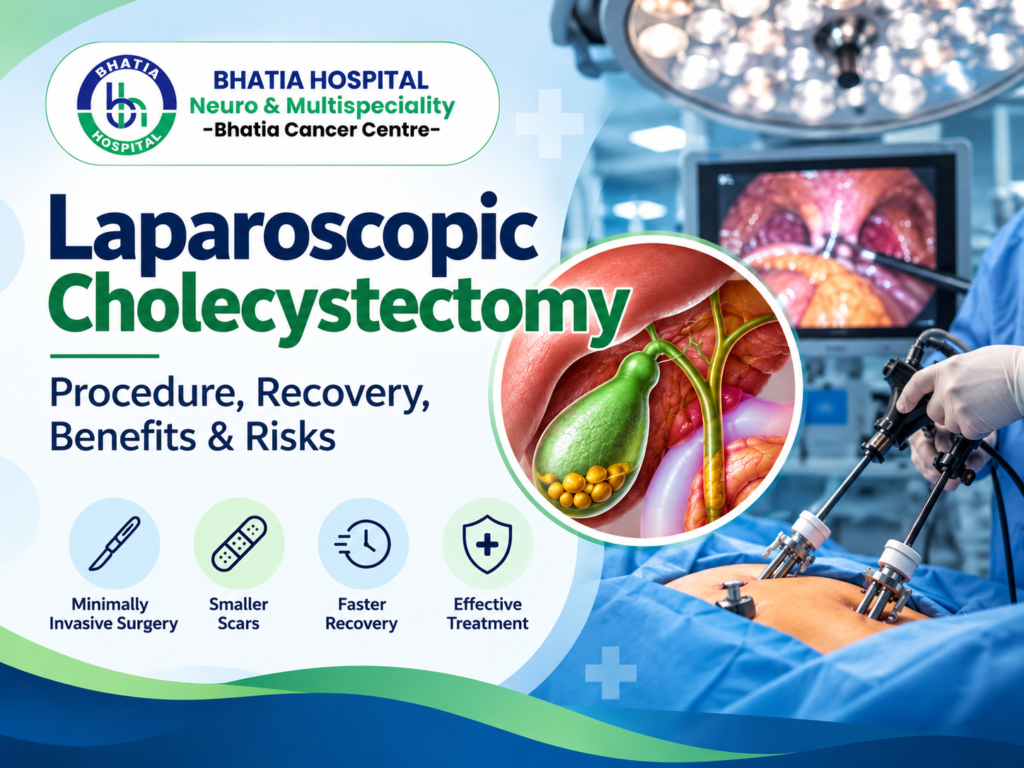
Gallstones can cause repeated abdominal pain, nausea, bloating, or inflammation of the gallbladder. When gallstones cause symptoms or complications, doctors may recommend laparoscopic cholecystectomy, commonly called laparoscopic gallbladder removal.
It is a minimally invasive operation that removes the gallbladder through small abdominal incisions. Most patients can return home the same day or after a short hospital stay when recovery is uncomplicated.
If you or a family member has been advised to undergo gallbladder surgery, understanding the procedure, preparation, recovery and possible risks can make the process easier.
What Is Laparoscopic Cholecystectomy?
Laparoscopic cholecystectomy is surgery to remove the gallbladder using a small camera and surgical instruments inserted through small abdominal incisions. It is commonly performed for symptomatic gallstones, gallbladder inflammation and certain gallstone-related complications. The operation is usually performed under general anesthesia.
What Is the Gallbladder?
The gallbladder is a small, pear-shaped organ located below the liver.
Its main function is to store bile made by the liver. Bile helps the body digest fats and travels from the gallbladder through bile ducts into the small intestine.
Sometimes, substances in bile form hard deposits called gallstones.
Gallstones may remain in the gallbladder without causing symptoms. But they can sometimes block the flow of bile and cause pain, inflammation or other complications.
Why Is Laparoscopic Cholecystectomy Done?
Doctors may recommend gallbladder removal when gallstones or gallbladder disease are causing symptoms or complications.
Common reasons include:
- Repeated pain caused by gallstones
- Acute or chronic gallbladder inflammation
- Gallstones causing complications
- Some bile duct or cystic duct stone problems
- Certain gallbladder conditions affecting its function
Typical symptoms of gallbladder inflammation can include sharp pain in the upper right abdomen, nausea, bloating and fever. Jaundice can occur when a stone blocks the common bile duct.
Not everyone with gallstones needs surgery. The decision depends on symptoms, complications, test results and the patient’s overall health. You can also learn more about when doctors recommend laparoscopic surgery and how they decide if this approach is appropriate.
What Tests Are Done Before Laparoscopic Cholecystectomy?
Your surgeon will first evaluate your symptoms and medical history.
Testing may include:
- Physical examination
- Blood tests
- Abdominal ultrasound
- Other imaging when needed
- Tests to assess the bile ducts in selected patients
An abdominal ultrasound is commonly used when evaluating gallstones. Preoperative assessment also considers medications, existing medical conditions and anesthesia-related risks.
The exact tests depend on the individual patient.
How Is Laparoscopic Cholecystectomy Performed?
Laparoscopic cholecystectomy is also called keyhole gallbladder surgery.
The procedure generally follows these steps:
1. General anesthesia:
The patient receives general anesthesia and remains asleep during the operation.2. Small abdominal incisions:
The surgeon makes small cuts in the abdomen.
3. Camera insertion:
A thin instrument called a laparoscope is inserted through one of the openings. It contains a camera that allows the surgical team to see inside the abdomen.4. Surgical instruments are inserted:
Small surgical instruments are introduced through additional openings.5. Gallbladder removal:
The surgeon carefully separates and removes the gallbladder.6. Incisions are closed:
After the gallbladder is removed, the instruments are taken out and the small incisions are closed. The operation commonly takes around one hour, although the duration can vary depending on the patient’s condition and the complexity of the procedure.Can Laparoscopic Surgery Be Converted to Open Surgery?
Sometimes a surgeon may begin with laparoscopic surgery but decide that open surgery is safer.
This may happen when there is severe inflammation, difficult anatomy, significant bleeding or another surgical concern.
Conversion does not necessarily mean something went wrong. It can be a safety decision made by the surgical team.
SAGES notes that the decision regarding discharge and surgical approach can depend on factors such as acute inflammation, bile duct stones and whether conversion to an open procedure is required.
What Are the Benefits of Laparoscopic Cholecystectomy?
For suitable patients, laparoscopic gallbladder removal offers several practical advantages compared with traditional open surgery.
These may include:
- Smaller abdominal incisions
- Less extensive surgical wounds
- Shorter hospital stay in uncomplicated cases
- Earlier return to normal activity
- Less postoperative discomfort for many patients
- Smaller scars
The American College of Surgeons notes that uncomplicated patients commonly go home the same day after laparoscopic cholecystectomy.
However, recovery is different for every patient.
How Long Does Recovery Take After Laparoscopic Cholecystectomy?
Recovery varies depending on your health, the reason for surgery, the type of work you do and whether complications occur.
Many patients can return home on the day of surgery after an uncomplicated laparoscopic procedure. For more details, read our guide to recovery after laparoscopic surgery. Some patients may need overnight observation.
A general recovery pattern:
| Recovery stage | What you may experience |
|---|---|
| First 24 hours | Sleepiness from anesthesia, abdominal discomfort and possible nausea |
| First few days | Gradual improvement in pain and movement |
| First 1–2 weeks | Increasing activity and gradual return to daily routines |
| After that | Many patients continue returning to normal activities as advised by their surgeon |
SAGES reports that many patients can return to normal activity at about one week after uncomplicated laparoscopic gallbladder removal, while the NHS notes that returning to work may take around 1–2 weeks, depending on the type of work and surgery.
People with physically demanding jobs may need more time.
Do not use these timelines as a personal clearance. Follow your surgeon’s instructions.
When Can You Eat After Gallbladder Removal?
After surgery, patients are monitored while the effects of anesthesia wear off.
You may initially take fluids and then gradually return to eating as advised by your healthcare team.
Most people can eventually eat a normal, healthy diet without a gallbladder. However, some patients find smaller meals easier during the first few days.
If certain foods cause discomfort, discuss your diet with your doctor.
When Can You Walk After Laparoscopic Cholecystectomy?
Light movement is generally encouraged after surgery.
Walking can help you gradually return to normal activity and may also reduce problems associated with prolonged inactivity.
SAGES advises patients to be active according to what their body allows and recommends walking after surgery. SAGES
Avoid strenuous activity or heavy lifting until your surgeon says it is safe.
What Are the Risks of Laparoscopic Cholecystectomy?
Like any operation, laparoscopic cholecystectomy has potential risks.
Possible complications include:
- Bleeding
- Wound infection
- Blood clots
- Bile leakage
- Injury to the bile duct
- Injury to nearby organs
- Retained gallstones
- Reactions related to anesthesia
- Continued abdominal symptoms
- Need for additional treatment or surgery in some cases
Serious complications are uncommon, but they can occur.
Your surgeon should explain the risks that are particularly relevant to your health and condition.
What Should You Expect After Gallbladder Removal?
You can live without a gallbladder.
After removal, bile continues to be produced by the liver. Instead of being stored in the gallbladder, it flows directly into the digestive system. Most people can eventually return to a normal, healthy diet.
Some people experience temporary digestive changes after surgery. Persistent or severe symptoms should be discussed with a doctor.
What Are the Warning Signs After Surgery?
Contact your surgical team if you develop concerning symptoms during recovery.
These may include:
- Severe or worsening abdominal pain
- High fever or chills
- Yellowing of the skin or eyes
- Persistent vomiting
- Difficulty keeping fluids down
- Increasing redness or drainage from the incision
- Pus or unusual discharge
- Breathing problems
These symptoms can sometimes indicate a complication and should not be ignored. Learn more about whether laparoscopic surgery is safe and the potential risks associated with the procedure. If symptoms are severe or you believe you have a medical emergency, seek urgent medical care.
Laparoscopic Cholecystectomy vs Open Cholecystectomy
Both procedures remove the gallbladder, but the surgical approach is different.
| Feature | Laparoscopic Cholecystectomy | Open Cholecystectomy |
|---|---|---|
| Incisions | Several small incisions | One larger incision |
| Camera | Used | Usually not used in the same way |
| Hospital stay | Often shorter | Usually longer |
| Recovery | Generally faster | Generally slower |
| Scarring | Smaller scars | Larger scar |
| Use | Common approach for suitable patients | May be required in selected situations |
Open surgery may be needed when inflammation is severe or when the gallbladder cannot be safely removed laparoscopically.
For a broader comparison, Bhatia Hospital already has a dedicated article on the difference between open and laparoscopic surgery.
How Should You Prepare for Laparoscopic Cholecystectomy?
Your surgical team will provide specific instructions before the operation.
Preparation may involve:
– Following fasting instructions
– Informing your doctor about all medicines and supplements
– Discussing existing medical conditions
– Completing recommended tests
– Arranging transportation home
– Planning help at home during the first day or two
Do not stop prescription medicines unless your doctor tells you to do so.
The exact preparation depends on your medical history and surgical plan.
Why Choose Bhatia Hospital, Patiala for Laparoscopic Surgery?
Patients considering gallbladder surgery need more than the operation itself. They also need proper evaluation, surgical planning, anesthesia assessment and postoperative care.
At Bhatia Hospital, Patiala, patients can discuss their gallbladder symptoms and diagnostic findings with the surgical team to understand whether laparoscopic cholecystectomy is appropriate for their condition.
The focus should be on:
– Appropriate patient evaluation
– Procedure-specific surgical planning
– Safe anesthesia assessment
– Postoperative monitoring
– Recovery guidance
– Follow-up care
The right treatment approach depends on the patient’s symptoms, diagnosis and overall health.
When Should You Consult a Doctor for Gallbladder Problems?
You should consider medical evaluation if you have:
- Repeated pain in the upper right abdomen
- Abdominal pain after meals
- Nausea or vomiting
- Unexplained bloating
- Fever with abdominal pain
- Yellowing of the skin or eyes
- Known gallstones with recurring symptoms
Severe abdominal pain, fever, jaundice or persistent vomiting may require prompt medical assessment.
When Should You Consult a Doctor for Gallbladder Problems?
What is laparoscopic cholecystectomy?
Laparoscopic cholecystectomy is a minimally invasive surgery to remove the gallbladder. The surgeon uses a small camera and surgical instruments through small abdominal incisions. It is commonly performed for symptomatic gallstones and certain gallbladder conditions.
How long does laparoscopic cholecystectomy take?
The surgery commonly takes around one hour, but the exact duration can vary depending on the patient’s condition and the complexity of the procedure.
How long does it take to recover from laparoscopic gallbladder surgery?
Recovery varies from person to person. Many patients gradually return to normal activities within one to two weeks after uncomplicated surgery. Physically demanding work may require more time.
When can I walk after laparoscopic cholecystectomy?
Light walking is generally encouraged as tolerated after surgery. However, strenuous exercise and heavy lifting should be avoided until your surgeon advises that it is safe.
Can I eat normally after gallbladder removal?
Most people can eventually return to a normal, healthy diet after gallbladder removal. Smaller meals may feel easier during the first few days. Your doctor may provide specific dietary advice based on your recovery.
What are the risks of laparoscopic cholecystectomy?
Possible risks include bleeding, infection, bile leakage, bile duct injury, retained gallstones and anesthesia-related complications. Your surgeon will explain the risks relevant to your individual condition.
Can you live normally without a gallbladder?
Yes. The liver continues to produce bile after the gallbladder is removed. Most people can eventually return to their usual diet and daily activities.
When should I contact my doctor after gallbladder surgery?
Contact your surgical team if you develop severe or worsening abdominal pain, fever, jaundice, persistent vomiting, increasing redness or discharge from the incision, or other concerning symptoms.