
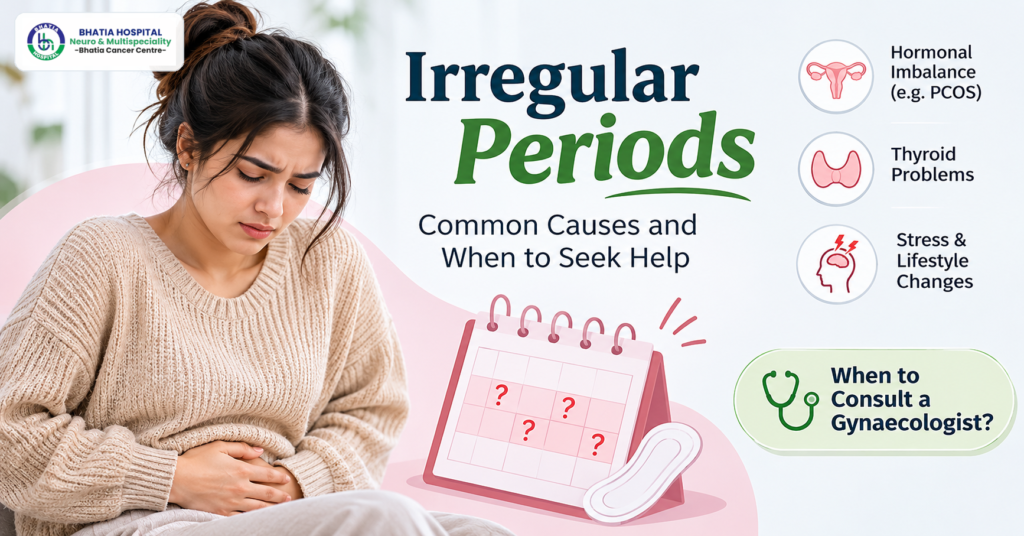
Irregular Periods: Common Causes and When to Seek Help
Menstrual cycles can vary from person to person. Sometimes, your period may arrive earlier or later than expected. You may also notice changes in bleeding or cycle length.
Occasional changes do not always indicate a health problem. However, repeated irregular periods may point to an underlying condition that needs medical attention.
Understanding the causes can help you remember changes and seek timely guidance.
What Are Irregular Periods?
A menstrual cycle counts from the first day of one period to the first day of the next.
For many adults, a typical menstrual cycle lasts around 21 to 35 days. Small variations can happen. However, periods that quickly occur outside this range may be consider irregular.
Irregular periods may include:
– Periods that arrive earlier or later than expected.
– Missing periods for several months.
– Bleeding that lasts longer than usual.
– Unusually light or heavy menstrual flow.
– Bleeding or spotting between periods.
Your usual menstrual pattern matters. A sudden change after previously regular cycles deserves attention.
Common Causes of Irregular Periods
Several factors can affect the hormones that regulate menstruation. Some causes are temporary, while others may require medical evaluation.
1. Polycystic Ovary Syndrome (PCOS)
PCOS is a common hormonal condition that can affect ovulation. When ovulation does not happen regularly, periods may become delayed, infrequent or unpredictable.
Other possible symptoms include:
– Acne or oily skin.
– Increased facial or body hair.
– Weight changes.
– Thinning hair on the scalp.
– Difficulty becoming pregnant.
Not everyone with PCOS experiences the same symptoms. A gynaecologist can assess your symptoms and recommend appropriate tests.
2. Thyroid Problems
The thyroid gland produces hormones that help regulate metabolism and other body functions. Thyroid hormone changes can also affect the menstrual cycle.
An underactive thyroid may be associates with heavier or irregular periods. An overactive thyroid may cause lighter or less frequent periods.
Other symptoms can include tiredness, weight changes, hair changes and sensitivity to heat or cold.
A doctor may recommend thyroid function tests when symptoms suggest a thyroid problem.
3. Stress and Lifestyle Changes
Physical and emotional stress can affect the hormones involved in ovulation.
Changes that may influence your menstrual cycle include:
– Prolonged stress or anxiety.
– Sudden weight gain or weight loss.
– Very restrictive diets.
– Excessive exercise.
– Poor sleep or major routine changes.
Maintaining regular meals, adequate sleep and balanced physical activity can support general health. Persistent cycle changes should still be analyse.
4. Sudden Weight Changes
Significant changes in body weight can affect hormone levels and ovulation.
Rapid weight loss, inadequate nutrition or excessive exercise may disturb the menstrual cycle. Higher body weight can also be link to hormonal conditions such as PCOS.
Avoid extreme diets or unmonitored weight-loss methods. A healthcare professional can help identify whether weight changes are contributing to your symptoms.
5. Pregnancy and Breastfeeding
A missed period can be an early sign of pregnancy. If pregnancy is possible, consider taking a pregnancy test.
Breastfeeding can also affect ovulation and menstrual cycles. Periods may remain irregular while breastfeeding, although experiences vary.
Do not assume that a missed period is caused by stress or hormonal imbalance without considering pregnancy.
6. Puberty and Perimenopause
Menstrual cycles may be less predictable during the first few years after periods begin.
As menopause approaches, hormonal changes can also cause variations in cycle length and bleeding patterns. This transition is consider as perimenopause.
However, unusually heavy bleeding, bleeding after menopause or significant changes should not automatically be considered normal ageing.
Symptoms You Should Not Ignore
Causes of Irregular periods includes other symptoms that help doctors identify the possible cause.
Pay attention to:
– Missing three consecutive periods when you are not pregnant.
– Bleeding that lasts longer than seven days.
– Very heavy bleeding that requires changing a pad or tampon every hour.
– Bleeding between periods or after sexual intercourse.
– Severe pelvic pain or painful periods.
– Unexplained weight changes.
– Increased facial hair or persistent acne.
– Unusual tiredness, weakness or dizziness.
Get urgent medical care if heavy bleeding is link with fainting, severe dizziness, breathlessness or severe pain. If pregnancy is possible and you experience severe abdominal pain or bleeding, seek urgent medical care.
How Are Irregular Periods Diagnosed?
A gynaecologist will first understand your menstrual history, symptoms and general health.
Depending on your condition, the evaluation may include:
Medical history: Your doctor may ask about your cycle dates, bleeding pattern, pain, medications, lifestyle and pregnancy possibility.
Blood tests: These may check thyroid function, pregnancy status, blood count or selected hormone levels.
Pelvic ultrasound: An ultrasound may help assess the uterus, ovaries and other pelvic structures.
Not every patient needs every test. Your doctor will recommend investigations based on your symptoms and examination.
Treatment Options for Irregular Periods
Treatment depends on the underlying cause, your symptoms, age, and reproductive goals.
Possible approaches include:
Hormonal treatment: Certain medicines may help regulate bleeding or menstrual cycles when appropriate.
PCOS management: Treatment may address menstrual irregularity, metabolic health and other symptoms.
Thyroid treatment: Managing an underlying thyroid condition may help improve cycle changes.
Lifestyle guidance: Balanced nutrition, suitable exercise, sleep and stress management may support menstrual health.
Treatment of other conditions: Fibroids, infections or other gynaecological problems may require specific treatment.
Do not start hormonal medicines or supplements without medical advice. The right treatment should be based on the cause rather than the symptom alone.
When Should You Consult a Gynaecologist?
Consider a consultation if your periods have become irregular after previously being regular. Furthermore, if you miss periods again and again, or bleeding is unusually heavy or lasts for a long time.
You should also seek medical advice if irregular periods occur with pelvic pain, unusual discharge, or unexplained weight changes. Moreover, difficulty becoming pregnant.
Early evaluation can help identify possible causes and guide suitable treatment.
How Can You Track Your Menstrual Cycle?
Keeping a menstrual record can make your consultation more useful.
Note the following details:
– The first day of each period.
– The number of days bleeding continues.
– Whether bleeding is light, moderate or heavy.
– Pain, cramps or other symptoms.
– Any spotting between periods.
– Changes in weight, medication or daily routine.
A calendar, diary or period-tracking application can help you notice patterns over time.
Get Guidance for Irregular Periods at Bhatia Hospital, Patiala
Irregular periods can have several causes, ranging from temporary lifestyle changes to hormonal or gynaecological conditions.
If you notice persistent changes in your menstrual cycle, consult a gynaecologist for proper evaluation.
At Bhatia Hospital Neuro & Multispeciality, Patiala, patients can seek gynaecological consultation and guidance based on their symptoms and healthcare needs.
Address: 19, Partap Nagar, Jai Jawan Colony, Patiala, Punjab 147001.
Do not ignore repeated changes in your menstrual cycle. Timely medical advice can help you understand what your body is telling you.
This article is for general awareness and does not replace professional medical consultation. Click here to know more.