
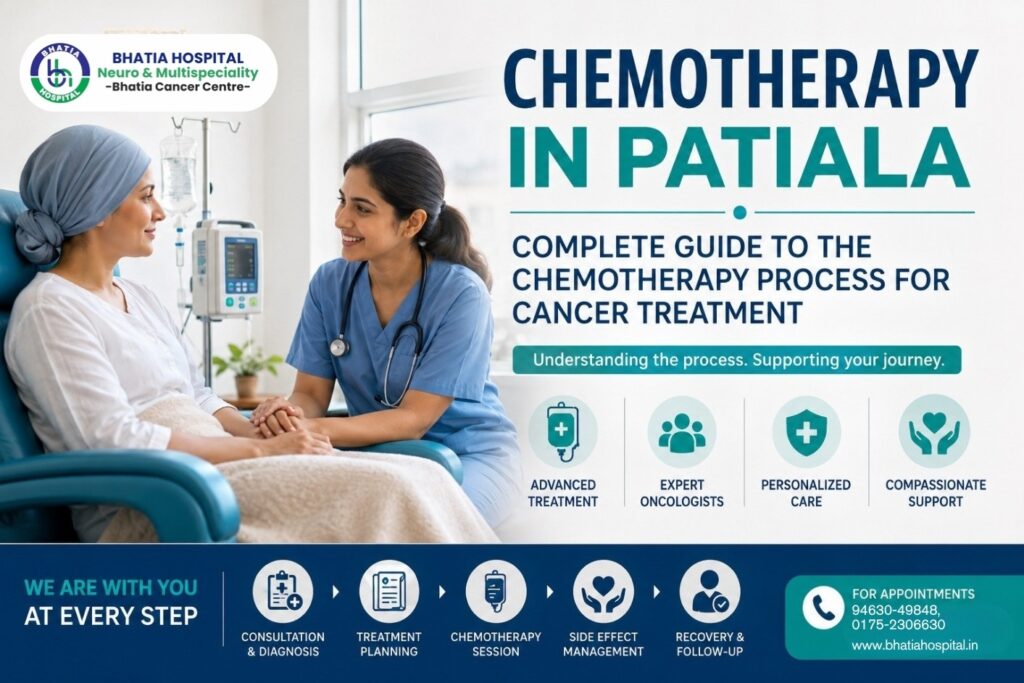
Chemotherapy in Patiala: Understanding the Process of Cancer Treatment
Getting a cancer diagnosis can bring many questions. You may wonder what chemotherapy is, how it works, and what to expect during treatment. These questions are normal. Learning about the treatment process can help you feel more prepared and confident.
If you are looking for Chemotherapy in Patiala, this guide explains every step in simple words. You will learn how chemotherapy works, when doctors recommend it, how treatment is planned, and how patients can prepare for each session. At Bhatia Hospital, Patiala, cancer care focuses on each patient’s needs. The medical team works together to provide safe, personalized, and compassionate treatment.
What Is Chemotherapy?
Chemotherapy is a treatment that uses medicines to destroy or control cancer cells. These medicines travel through the bloodstream and reach cancer cells in many parts of the body.
Unlike surgery, which removes a tumor from one place, chemotherapy can treat cancer cells that have spread. Doctors may use it alone or combine it with surgery, radiation therapy, targeted therapy, or immunotherapy.
The goal of chemotherapy depends on your type of cancer. In some cases, it aims to cure cancer. In others, it helps control the disease or relieve symptoms.
How Does Chemotherapy Work?
Chemotherapy works by stopping cancer cells from growing and dividing. Cancer cells grow much faster than normal cells. Chemotherapy medicines target these fast-growing cells.
However, some healthy cells also grow quickly. These include cells in the hair, mouth, bone marrow, and digestive system. As a result, some patients experience temporary side effects such as hair loss or nausea.
Most healthy cells recover after treatment ends.
When Is Chemotherapy Recommended?
Doctors recommend chemotherapy for many types of cancer. The decision depends on several factors, including the cancer type, its stage, and your overall health.
Chemotherapy may be used to:
- Destroy cancer cells
- Shrink a tumor before surgery
- Lower the risk of cancer returning
- Treat cancer that has spread
- Ease symptoms in advanced cancer
Every patient receives a treatment plan that matches their condition.
Which Cancers Can Be Treated with Chemotherapy?
Chemotherapy is commonly used for:
- Breast cancer
- Lung cancer
- Colon cancer
- Blood cancer
- Ovarian cancer
- Cervical cancer
- Stomach cancer
- Pancreatic cancer
- Head and neck cancer
- Prostate cancer
Your medical oncologist will explain whether chemotherapy is the best option for your condition.
Types of Chemotherapy
The treatment approach varies depending on the patient’s condition.
Neoadjuvant Chemotherapy
Given before surgery to shrink the tumor and improve surgical outcomes.
Adjuvant Chemotherapy
Given after surgery to destroy remaining cancer cells and reduce the risk of recurrence.
Curative Chemotherapy
Used with the goal of completely eliminating cancer.
Palliative Chemotherapy
Helps relieve symptoms and improve quality of life in advanced-stage cancer.
What Happens Before Chemotherapy?
Every patient goes through a careful evaluation before treatment begins. This helps the doctor choose the safest and most effective plan.
During your first visit, the oncologist will:
- Review your medical history
- Ask about your symptoms
- Perform a physical examination
- Review previous reports
- Discuss treatment options
- Explain possible side effects
This is also the best time to ask questions about your treatment.
Tests Before Chemotherapy
Several tests help the medical team understand your health before treatment.
These may include:
- Blood tests
- CT scan
- MRI scan
- PET scan
- Ultrasound
- Biopsy
- Kidney function tests
- Liver function tests
- Heart tests when needed
These tests help doctors decide which chemotherapy medicines are right for you.
How Is a Chemotherapy Plan Created?
Every chemotherapy plan is different. Doctors do not use the same treatment for every patient.
Your treatment plan depends on:
- Type of cancer
- Stage of cancer
- Age
- Overall health
- Medical history
- Previous treatments
- Results of laboratory tests
The oncologist also decides:
- Which medicines to use
- The dose
- Number of treatment cycles
- Time between each cycle
The goal is to give effective treatment while protecting your overall health.
How Should You Prepare for Chemotherapy?
Preparing for chemotherapy can make treatment easier.
Your healthcare team may suggest that you:
- Eat healthy meals
- Drink enough water
- Get enough sleep
- Stay physically active
- Complete dental treatment if needed
- Arrange transportation
- Bring a family member for support
- Take medicines as advised
Good preparation helps you feel more comfortable during treatment.
How Is Chemotherapy Given?
Chemotherapy medicines can be given in different ways.
Intravenous (IV)
This is the most common method. Medicines enter the body through a vein.
Oral Medicines
Some chemotherapy drugs come as tablets or capsules.
Injection
Certain medicines are given as injections under the skin or into a muscle.
Through a Port or PICC Line
Patients receiving long-term treatment may have a special device placed under the skin. This makes repeated treatment easier.
What Happens During a Chemotherapy Session?
Most chemotherapy sessions follow the same basic steps.
Step 1: Registration
Hospital staff complete your admission and treatment records.
Step 2: Health Check
Your blood pressure, temperature, pulse, and weight are checked.
Step 3: Blood Tests
Doctors review your blood counts before giving treatment.
Step 4: Doctor Review
The oncologist checks your reports and answers your questions.
Step 5: Pre-medication
You may receive medicines to prevent nausea or allergic reactions.
Step 6: Chemotherapy Treatment
The chemotherapy medicines are given according to your treatment plan.
Step 7: Observation
The medical team watches for any immediate side effects before you go home.
Some sessions last one hour. Others may take several hours.
What Is a Chemotherapy Cycle?
Chemotherapy is usually given in cycles.
A cycle includes:
- One treatment session
- A rest period
The rest period allows healthy cells to recover.
For example, you may receive treatment on one day and return after two or three weeks for the next cycle.
The number of cycles depends on your cancer type and how your body responds to treatment.
What Are the Common Side Effects of Chemotherapy?
Chemotherapy can affect healthy cells as well as cancer cells. Because of this, some people develop side effects. The good news is that many side effects are temporary. They often improve after treatment ends.
Not every patient has the same experience. Some people have only mild symptoms, while others need extra care.
Common side effects include:
- Tiredness
- Hair loss
- Nausea
- Vomiting
- Loss of appetite
- Mouth sores
- Dry mouth
- Constipation
- Diarrhea
- Low blood counts
- Easy bruising
- Increased risk of infection
- Changes in taste
- Numbness in the hands or feet
- Skin changes
Your oncology team will help manage these side effects throughout your treatment.
Why Does Chemotherapy Cause Side Effects?
Chemotherapy targets fast-growing cancer cells. However, some healthy cells also grow quickly.
These include:
- Hair follicles
- Bone marrow
- Cells inside the mouth
- Cells in the stomach and intestines
When these healthy cells are affected, temporary side effects may appear. Most healthy cells recover after treatment.
How Can You Manage Chemotherapy Side Effects?
Many side effects can be controlled with medicines and healthy habits. Tell your doctor about any new symptoms. Early treatment often prevents problems from getting worse.
You can help yourself by:
- Drinking plenty of water
- Eating small meals often
- Choosing soft foods if your mouth is sore
- Resting when you feel tired
- Taking short walks if your doctor agrees
- Washing your hands often
- Avoiding people who are sick
- Taking medicines exactly as prescribed
Never stop chemotherapy without speaking to your doctor.
What Should You Eat During Chemotherapy?
A healthy diet helps your body recover.
Try to eat:
- Fresh fruits
- Cooked vegetables
- Whole grains
- Eggs
- Fish
- Chicken
- Lentils
- Milk and yogurt
- Nuts, if advised
Drink enough water every day.
If eating becomes difficult, ask your doctor or dietitian for advice.
Try to avoid:
- Raw or undercooked meat
- Unpasteurized milk
- Alcohol
- Very spicy food if you have mouth sores
- Street food if your immunity is low
Can You Live a Normal Life During Chemotherapy?
Many people continue their daily routine during treatment. Others need more rest.
It depends on:
- Your type of cancer
- The medicines used
- Your overall health
- How your body responds
Light exercise, healthy meals, and enough sleep often help patients feel better.
Always ask your doctor before starting a new exercise routine.
How Long Does Recovery Take?
Recovery is different for every patient.
Some people feel better within a few days after each cycle. Others may need several weeks.
Your recovery depends on:
- Type of chemotherapy
- Number of treatment cycles
- General health
- Nutrition
- Physical activity
- Other medical conditions
Regular follow-up visits help your doctor monitor your progress.
What Happens After Chemotherapy Ends?
Treatment does not end with the last chemotherapy session.
Your doctor may recommend:
- Blood tests
- CT scan
- MRI
- PET scan
- Physical examination
- Regular follow-up visits
These appointments help check your recovery and look for any signs that cancer has returned.
Possible Risks and Complications
Most patients complete chemotherapy safely. However, serious problems can happen in some cases.
Possible complications include:
- Severe infection
- Low white blood cell count
- Heavy bleeding
- Kidney problems
- Liver problems
- Heart problems with certain medicines
- Allergic reactions
- Dehydration
Your healthcare team watches closely for these problems during treatment.
Symptoms That Need Immediate Medical Care
Contact your doctor or visit the nearest emergency department if you have:
- Fever above 38°C
- Chills
- Trouble breathing
- Chest pain
- Heavy bleeding
- Blood in urine or stool
- Severe vomiting
- Severe diarrhea
- Confusion
- Fainting
- Extreme weakness
- Swelling of the face or throat
Do not wait for your next appointment if these symptoms appear.
How Can Family Members Help?
Support from family makes a big difference.
Family members can help by:
- Driving the patient to appointments
- Preparing healthy meals
- Giving emotional support
- Helping with medicines
- Watching for warning signs
- Encouraging rest
- Joining doctor visits
Good support often makes treatment easier.
Tips for Patients Receiving Chemotherapy
Simple daily habits can improve comfort.
Remember to:
- Sleep for seven to eight hours.
- Drink enough fluids.
- Eat healthy food.
- Stay active if possible.
- Avoid smoking.
- Avoid alcohol.
- Wash your hands often.
- Protect yourself from infections.
- Keep all follow-up appointments.
- Report new symptoms early.
Why Choose Bhatia Hospital for Chemotherapy in Patiala?
Choosing the right hospital is an important step in cancer care.
At Bhatia Hospital, Patiala, patients receive care from an experienced team of doctors and healthcare professionals.
Our approach focuses on:
- Personalized chemotherapy treatment
- Experienced medical oncologists
- Modern cancer care facilities
- Advanced diagnostic services
- Safe chemotherapy administration
- Compassionate nursing care
- Multidisciplinary treatment planning
- Patient education and counseling
- Regular follow-up care
Every treatment plan is designed according to the patient’s condition, cancer type, and overall health.
Chemotherapy Treatment Process
| Step | What Happens |
|---|---|
| Consultation | Meet the medical oncologist |
| Tests | Blood tests, scans, and biopsy |
| Planning | Personalized treatment plan |
| Preparation | Nutrition and health assessment |
| Treatment | Chemotherapy medicines are given |
| Monitoring | Side effects are managed |
| Follow-up | Recovery and regular check-ups |
Common Side Effects vs Emergency Symptoms
| Common Side Effects | Emergency Symptoms |
|---|---|
| Mild nausea | High fever |
| Hair loss | Difficulty breathing |
| Tiredness | Heavy bleeding |
| Mouth sores | Severe vomiting |
| Loss of appetite | Chest pain |
| Taste changes | Confusion |
| Mild diarrhea | Severe dehydration |
Recovery Tips
| Do | Avoid |
|---|---|
| Drink water | Smoking |
| Eat healthy food | Alcohol |
| Walk daily | Skipping medicines |
| Sleep well | Missing appointments |
| Wash hands | Crowded places during low immunity |
Conclusion
Cancer treatment can feel challenging, but you do not have to face it alone. Understanding the chemotherapy process helps you prepare for each stage of treatment. It also allows you to work closely with your healthcare team and make informed decisions.
If you are looking for Chemotherapy in Patiala, early consultation with a qualified medical oncologist is the first step. Every cancer is different, so treatment should always be personalized based on the type of cancer, its stage, your medical history, and your overall health.
With timely diagnosis, proper treatment, and regular follow-up care, many people successfully complete chemotherapy and continue their recovery journey.
Schedule a Consultation at Bhatia Hospital, Patiala
If you or a loved one has been diagnosed with cancer, the experienced team at Bhatia Hospital is here to support you.
Our specialists provide:
- Comprehensive cancer evaluation
- Personalized chemotherapy treatment
- Medical oncology services
- Advanced diagnostic testing
- Compassionate patient care
- Ongoing follow-up and support
Book an appointment to discuss your treatment options and receive expert guidance tailored to your needs.
Medical Disclaimer: This article is for educational purposes only. It does not replace professional medical advice, diagnosis, or treatment. Always consult a qualified doctor for personalized medical care. Early diagnosis and timely treatment can improve outcomes, and every treatment plan should be based on the individual patient’s condition.