
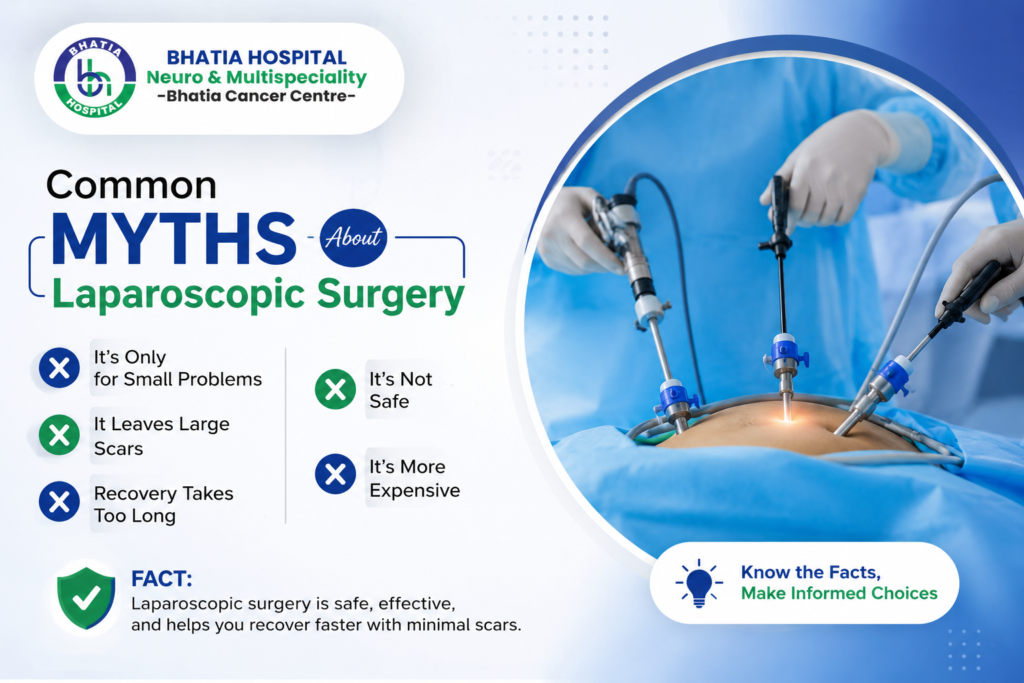
Common Myths About Laparoscopic Surgery | Bhatia Hospital
Laparoscopic surgery, also known as keyhole surgery or minimally major surgery, has changed the way many medical conditions are treated. It uses small cuts, a tiny camera, and specialized instruments to perform surgeries with greater precision. Despite its many benefits, several myths still make people feel worried or confused about the procedure.
At Bhatia Hospital, our experienced surgeons provide advanced laparoscopic procedures with a strong focus on patient safety, comfort, and faster recovery. Understanding the facts can help you make informed decisions about your treatment.
What Is Laparoscopic Surgery?
Laparoscopic surgery is a modern surgical method in which the surgeon makes a few small cuts instead of one large cut. The surgeon inserts a thin tube with a small camera, called a laparoscope, through a small cut. The camera shows clear images of the inside of the body on a monitor, helping the surgeon perform the operation safely.
This method is commonly use for:
- Gallbladder removal
- Appendix removal
- Hernia repair
- Gynecological surgeries
- Certain intestinal surgeries
- Diagnostic procedures
Common Myths About Laparoscopic Surgery
Myth 1: Laparoscopic Surgery Is Only for Minor Procedures
Fact:
Many people believe laparoscopic surgery is suitable only for simple operations. In reality, it is use for a wide range of complex surgeries, including hernia repair, gallbladder removal, appendix surgery, and some gastrointestinal and gynecological procedures.
Myth 2: It Is Less Safe Than Open Surgery
Fact:
Laparoscopic surgery is consider safe when performed by train and experience surgeons. Modern technology and high-definition cameras help surgeons perform procedures with excellent correct while less damage to surrounding tissues.
Myth 3: Recovery Takes the Same Time as Open Surgery
Fact:
One of the biggest advantages of laparoscopic surgery is faster recovery. Because the surgical cuts are much smaller, patients usually experience:
- Less pain
- Shorter hospital stays
- Faster recovery
- Earlier return to daily activities
- Less risk of wound complications
Myth 4: Laparoscopic Surgery Leaves Large Scars
Fact:
Unlike traditional surgery, laparoscopic procedures require only a few small surgical cuts. These tiny cuts usually recover well and leave minimal scars, making the cosmetic results much better for most patients.
Myth 5: It Is Too Painful
Fact:
Most patients experience significantly less pain after laparoscopic surgery compared to open surgery. Smaller cuts mean less tissue damage, leading to less discomfort and lower need for pain medications.
Myth 6: Older Adults Cannot Undergo Laparoscopic Surgery
Fact:
Age alone does not determine whether someone is suitable for laparoscopic surgery. Many older adults successfully undergo these procedures. The surgeon check each patient’s overall health, medical history, and condition before advisor the best treatment.
Myth 7: Laparoscopic Surgery Is More Expensive
Fact:
Although laparoscopic surgery uses advance tools, it can lower the overall treatment cost. Patients often spend less time in the hospital, recover faster, face fewer complications, and return to work and daily activities sooner.
Myth 8: Every Patient Is Eligible for Laparoscopic Surgery
Fact:
While laparoscopic surgery is suitable for many patients, it may not be the best option for everyone. Certain medical conditions, previous surgeries, or emergency situations may require open surgery. Your surgeon will advice the safest way based on your individual health needs.
Benefits of Laparoscopic Surgery
Laparoscopic surgery offers several advantages over traditional open surgery, including:
- Smaller cuts
- Less pain after surgery
- Faster recovery
- Shorter hospital stay
- Minimal blood loss
- Lower risk of infection
- Smaller scars
- Quicker return to normal activities
How to Prepare for Laparoscopic Surgery
Before your surgery, your doctor may advice:
- A complete medical evaluation
- Blood tests or imaging if needed
- Temporary fasting before the procedure
- Stopping certain medications as advised
- Arranging someone to go with you home after discharge
Following your surgeon’s instructions carefully helps ensure a smoother surgery and recovery.
Recovery After Laparoscopic Surgery
Recovery time depends on the type of procedure performed. Most patients can:
- Walk within a few hours after surgery
- Return home the same day or within 24 hours
- Resume light activities within a few days
- Return to work sooner than after open surgery
Your surgeon will give personalized instructions regarding diet, activity, wound care, and follow-up appointments.
When Should You Advice a Surgeon?
You should advice a qualified surgeon if you experience:
- Continuous abdominal pain
- Gallstones causing repeated signs
- Hernia swelling or discomfort
- Suspected appendicitis
- Unexplained abdominal conditions requiring diagnosis
- Conditions that may require minimally major surgery
Early advice helps determine the most suitable treatment before complications develop.
Why Choose Bhatia Hospital?
At Bhatia Hospital, we are committee to providing advance surgical care using modern laparoscopic method. Our experienced surgical team focuses on correct diagnosis, personalized treatment plans, patient safety, and faster recovery, helping patients return to their normal lives with confidence.
Conclusion
Laparoscopic surgery is a safe and effective option for treating many medical conditions. Unfortunately, several myths continue to prevent patients from choosing this advanced treatment. Knowing the facts can help you make informed healthcare decisions. If your doctor advices laparoscopic surgery, discussing your concerns with an expert surgeon can give you the confidence to move forward with the right treatment.
Frequently Asked Questions (FAQs)
Is laparoscopic surgery safer than open surgery?
When perform by experience surgeons, laparoscopic surgery is consider safe and offers benefits such as smaller cuts, less pain, and faster recovery.
How long does it take to recover after laparoscopic surgery?
Recovery depends on the type of surgery, but many patients return to normal daily activities within a few days to two weeks.
Will laparoscopic surgery leave noticeable scars?
The procedure uses very small cuts, so scars are usually minimal and become less visible over time.
Is laparoscopic surgery painful?
Most patients experience less pain than with traditional open surgery because the surgical cuts are much smaller.
Can every surgery be perform laparoscopically?
No. While many conditions can be treat using laparoscopic methods, some patients or complex cases may require open surgery based on the surgeon’s assessment.