
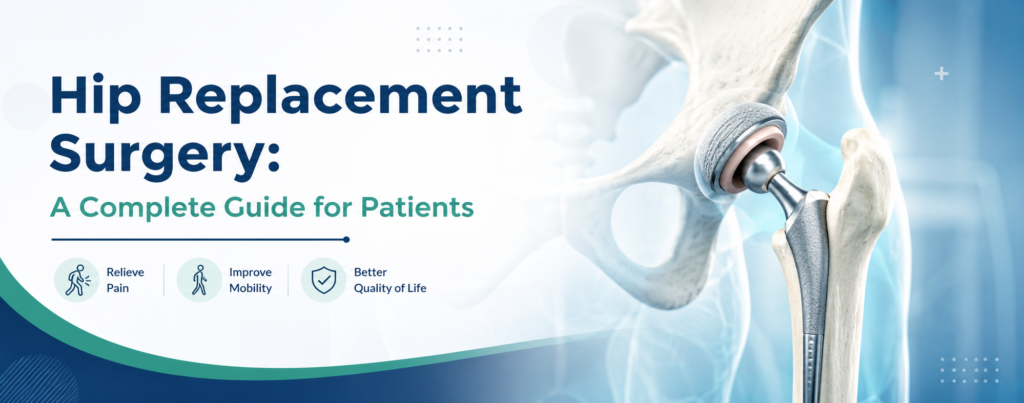
Hip Replacement Surgery: A Complete Guide for Patients
Hip pain can make daily life difficult. As a result, walking, climbing stairs, or even sleeping may become painful.. However, if medicines and therapy no longer help, Hip Replacement Surgery may offer pain relief.
This guide explains the procedure in simple words. It also covers recovery, benefits, and what to expect before and after surgery. As a result, you can make informed decisions about your health.
What Is Hip Replacement Surgery?
Hip Replacement Surgery is a procedure that changes a damage hip joint with an artificial joint. The new joint helps reduce pain. As a result, it improves movement.
Doctors usually recommend this surgery when other treatments no longer work. The artificial joint allows many people to return to daily activities with less pain .
Who Needs Hip Replacement Surgery?
Not every person with hip pain needs operation. However, some people may benefit greatly.
Your doctor may suggest Hip Replacement Surgery if you have:
- Severe hip pain during daily activities
- Pain that continues even after rest
- Less movement in the hip joint
- Hip stiffness that affects walking
- Wear-and-tear arthritis of the hip
- A disease that causes joint inflammation arthritis
- Hip fractures
- Damage cause by injury
Also, early check-ups help doctors choose the right treatment.
Understanding Hip Replacement Surgery Step by Step
Many people worry before surgery. However, understanding each step can reduce stress.
1. Medical Evaluation
The orthopedic surgeon checks your health. Then, blood tests, X-rays, and other scans help plan the surgery.
2. Preparing for Surgery
Your doctor explains the procedure. You also get instructions about medicines, food, and hospital admission.
3. The Surgery
The surgeon removes the damage parts of the hip joint. Next, the surgeon places a Strong artificial artificial joint.
4. Recovery Room
Doctors check your health after surgery. Pain control begins right away..
5. Rehabilitation
Physical therapy starts early. Then, regular exercises help build strength and improve movement.
How Is Hip Replacement Surgery Perform?
Many patients ask how the operation works.
First, the surgeon makes a small cut near the hip. The damage bone and cartilage are remove carefully. An artificial joint replaces the damaged one. Then, a metal or ceramic ball replaces the worn hip joint.
Finally, the surgeon checks the joint for easy movement before closing the cut.
Modern surgical ways often reduce pain and support faster recovery.
Benefits of Hip Replacement Surgery for Arthritis
Hip arthritis often causes severe pain and difficulty moving . Surgery can change quality of life when other treatments fail.
Common benefits include:
- Less hip pain
- Better movement
- Improve balance
- Easier walking
- Better sleep
- Greater independence
- Improve quality of life
Many patients return to normal routines after proper treatment.
Is Hip Replacement Surgery Safe?
Hip Replacement Surgery has a high success rate. Skill surgeons perform this procedure every day.
Like any surgery, some risks remain.
Possible risks include:
- Infection
- Blood clots
- Bleeding
- Implant wear
- Joint dislocation
- Nerve injury
Your medical team takes several steps to lower these risks.
What to Expect After Hip Replacement Surgery ?
Recovery begins soon after surgery.
Most patients stand and walk with support within one or two days. Physical therapy continues for several weeks. Daily activities become easier as strength improves.
Your doctor also gives advice about walking, sitting, climbing stairs, and sleeping safely.
Regular follow-up visits help monitor healing.
Recovery After Total Hip Replacement Surgery
Recovery differs for every patient. Age, health, and exercise all affect healing.
Most people notice steady improvement during the first few months.
Recovery usually includes:
- Pain management
- Walking exercises
- Muscle strengthening
- Balance training
- Regular physiotherapy
- Healthy nutrition
Following your doctor’s advice supports better recovery.
How Long Does It Take to Recover from Hip Replacement Surgery?
Many patients recover well within six to twelve weeks. However, complete healing may take several months.
Most patients return to light daily activities within a few weeks. Heavy exercise should begin only after medical approval.
Consistency during rehabilitation leads to better results.
Tips for a Smooth Recovery
Simple habits support healing.
- Attend every follow-up appointment.
- Complete your physical therapy sessions.
- Walk regularly as advised.
- Eat healthy meals.
- Stay hydrated.
- Take medicines on time.
- Avoid sudden twisting movements.
- Keep your home safe from falls.
Small daily efforts make recovery easier.
When Should You Contact Your Doctor?
Contact your doctor if you notice:
- High fever
- Severe swelling
- Increased pain
- Redness around the wound
- Drainage from the incision
- Difficulty walking suddenly
- Chest pain
- Shortness of breath
Early medical care helps prevent serious complications.
Why Choose an Experienced Orthopedic Team?
Choosing the right hospital matters.
An experienced orthopedic team offers:
- Accurate diagnosis
- Modern surgical techniques
- Personalized treatment plans
- Advanced operation facilities
- Skilled rehabilitation support
- Regular follow-up care
A patient-focused approach improves confidence throughout treatment.
Conclusion
Hip Replacement Surgery offers hope for people living with long-term hip pain. It can reduce discomfort, improve movement, and restore independence. Early consultation also helps you understand every treatment option. If hip pain affects your daily life, speak with an experienced orthopedic specialist. The right care today can help you enjoy a healthier and more active future. Follow up Instagram and Facebook for more infomation.
Frequently Asked Questions
Who needs Hip Replacement Surgery?
People with severe hip pain, arthritis, or joint damage that affects daily life may need surgery.
Is Hip Replacement Surgery painful?
Doctors use anesthesia during surgery. Pain after surgery improves with medicines and rehabilitation.
How long does Hip Replacement Surgery take?
Most procedures take one to two hours, depending on the patient’s condition.
When can I walk after surgery?
Many patients begin walking with support within one or two days.
How long does the artificial hip last?
Many modern hip implants last 15 to 20 years or longer with proper care.
Can I return to normal life after surgery?
Yes. Most patients return to many daily activities after recovery and rehabilitation.