
Importance of 24 Hours Critical Care Support
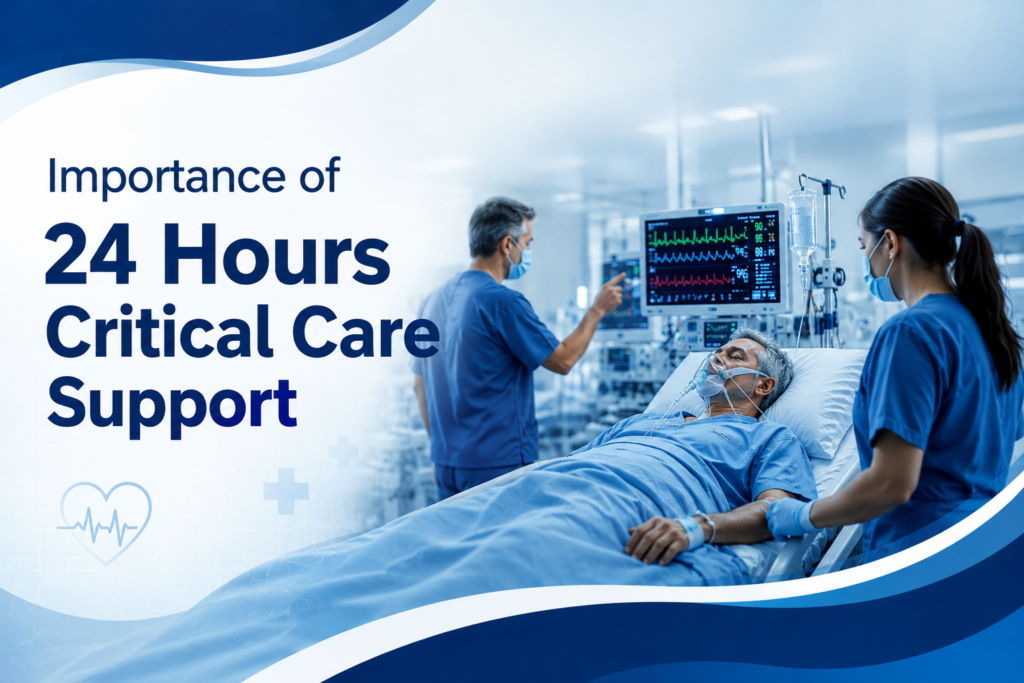
Medical emergencies can happen at any time. A heart attack, severe infection,, this serious issue, or accident In some cases during the day or late at night.
In such conditions, fast medical help can make a major difference. 24/7 critical care provides fast treatment and helps keep patients stable when every second matters.
Also, stop problems and help patients heal faster. Bhatia Hospital knows the Importance of 24 hour critical care support and provide advance care to their patients.
What Is 24/7 Critical Care Support?
In simple words, 24/7 critical care support provides specialized medical care day and night for serious health conditions. In the ICU, doctors and nurses use advanced systems to give continuous patient care.
Doctors check body signs, for emergencies, and respond quickly to any changes in a patient’s condition.
Key Components of Critical Care
- 24/7 patient check-up
- Emergency treatment
- Medical machines
- Breathing help
- Specialized nursing care
- Quick response to problems
Major Benefits of 24-hour critical care
1. Fast emergency response
2. Regular checking
3. Early finding of problems
4. Higher chance of living
5. Good recovery results
6. Reduced risk of permanent damage
How does fast critical care save people?
Quick medical care affects serious cases. For example, a patient experiencing a stroke needs treatment as soon as possible. Early treatment can lower brain damage and help patients get better.
Similarly, patients with severe infections, heart attacks, or breathing difficulties benefit from immediate medical attention. Because of this, hospitals with 24/7 critical care support can provide timely treatment whenever emergencies occur.
How Continuous Monitoring Helps Patients?
Continuous monitoring is one of the most important parts of critical care. Doctors and nurses check patients all over the day and night.
They watch important body signs such as heart rate, blood pressure, oxygen levels, and breathing. If a patient’s condition suddenly changes, the medical team can respond quickly.
Fast action helps prevent serious problems and improves recovery. Continuous checking also helps doctors adjust treatment when needed.
As a result, patients receive the right care at the right time. For many critically ill patients, continuous monitoring can make a major difference in treatment success.
Common Problems Treated in Special Care Units
- Heart attack
- Brain attack
- Serious infections and blood infection
- Physical damage
- Brain damage
- Breathing failure
- Organ stop working
- Serious surgeries
- Poison cases
- Deep burns
Essential ICU Facilities
- Patient checking systems
- Breathing support
- Heart checking machines
- Emergency medicines ready
- Breathing support Infection
- Safety Steps Expert
- ICU doctors and nurses
- Quick check-ups
Patients who need ICU care
- Old patients who are very sick
- Accident patients
- Patients healing from serious surgery
- People with bad infections
- Patients with Brain problems
- People with heart problems
How ICU Teams Work Together?
Critical care needs teamwork. Different healthcare experts work together to provide complete patient care.
A critical care team may include:
-ICU doctors
-Emergency doctors
-Neurologists Nurses
-Breathing experts
-Lab workers
-Physical health workers
Each team member has an important role. Doctors create treatment plans. Nurses provide ongoing care. health workers help support breathing and recovery.
Because of this teamwork, patients receive better and faster treatment
Why Every Minute Matters During an Emergency?
Late treatment can make the condition worse.
For example:
Heart Attack
Quick treatment helps bring blood flow back to the heart. Early care can also reduce damage to the heart and help the patient recover better.
Stroke
Doctors often say “Time is brain.” Fast treatment helps protect brain cells and improves recovery. So, quick action is very important.
Severe Infection
Serious infections can spread quickly through the body. Immediate treatment helps stop the infection from becoming more dangerous.
Breathing Failure
Patients who cannot breathe properly may need oxygen support or breathing machine care right away. Hospitals with 24/7 critical care support can deal with emergencies at any time.
Family Support During Critical Care
A medical emergency is very stressful for patients and their families. Good hospitals care for patients and also support their family members during treatment. They give updates, explain the condition, and help them feel calm and informed.
Healthcare teams help families by:
-Sharing regular updates
-Explaining treatment plans
-Answering questions
-Giving emotional support
-Helping families make important decisions
-Providing information about visiting hours
Good communication helps families feel informed and trusting of the care of their loved one. That is why there is a huge Importance of 24 hour critical care support for patients and their families.
How Advanced ICU Equipment Supports Treatment?
Modern ICU rooms use advanced machines to help doctors treat serious patients. These machines help in breathing support, heart check, and constant monitoring. As a result, patients get safe and quick treatment.
Important ICU equipment includes:
Ventilators
Ventilators help patients breathe when they cannot breathe properly on their own. They give oxygen to the body and support breathing. This helps patients stay stable in serious conditions and survive until they get better.
Patient Monitors
These systems check heart rate, oxygen level, and blood pressure all the time. They help doctors see any changes quickly. This makes it easy to give fast treatment and keep patients safe.
Infusion Pumps
Infusion pumps help deliver medicines safely and accurately.They are especially important for patients with life threatning conditions who need precise treatment.
Oxygen support helps patients who have breathing difficulties and need extra oxygen.
Advanced ICU equipment helps doctors and nurses give better care to very sick patients. It helps in fast treatment and keeps patients safe. It also helps doctors watch patients closely and act quickly in emergencies. As a result, patients get better care and faster recovery.
Symptoms that need emergency care
Finding signs early saves lives.
Get urgent medical help if someone has:
- Chest pain
- Weakness on one side
- Breathing problem
- No response
- Strong head injury
- Heavy bleeding
- Very high fever and not understanding
- Body shaking
Get medical help now
Why Choose a Hospital with 24/7 Urgent Care Support?
Hospitals that provide continuous critical care services can respond quickly during emergencies.
Key advantages include:
- Fast doctor help
- Fast care decisions
- Life-saving machines
- Always watching patient
- Better hospital teamwork
These factors help improve patient safety and care results.
Key Takeaways
- 24/7 critical care support gives 24/7 care for dangerous health problem
- Immediate treatment can significantly improve survival rates.
- As a result, teams check patients 24/7.
- Conditions such as stroke, heart attack, and severe infections often require ICU care.
- This helps improve patient results.
- Early medical help stop serious problems.
Conclusion
The importance of 24 hour critical care support is very much for doctors and hospitals. Medical emergencies often happen without warning and require immediate attention. Fast treatment, continuous monitoring, and expert care help improve patient safety and recovery.
Critically ill patients, especially ICU patients, need close monitoring because their condition can change quickly. Therefore, hospitals must provide skilled doctors, trained nurses, advanced equipment, and emergency support at all times.
At Bhatia Hospital Neuro & Multispeciality, Patiala, experienced specialists and modern ICU facilities work together to provide round-the-clock critical care.
The hospital focuses on patient safety, quick response, and quality treatment for every ICU patient. If you see any signs of a medical emergency, go to the hospital right away. Do not wait. Get medical help immediately. Early treatment can make a big difference and can help save lives.
FAQ’s
What is 24/7 critical care support?
Doctors and nurses give care to very sick patients all day and all night without stopping. They watch the patient closely, use medical machines, and give quick treatment whenever needed. This care helps keep patients safe in emergencies and supports faster recovery.
Why is round-the-clock critical care important?
It is important because doctors and nurses are always available. They give fast treatment and constant care. This helps patients stay safe, get better quickly, and survive serious health problems.
Who needs critical care treatment?
Patients who are very sick need critical care. For example, people with a heart attack, stroke (brain attack), serious infection, major injury, or breathing problems need ICU care. They need constant monitoring and fast treatment to stay safe and recover.
What happens in an ICU?
In the ICU, doctors and nurses watch patients all the time. They check the patient’s health closely and give fast treatment. They also use medical machines to support breathing, heart function, and other body needs.
Can critical care improve health results?
Yes. Critical care can improve health results. Doctors give early treatment and keep checking patients all the time. This helps stop problems early and supports faster and better recovery.
How is critical care different from regular hospital care?
Critical care provides regular checking and special care for serious problems.
Are critical care services available at night?
Yes, critical care works 24/7. Doctors and nurses care for patients day and night and give quick treatment when needed.