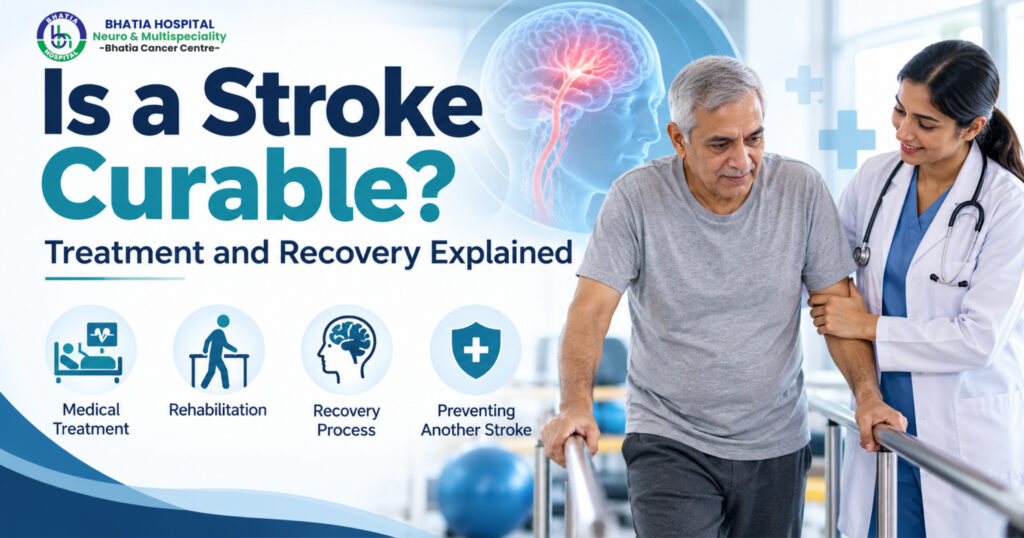
Is a Stroke Curable? Treatment and Recovery Explained
A stroke can sometimes lead to a full recovery, but not every person recovers completely. The outcome depends on the type of stroke, the area and extent of brain damage, how quickly treatment begins, and the person’s overall health.
Stroke treatment can limit further damage, manage complications, and support recovery. Rehabilitation may help a person regain movement, speech, balance, and independence. However, some people continue to experience long-term effects.
Quick Answer: Is a Stroke Curable?
A stroke is treatable, but a complete cure cannot be guaranteed. Some people recover fully, while others have lasting difficulties with movement, speech, memory, or daily activities. Early emergency treatment, appropriate medical care, rehabilitation, and prevention of another stroke can all play important roles in the recovery process.
If someone develops sudden facial drooping, weakness on one side, difficulty speaking, vision changes, or loss of balance, seek emergency medical help immediately. In India, call 112 or your local emergency ambulance service. Do not wait to see whether the symptoms improve.
What Happens During a Stroke?
1. Ischemic Stroke:
An ischemic stroke occurs when a blood clot or another blockage stops blood from reaching part of the brain. Treatment may focus on restoring blood flow and preventing further clots, depending on the patient’s condition.2. Hemorrhagic Stroke:
A hemorrhagic stroke occurs when a blood vessel in or around the brain breaks and causes bleeding. Treatment focuses on controlling the bleeding, managing pressure inside the skull, and treating the underlying cause. Doctors must identify the type of stroke before deciding on treatment. The treatments used for one type may not be suitable for the other.How Is a Stroke Treated?
Stroke treatment depends on the type of stroke, when symptoms began, scan findings, and the person’s medical condition.
Emergency assessment and brain scans:
Treatment for ischemic stroke
Some eligible patients may receive thrombolysis, a treatment that uses medicine to break down a blood clot. Selected patients may be considered for mechanical thrombectomy, a procedure that removes a clot from a blocked blood vessel.
These treatments have specific eligibility requirements and time windows. Not every patient qualifies. The treating team must assess the likely benefits and risks.
Treatment for hemorrhagic stroke
Treatment may involve careful blood pressure management, medicines to manage complications, and procedures or surgery in selected cases. The approach depends on where the bleeding occurred, its cause, and its severity.
Preventing another stroke
Can the Brain Recover After a Stroke?
The brain can sometimes adapt after a stroke. This ability is often called neuroplasticity. During recovery, the brain may learn new ways to perform certain tasks, while rehabilitation helps patients practise skills affected by the stroke.
However, recovery does not mean that all damaged brain tissue returns to normal. The degree of improvement varies, and some effects may remain.
A person may improve in areas such as:
Walking, balance, and coordination
Arm and hand movement
Speaking and understanding language
Swallowing, when assessed and managed appropriately
Memory, attention, and problem-solving
Performing daily tasks with greater independence
The amount of improvement depends on the individual’s condition and response to treatment and rehabilitation.
How Long Does Stroke Recovery Take?
There is no single recovery timeline that applies to everyone. Some people make noticeable progress in the first days or weeks. Others need months or years of rehabilitation and support.
| Recovery stage | What may happen |
|---|---|
| First hours and days | Emergency treatment, monitoring, and assessment of stroke-related problems |
| Early recovery | Rehabilitation may begin in hospital when the medical team considers it appropriate |
| Following weeks and months | Ongoing therapy may help improve movement, communication, balance, and daily activities |
| Longer term | Some people continue to improve, while others need ongoing therapy, equipment, or help with daily tasks |
This is a general guide, not a guaranteed schedule. Recovery depends on the extent of the stroke, the person’s health, complications, and the rehabilitation plan.
What Is Stroke Rehabilitation?
Stroke rehabilitation helps a person practise abilities affected by the stroke. The team assesses the patient’s needs and sets suitable goals.
Rehabilitation may include:
Physiotherapy:
Physiotherapy may help improve strength, movement, balance, coordination, and walking ability. Exercises should match the patient’s needs and safety level.
Occupational therapy:
Occupational therapy helps people practise daily activities such as dressing, bathing, eating, and using household items. A therapist may also suggest ways to make the home safer.
Speech and language therapy
A stroke may affect speaking, understanding language, reading, writing, or swallowing. A speech and language therapist can assess these difficulties and recommend suitable treatment.
Cognitive and emotional support
Some people experience memory problems, reduced concentration, anxiety, low mood, or changes in behaviour after a stroke. Discuss these changes with the healthcare team so the patient can receive appropriate assessment and support.
Rehabilitation may start in hospital and continue after discharge. The timing and type of therapy depend on the person’s medical stability and individual needs.
Can Paralysis After a Stroke Improve?
What Factors Affect Stroke Recovery?
Several factors may influence recovery:
Time to treatment: Prompt assessment can help determine whether emergency treatments are suitable.
Type of stroke: A blocked blood vessel and bleeding in the brain require different treatment approaches.
Extent of brain injury: The affected brain area and severity of damage influence the problems a person may experience.
Existing health conditions: Conditions such as high blood pressure, diabetes, and heart disease can affect ongoing care.
Rehabilitation: Appropriate, regular therapy may help patients practise affected skills.
Support at home: A safe environment and help from family or caregivers may support daily recovery.
Follow-up care: Medical reviews help monitor progress, manage risk factors, and adjust the treatment plan.
These factors help guide care, but they cannot predict an individual’s outcome with certainty.
How Can You Reduce the Risk of Another Stroke?
A person who has experienced a stroke may be at increased risk of having another one. Follow-up care is important even when symptoms improve.
Steps may include:
Taking prescribed medicines as instructed.
Monitoring and managing blood pressure.
Managing diabetes and cholesterol.
Following medical advice about diet and physical activity.
Avoiding smoking and discussing alcohol use with a clinician.
Attending follow-up appointments.
Following the treatment plan for heart rhythm problems or other identified causes.
Ask the treating doctor which risk factors are relevant to your case. Do not use another person’s medicines or follow a stroke prevention plan without medical advice.
When Should You Seek Emergency Medical Help?
Stroke is a medical emergency. Call 112 in India if a person suddenly develops any of these symptoms:
Drooping on one side of the face
Weakness or numbness in an arm or leg, especially on one side
Slurred speech or difficulty understanding others
Sudden loss of balance or coordination
Sudden vision changes
A sudden, severe headache without a known cause
Note the time symptoms started or when the person was last known to be well. Do not give food, drink, aspirin, or other medicines unless an emergency medical professional advises you to do so.
Even if the symptoms disappear, urgent medical assessment is still necessary. Brief symptoms may indicate a transient ischemic attack (TIA), which can be a warning sign of a future stroke.
Stroke Treatment and Specialist Care in Patiala
People who have had a stroke may need emergency assessment, specialist medical care, rehabilitation, and long-term follow-up. The appropriate care depends on the type of stroke and the patient’s current condition.
Bhatia Hospital Neuro & Multispeciality in Patiala provides information about its neurology and neurosurgery services on its website. Patients and families can review the neurology and neurosurgery information or use the hospital contact page for enquiries.
Important: If stroke symptoms are happening now, do not delay emergency care to arrange a routine appointment. Call 112 or your local emergency ambulance service.
Conclusion:
A stroke can be treated, and some people recover fully. Others may experience lasting difficulties and need continued support. The outcome depends on several factors, including the type of stroke, the extent of brain injury, the speed of treatment, and rehabilitation.
Recognising symptoms quickly, getting emergency medical care, following the treatment plan, and attending rehabilitation and follow-up appointments can support recovery and help reduce the risk of another stroke. No article can predict how much an individual will recover; the treating healthcare team is best placed to discuss the patient’s situation.
FAQ Section:
Is a stroke completely curable?
A stroke is treatable, but complete recovery cannot be guaranteed. Some people regain their previous abilities, while others experience lasting effects. Recovery depends on the extent of brain injury, treatment, and rehabilitation.
Can a person live a normal life after a stroke?
Some people return to their previous routines after a stroke. Others need changes to their daily activities or ongoing support. Recovery depends on the effects of the stroke and the person’s progress.
How long does it take to recover from a stroke?
Recovery may take weeks, months, or years. Some people improve quickly, while others need long-term rehabilitation. The treating team can provide a more individual assessment as recovery progresses.
Can paralysis after a stroke be reversed?
Weakness or paralysis may improve after a stroke, but the amount of recovery varies. Rehabilitation may help improve movement and daily function. Complete recovery is not possible for everyone.
Can brain damage caused by a stroke heal?
The brain may adapt after a stroke, helping some people regain certain abilities. However, damaged brain tissue does not always return to normal. Recovery depends on the location and extent of the injury.
What treatment is given after a stroke?
Treatment depends on whether the stroke is caused by a blockage or bleeding. It may involve clot-dissolving medicine, clot removal, management of bleeding, medicines to prevent another stroke, and rehabilitation.
Can a stroke happen again after recovery?
Yes. A person who has had a stroke may be at increased risk of another stroke. Medical follow-up, prescribed medicines, and management of risk factors can help reduce this risk.
When should stroke rehabilitation begin?
Rehabilitation may begin in hospital once the medical team considers it appropriate. The timing and type of therapy depend on the patient’s medical stability, abilities, and treatment needs.
Which doctor treats a stroke in Patiala?
Stroke care may involve emergency doctors, neurologists, neurosurgeons, and rehabilitation professionals. The specialists involved depend on the type of stroke and the patient’s condition. For current symptoms, seek emergency care rather than waiting for an appointment.