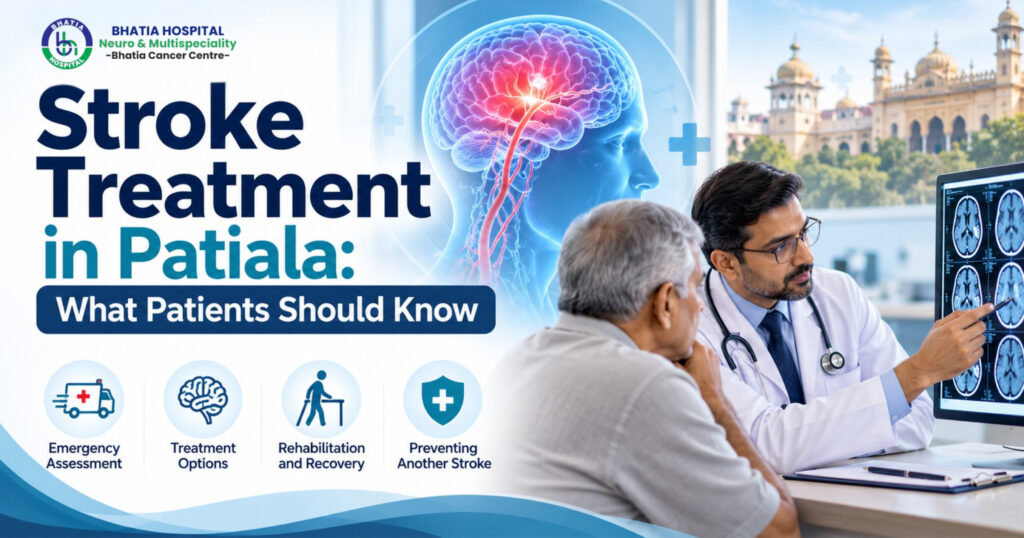
Stroke Treatment in Patiala: What Patients Should Know
A stroke is a medical emergency that requires immediate assessment. It happens when blood flow to part of the brain is blocked or when a blood vessel in the brain bursts. Quick medical attention can help doctors identify the type of stroke and decide which treatment may be appropriate.
For patients and families in Patiala, understanding the treatment process can help them make informed decisions for stroke treatment in Patiala. This guide explains stroke warning signs, hospital assessment, treatment options, rehabilitation, and questions to discuss with the healthcare team.
If someone develops sudden signs of a stroke, call 112 in India or your local emergency ambulance service. Do not wait for a routine appointment.
What Is a Stroke?
A stroke occurs when part of the brain does not receive enough blood or when bleeding damages brain tissue. Brain cells can become injured, which may affect movement, speech, vision, memory, or other functions.
There are two main types of stroke.
Ischemic stroke
An ischemic stroke occurs when a blood clot or another blockage reduces blood flow to part of the brain. Treatment may aim to restore blood flow when appropriate and prevent further complications.
Hemorrhagic stroke
A hemorrhagic stroke occurs when a blood vessel breaks and causes bleeding in or around the brain. Treatment may focus on controlling bleeding, managing pressure inside the skull, and addressing the cause.
The treatments for these two types of stroke are different. Brain imaging and medical assessment help doctors determine which type has occurred.
What Are the Warning Signs of a Stroke?
Recognising symptoms quickly is important. Stroke symptoms often appear suddenly and may include:
Face: One side of the face droops or feels numb.
Arms: One arm becomes weak or difficult to lift.
Speech: Speech becomes slurred, unclear, or difficult to understand.
Balance: Sudden dizziness, loss of balance, or difficulty walking.
Eyes: Sudden loss of vision or changes in vision.
Severe headache: A sudden, severe headache without a known cause.
Remember the signs using the B.E. F.A.S.T. approach: Balance, Eyes, Face, Arms, Speech, and Time.
If any warning sign appears suddenly, call 112 or your local emergency ambulance service. Note when the symptoms began or when the person was last known to be well. Do not delay care even if symptoms improve or disappear.
How Is a Stroke Diagnosed in Hospital?
Medical and neurological examination
Doctors ask about symptoms, when they started, existing health conditions, and medicines the patient takes. They may assess strength, speech, alertness, vision, coordination, and other neurological functions.
Brain imaging
A CT scan or MRI may help identify bleeding or other changes in the brain. Additional tests may be required to assess blood vessels and investigate the possible cause of the stroke.
Blood tests and other investigations
Blood tests and other investigations may help assess the patient’s condition and identify factors that influence treatment decisions. Depending on the situation, doctors may also investigate heart rhythm, blood pressure, diabetes, cholesterol, and other risk factors.
The exact tests depend on the patient’s symptoms, examination findings, and clinical needs.
What Stroke Treatment Options May Be Available?
Stroke treatment depends on the type of stroke, symptom onset, scan results, the patient’s medical history, and eligibility for specific treatments.
Treatment for ischemic stroke
Some eligible patients may receive thrombolysis, a medicine-based treatment that helps dissolve a blood clot. Selected patients may be considered for mechanical thrombectomy, a procedure used to remove a clot from a blocked blood vessel.
These treatments have specific eligibility criteria and time windows. Not every patient is suitable for them, so the treating team must assess the situation urgently.
Treatment for hemorrhagic stroke
Treatment for a stroke caused by bleeding may include careful blood pressure management, medicines to manage complications, and procedures or surgery in selected cases.
The treatment plan depends on the location and amount of bleeding, its cause, and the patient’s condition. Not every patient requires surgery.
Monitoring and supportive care
Preventing another stroke
After the immediate emergency, doctors may recommend treatment to reduce the risk of another stroke. Depending on the cause, this may include prescribed medicines and management of high blood pressure, diabetes, cholesterol, heart rhythm problems, and other risk factors.
Patients should not start, stop, or change medicines without advice from their treating clinician.
How to Choose Stroke-Related Medical Care in Patiala
When discussing the right medical care for stroke treatment in patiala , ask questions that help clarify what assessment and treatment are available.
Consider asking:
Is emergency assessment available for suspected stroke?
Can urgent brain imaging be arranged, or where will it be performed?
Is a neurologist available to assess the patient’s condition?
If a procedure is needed, can it be provided at this hospital or is transfer required?
What monitoring and supportive care may be needed?
What rehabilitation and follow-up arrangements should be made?
Who should the family contact for updates and discharge instructions?
Availability can differ between hospitals and may change. Confirm current services directly rather than assuming that every treatment is available at every facility.
Important: If stroke symptoms are occurring now, do not spend time comparing hospitals or making routine enquiries. Call 112 or your local emergency ambulance service and follow the emergency team’s instructions.
What Happens After Stroke Treatment?
The next stage depends on the patient’s condition and the effects of the stroke. Some people may return home with a follow-up plan. Others may need continued hospital care, rehabilitation, or help with daily activities.
The medical team may review the patient’s mobility, speech, swallowing, memory, and ability to carry out everyday tasks.
Before discharge, patients and families should ask about:
Medicines and how to take them
Follow-up appointments
Warning signs that require urgent attention
Safe movement and daily activities
Diet and swallowing advice, if relevant
Rehabilitation needs
Management of stroke risk factors
Follow the individual discharge instructions. Do not begin exercises or change the patient’s diet without appropriate guidance if swallowing or mobility is affected.
What Is Stroke Rehabilitation?
Stroke rehabilitation helps patients practise abilities affected by the stroke. The plan depends on the person’s needs and medical stability.
Physiotherapy
Physiotherapy may help patients work on movement, strength, balance, coordination, and walking.Occupational therapy
Occupational therapy may help people practise daily activities such as dressing, bathing, and using household items. Therapists may also recommend changes that make daily tasks safer.Speech and language therapy
A stroke may affect speech, understanding language, reading, writing, or swallowing. A speech and language therapist can assess these difficulties and recommend appropriate support.Cognitive and emotional support
Some people experience memory difficulties, changes in concentration, anxiety, or low mood after a stroke. Tell the healthcare team about these changes so they can assess the patient’s needs.
Recovery varies from person to person. Rehabilitation may continue for weeks, months, or longer, depending on progress and individual goals.
How Can Families Support Someone Recovering From a Stroke?
Family members and caregivers can help by following the treatment plan and communicating with the healthcare team.
Helpful steps include:
Keep a current list of medicines and appointments.
Help the patient attend recommended follow-up visits.
Follow advice about safe movement and daily activities.
Ask for demonstrations of any care tasks that need to be done at home.
Make pathways clear and reduce fall risks where possible.
Watch for new or worsening symptoms and seek medical help when needed.
Encourage rehabilitation exercises only as directed by the patient’s therapist.
Caregivers should also ask for guidance when they feel unsure about moving, feeding, or assisting the patient. The safest approach depends on the person’s specific condition.
Stroke Treatment and Specialist Care at Bhatia Hospital, Patiala
Patients and families seeking information about neurological care in Patiala can review the services listed on the Bhatia Hospital Neuro & Multispeciality website.
Read the hospital’s neurology and neurosurgery information to learn about the listed services. For enquiries about current service availability, appointments, or care arrangements, visit the Bhatia Hospital contact page.
Confirm directly with the hospital whether the assessment, specialist, procedure, or rehabilitation service needed for an individual patient is currently available.
If someone is showing signs of a stroke, do not delay emergency care while browsing online or arranging a routine consultation. Call 112 or your local emergency ambulance service.
Frequently Asked Questions:
Is stroke treatment available in Patiala?
Patients can contact hospitals in Patiala to ask about emergency assessment, neurological evaluation, diagnostic tests, treatment options, and follow-up care. Availability of specific treatments varies, so confirm directly with the hospital.
Which doctor treats a stroke?
Stroke care may involve emergency physicians, neurologists, neurosurgeons, and rehabilitation professionals. The team depends on the type of stroke and the patient’s condition.
Is a CT scan needed for a stroke?
Brain imaging, such as a CT scan or MRI, is commonly used to help doctors identify the type of stroke and guide treatment decisions. The treating team determines which investigations are appropriate.
Can a stroke be treated completely?
Some people recover fully after a stroke, while others experience lasting effects. The outcome depends on the extent of brain injury, the type of stroke, treatment, and rehabilitation. Complete recovery cannot be guaranteed.
How soon should a patient receive stroke treatment?
A suspected stroke requires emergency assessment immediately. Some treatments are time-sensitive, so do not wait for symptoms to improve or for a routine appointment.
Does every stroke patient need surgery?
No. Treatment depends on the type and cause of the stroke, scan findings, and the patient’s condition. Some patients need medicines and monitoring, while selected patients may require a procedure or surgery.
Conclusion:
Stroke treatment begins with urgent assessment to identify the type of stroke and determine the appropriate care. Treatment may involve medicines, procedures, monitoring, rehabilitation, and steps to reduce the risk of another stroke.
For patients and families in Patiala, asking about emergency assessment, diagnostic facilities, specialist availability, and follow-up arrangements can help clarify the care pathway. This helps local patients get proper care at the time of their stroke treatment in Patiala. However, a suspected stroke is always an emergency. Call 112 or your local emergency ambulance service immediately and follow professional medical instructions.