
Laparoscopy for Endometriosis: Procedure, Benefits & Recovery
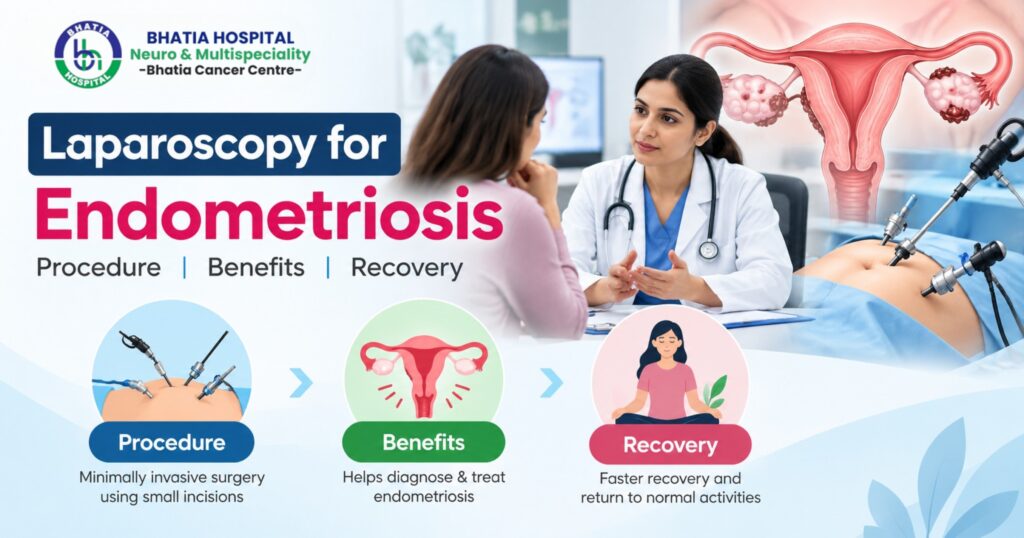
Laparoscopy for endometriosis is a minimally invasive procedure used to examine the pelvis and treat endometriosis when surgery is appropriate.
It uses a thin camera called a laparoscope. The surgeon inserts it through a small abdominal incision.
Laparoscopy may help identify endometriosis and may allow treatment during the same procedure. However, surgery is not automatically required for every patient with suspected endometriosis.
The decision depends on symptoms, imaging, previous treatment, fertility plans, and individual preferences.
What Is Laparoscopy for Endometriosis?
Laparoscopy is keyhole surgery used to examine the pelvic area for endometriosis.
If endometriosis is found, the surgeon may remove or treat visible lesions during the procedure.
The surgery is usually performed under general anaesthesia.
Small abdominal cuts are used instead of one large incision. Laparoscopy can therefore have both a diagnostic and treatment role.
What Is Endometriosis?
Endometriosis is a chronic condition involving tissue similar to the uterine lining outside the uterus.
It can affect areas such as:
- Ovaries
- Fallopian tubes
- Pelvic lining
- Bladder
- Bowel
- Areas around the uterus
The condition can cause inflammation and scar tissue.
Some patients experience severe pain. Others may have few or no symptoms.
Common symptoms include:
- Painful periods
- Pelvic pain
- Pain during sex
- Pain during bowel movements
- Pain while urinating during periods
- Heavy menstrual bleeding
- Difficulty becoming pregnant
Not every patient has the same symptoms.
What Is Laparoscopy for Endometriosis?
Laparoscopy is also called keyhole surgery.
The surgeon makes a small incision in the abdomen.
A laparoscope is then inserted through the incision.
The camera provides a view of the pelvic organs.
Additional small incisions may be made for surgical instruments.
The surgeon can then examine areas where endometriosis may be present.
If treatment is planned, visible endometriosis may also be removed during the sa
Is Laparoscopy Necessary for Every Patient With Endometriosis?
No.
This is an important point for patients to understand.
Endometriosis can be assessed through:
- Medical history
- Symptoms
- Physical examination
- Ultrasound
- MRI when appropriate
Current NICE guidance recommends imaging as part of the evaluation. It also allows laparoscopy to be considered when endometriosis is suspected, even when ultrasound or MRI is normal.
The choice depends on the individual case.
Your gynecologist may discuss surgery when symptoms continue despite treatment. Surgery may also be considered when treatment or direct assessment is needed.
When May Laparoscopy Be Recommended?
Laparoscopy may be considered in several situations.Persistent symptoms:
Severe or ongoing pelvic pain may affect daily life. If medicines are not providing enough relief, surgery may be discussed.Suspected endometriosis:
Laparoscopy can allow direct examination of the pelvis.
A biopsy may also be taken when appropriate.
Endometrioma:
An endometrioma is an ovarian cyst associated with endometriosis. Surgery may sometimes be considered depending on symptoms, fertility plans, cyst characteristics, and other factors.Infertility:
Endometriosis can be associated with difficulty becoming pregnant.
Treatment decisions should consider the patient’s fertility goals.
Deep endometriosis:
Endometriosis can sometimes involve the bowel, bladder, or ureters.
Complex disease may require specialist planning and expertise.
How Is Laparoscopy for Endometriosis Performed?
The procedure usually involves general anaesthesia.
You will be asleep during surgery.
Step 1: Anaesthesia
The anaesthesia team gives medicines to keep you asleep and comfortable.Step 2: Small abdominal incision
The surgeon usually makes a small incision near the belly button.
Step 3: Inserting the laparoscope
A thin camera is placed through the incision. The abdomen may be inflated with carbon dioxide. This creates space for the surgeon to see the pelvic organs.Step 4: Examining the pelvis
The surgeon looks for endometriosis and other abnormalities. They may assess the ovaries, tubes, uterus, bowel, bladder, and surrounding tissues.Step 5: Treating endometriosis
If operative treatment is planned, additional instruments can be inserted.
The surgeon may remove endometriosis or treat affected areas.
The exact technique depends on the location and extent of disease.
Can Endometriosis Be Removed During Laparoscopy?
Yes, when surgical treatment is appropriate.
Laparoscopy can allow treatment during the same operation.
Possible procedures include:
- Excision of endometriosis
- Treatment of selected lesions
- Removal of adhesions
- Treatment of an endometrioma
The procedure depends on where the endometriosis is located.
It also depends on how deeply it has affected surrounding tissues.
For deep endometriosis, surgery can be more complex. Specialist expertise may be required when the bowel, bladder, or ureters are involved.
What Are the Benefits of Laparoscopy for Endometriosis?
When surgery is appropriate, laparoscopy can offer several benefits.
Smaller incisions:
Laparoscopy uses small abdominal cuts.Direct view of the pelvis:
The surgeon can directly examine pelvic structures.Treatment during the same procedure:
Visible disease may be treated during surgery when planned.
Less invasive approach:
Compared with open abdominal surgery, keyhole surgery usually involves smaller incisions.
Recovery may be faster:
Laparoscopy generally has a faster recovery than open surgery. However, recovery depends on the complexity of the procedure.Can Laparoscopy Cure Endometriosis?
Laparoscopy can treat visible endometriosis, but it is not a guaranteed permanent cure.
Endometriosis is a chronic condition.
Pain or disease can return after surgery.
ACOG notes that symptoms may recur after surgical treatment. ACOG
Some patients may also need medical treatment after surgery.
Your gynecologist may discuss hormonal treatment based on your symptoms and pregnancy plans.
Is Laparoscopy for Endometriosis Painful?
The procedure itself is performed under anaesthesia.
You should not feel the surgery while you are asleep.
After surgery, some discomfort is expected.
You may experience:
- Abdominal soreness
- Incision pain
- Bloating
- Tiredness
- Shoulder pain
Shoulder pain can occur because of the gas used during laparoscopy.
Pain should generally improve as recovery progresses.
Severe or worsening pain needs medical assessment.
Can Laparoscopy Improve Endometriosis Pain?
Surgery may reduce endometriosis-associated pain for some patients.
However, the result varies.
Not all pelvic pain is caused by endometriosis.
Pain can also continue after surgery.
ESHRE recommends discussing surgical benefits, risks, and patient preferences before treatment.
This is why surgery should be planned for the individual patient.
Can Laparoscopy for Endometriosis Improve Fertility?
Endometriosis can affect fertility.
In selected patients, surgical treatment can improve the chance of spontaneous pregnancy.
NICE recommends discussing the potential benefits and risks of surgery when fertility is a priority.
However, surgery does not guarantee pregnancy.
Fertility planning may depend on:
- Age
- Ovarian reserve
- Endometriosis severity
- Previous surgery
- Tubal factors
- Partner fertility
- Pregnancy plans
Tell your gynecologist if you are planning pregnancy.
This information can change the treatment approach.
What About Laparoscopy for an Endometriosis Cyst?
An endometriosis cyst is called an endometrioma.
It commonly affects an ovary.
Surgery may be considered in selected patients.
However, ovarian surgery requires careful planning.
ESHRE recommends caution to minimise ovarian damage during endometrioma surgery.
Your doctor may discuss:
- Cyst size
- Symptoms
- Fertility goals
- Ovarian reserve
- Previous surgery
- Other treatment options
Do not assume that every endometrioma requires immediate surgery.
How Long Is Recovery After Laparoscopy for Endometriosis?
Recovery varies according to the procedure performed.
A diagnostic laparoscopy may have a shorter recovery.
Extensive surgery for deep endometriosis can require more time.
After laparoscopy, you may experience:
- Mild abdominal pain
- Bloating
- Shoulder discomfort
- Tiredness
- Bruising around the small incisions
The NHS states that recovery after laparoscopy varies. Diagnostic procedures may take up to around 10 days to recover from, while surgery can require longer. nhs.uk
Your surgeon will provide specific instructions for your procedure.
What Can You Do During Recovery?
Walking:
Gentle movement is usually encouraged.
Start slowly and increase activity as you feel better.
Work:
Your return to work depends on your procedure and job. Desk work may be possible sooner than physically demanding work.Exercise:
Avoid strenuous exercise until your surgeon clears you. Do not restart heavy lifting too quickly.Driving:
Do not drive until you can safely control the vehicle.
You should also follow your doctor’s advice and your insurer’s requirements.
The NHS advises avoiding driving for at least 48 hours after laparoscopy. It also recommends ensuring you can perform an emergency stop safely.
What Should You Eat After Laparoscopy for Endometriosis?
Your diet may depend on how you feel after surgery.
Unless your medical team gives different instructions:
- Drink enough fluids.
- Start with foods you tolerate well.
- Gradually return to your normal diet.
- Include nutritious foods during recovery.
- Follow any specific diet instructions from your hospital.
If nausea, vomiting, or difficulty eating continues, contact your healthcare team.
The NHS recommends fluids and a healthy diet during recovery from laparoscopy.
What Happens to Your Period After Laparoscopy?
Your menstrual cycle may not immediately feel the same after surgery.
The timing and symptoms of your next period can vary.
Hormonal medicines can also affect menstrual bleeding.
Do not assume that changes in your first cycle mean that something has gone wrong.
However, contact your gynecologist if you have unusually heavy bleeding, severe pain, or symptoms that concern you.
When Can You Have Sex After Laparoscopy?
The timing depends on the type of surgery and how your wounds are healing.
There is no single safe date for every patient.
Your surgeon may recommend waiting until:
- You feel comfortable
- Your wounds are healing
- Pain has improved
- Your surgeon confirms that sexual activity is appropriate
Follow the specific instructions given after your surgery.
Can You Do Yoga After Laparoscopy?
Gentle movement can be useful during recovery.
However, some yoga poses place pressure on the abdomen.
Avoid strenuous yoga or abdominal exercises until your surgeon allows them.
Gradually return to exercise as your recovery progresses.
What Are the Risks of Laparoscopy for Endometriosis?
Laparoscopy is a surgical procedure.
Like other operations, it has possible risks.
These can include:
- Bleeding
- Infection
- Blood clots
- Anaesthesia-related complications
- Injury to nearby organs
- Wound problems
- Need for open surgery
The risk can increase when endometriosis is extensive.
Disease involving the bowel, bladder, or ureters may require more complex surgery.
Your surgeon should explain the risks before you provide consent.
Can Endometriosis Return After Laparoscopy?
Yes, endometriosis can recur after surgery.
Surgery removes or treats visible disease.
It does not guarantee that endometriosis will never return.
Some patients may need further treatment later.
ACOG notes that pain can return after surgery.
Long-term management may involve medical treatment, follow-up, or further treatment when needed.
What Are the Warning Signs After Laparoscopy?
Contact your healthcare team if you develop:
- Fever
- Increasing abdominal pain
- Persistent vomiting
- Increasing abdominal swelling
- Redness around an incision
- Pus from a wound
- Significant bleeding
- Unusual vaginal discharge
- Leg pain or swelling
- Difficulty breathing
These symptoms can indicate a complication and need medical assessment.
Seek urgent medical care for severe breathing difficulty, chest pain, or other emergency symptoms.
Questions to Ask Before Endometriosis Laparoscopy
Before surgery, ask your gynecologist:
- Why do I need laparoscopy?
- Is the procedure for diagnosis, treatment, or both?
- What did my ultrasound or MRI show?
- Could I have an endometrioma?
- Could my bowel or bladder be involved?
- What treatment might be performed during surgery?
- How could surgery affect my fertility?
- Could surgery affect my ovarian reserve?
- How long might my recovery take?
- When can I return to work?
- When can I exercise?
- What are my alternatives to surgery?
- Will I need treatment after surgery?
- What symptoms should make me seek urgent help?
These questions can help you understand your treatment plan.
Laparoscopy for Endometriosis in Patiala
Patients in Patiala with persistent pelvic pain, painful periods, suspected endometriosis, or fertility concerns can seek gynecological evaluation.
Bhatia Hospital’s Gynecology Department in Patiala lists endometriosis, pelvic pain, infertility, and ovarian cysts among the conditions it manages. The department also lists several laparoscopic gynecological procedures.
The hospital’s verified gynecology service page can therefore be used as the main internal link for this article.
For an individual patient, the suitability of laparoscopy depends on medical evaluation.
Book a gynecology consultation
Bhatia Hospital is located at 19, Partap Nagar, Jai Jawan Colony, Patiala, Punjab 147001.
Conclusion:
Laparoscopy for endometriosis is a minimally invasive procedure that can help examine and treat endometriosis.
It uses small abdominal incisions and a camera.
When surgery is appropriate, visible endometriosis may be treated during the procedure.
However, not every patient needs laparoscopy.
The decision should consider symptoms, imaging, previous treatments, fertility plans, and personal preferences.
FAQS:
How long does laparoscopy for endometriosis take?
The duration varies according to the extent of endometriosis and the planned treatment. A simple diagnostic procedure may be shorter than extensive surgery.
Can I get pregnant after laparoscopy for endometriosis?
Pregnancy is possible after surgery, but results vary. Fertility depends on several factors, including age, ovarian reserve, disease severity, and other fertility factors.
Is laparoscopy for endometriosis painful?
The surgery is performed under anaesthesia. Some abdominal or shoulder discomfort can occur during recovery.
What should I eat after laparoscopy for endometriosis?
Follow your hospital’s instructions. Most patients can gradually return to foods they tolerate while maintaining good hydration and nutrition.
When can I return to work after endometriosis laparoscopy?
Start with gentle movement and follow your surgeon’s restrictions. Avoid strenuous exercise until you are medically cleared.
When can I exercise after endometriosis laparoscopy?
Start with gentle movement and follow your surgeon’s restrictions. Avoid strenuous exercise until you are medically cleared.
Can my period be different after endometriosis laparoscopy?
Your next period may not be exactly the same as usual. Hormonal treatment can also change bleeding patterns. Seek medical advice for very heavy bleeding or severe pain.