
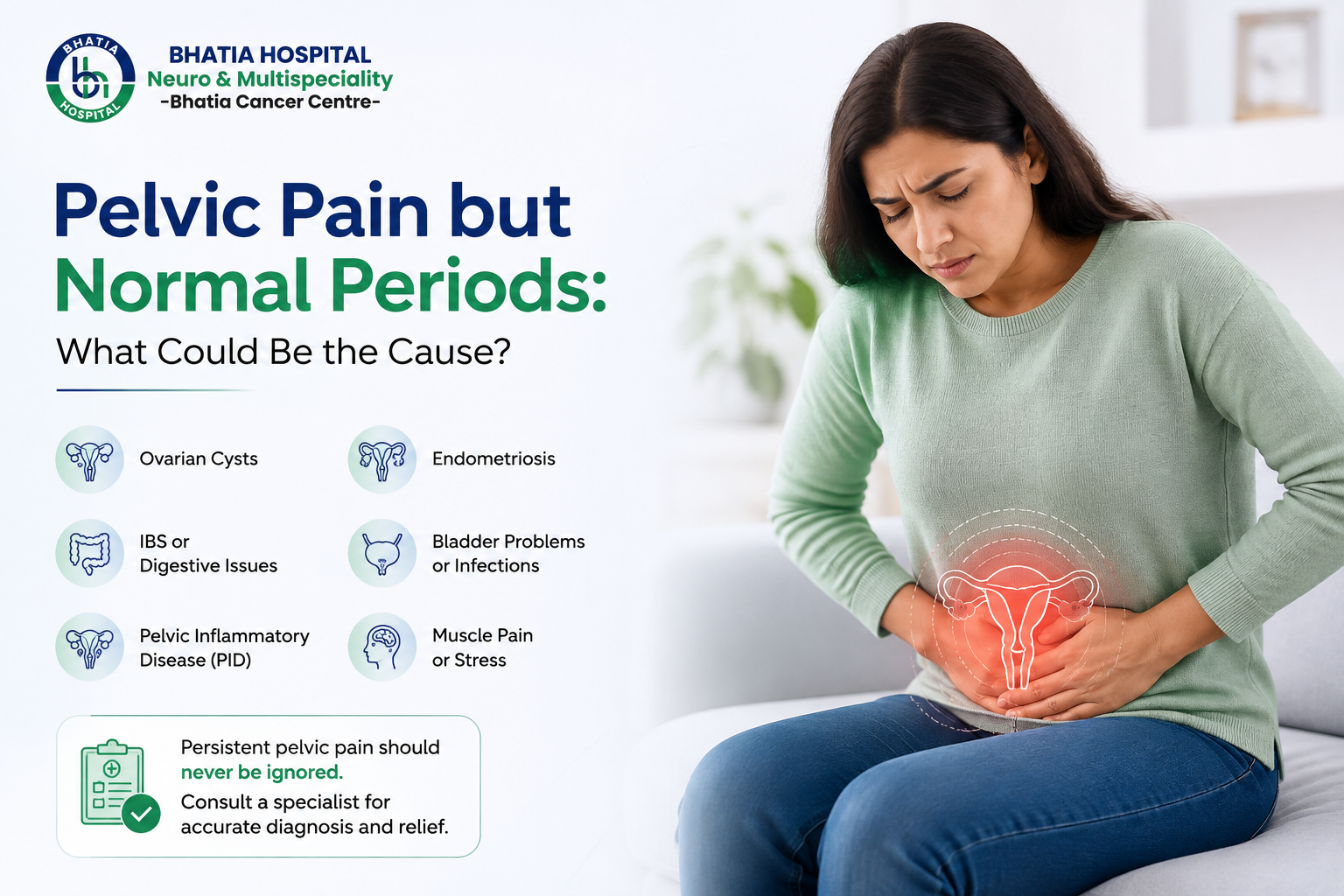
Pelvic Pain but Normal Periods: What Could Be the Cause?
Having regular periods does not always mean that your pelvic area is healthy. Pelvic pain in women can happen before, during, or between periods. The pain may feel like a pressure, burning, cramps, or a sharp pain. The pain may last for a few hours. It may also come back later.
So, why do I have pelvic pain but normal periods? There can be many reasons. For example, ovulation, ovarian cysts, endometriosis, infections, bladder problems, bowel problems, or tight pelvic muscles can cause pain.
Some causes are mild. Others need medical care. Therefore, do not ignore pain that keeps coming back or gets worse. If you live in Patiala or nearby areas of Punjab, a gynecologist can help find the cause. The doctor can also suggest the right treatment for you.
What Is Pelvic Pain?
Pelvic pain means pain in the lower belly or pelvic area. You may also feel pain in your lower back, hips, or genital area. The pain can be mild or severe. It may start suddenly or slowly. Also, it can come and go. Pelvic pain is a symptom, not a disease. Many health problems can cause the same type of pain. Sometimes, more than one problem can cause pelvic pain. Because of this, finding the main cause is important.
What is pelvic pain?
Pelvic pain is pain or discomfort in the lower belly or pelvic area. It can come from the uterus, ovaries, bladder, bowel, muscles, or nerves. The pain may be mild, strong, sudden, or long-lasting. Regular periods do not always rule out a health problem.
Why Can Pelvic Pain Happen With Normal Periods?
A normal period does not always mean that everything is fine inside the pelvis.
For example, endometriosis can occur even when periods are regular. Ovarian cysts can also cause pain without changing your period. In the same way, infections, bladder problems, and bowel problems can cause pelvic pain.
So, why does my pelvis hurt if my period is normal? The answer depends on the type of pain and your other symptoms.
Your doctor may ask when the pain starts. They may also ask where you feel it and how long it lasts. These details can help find the cause.
Common Causes of Pelvic Pain in Women
1. Ovulation Pain
Some women feel pain when an ovary releases an egg. This is called ovulation pain. It often happens around the middle of the menstrual cycle. You may feel the pain on one side of your lower belly. Usually, mild ovulation pain goes away on its own. However, severe pain needs a medical check-up.
Pain that returns every month may also need a doctor’s advice. This is especially true if the pain affects your daily life.
2. Endometriosis
Endometriosis happens when tissue similar to the lining inside the uterus grows outside the uterus.This condition can cause pelvic pain. It may also cause pain during sex, bowel problems, bladder problems, or trouble getting pregnant.
Can you have endometriosis with regular periods? Yes. Regular periods do not rule out endometriosis. Therefore, talk to a gynecologist if you have repeated pelvic pain. Your doctor can review your symptoms and decide if you need more tests.
3. Ovarian Cysts
An ovarian cyst is a fluid-filled sac that grows on an ovary. Many ovarian cysts cause no symptoms. They may also go away without treatment. However, some cysts can cause pelvic pain or pressure. You may also feel discomfort on one side.
In rare cases, a cyst can burst or cause the ovary to twist. This can lead to sudden and severe pain. If you have sudden, strong pelvic pain, seek medical help quickly.
4. Pelvic Inflammatory Disease
Pelvic inflammatory disease, or PID, is an infection of the female reproductive organs. It can cause lower belly pain, unusual vaginal discharge, pain during sex, fever, or bleeding between periods.
Some women may have only mild symptoms. Even so, the infection can cause problems if it goes untreated. So, see a doctor if you have pelvic pain with fever, unusual discharge, or pain during sex.
5. Fibroids and Adenomyosis
Fibroids are non-cancerous growths that can form in the uterus. They may cause pelvic pressure, pain, heavy periods, or bladder problems. Some women, however, have no symptoms.
Adenomyosis is another condition that can cause pelvic pain. It happens when tissue similar to the uterine lining grows into the muscle wall of the uterus. It can cause painful periods and pelvic pain. However, not every woman has heavy or unusual bleeding.
6. Urinary Problems
The bladder and urinary tract can also cause pelvic pain. For example, a urinary tract infection can cause burning when you urinate. You may also need to urinate more often.
Lower belly pain can happen too. Some bladder problems can cause pain for a longer time. Therefore, tell your doctor if pelvic pain comes with urinary symptoms.
7. Bowel Problems
The bowel sits close to the pelvic organs. Because of this, bowel problems can sometimes feel like pelvic pain.
Common causes include:
- Constipation
- Gas
- Bloating
- Irritable bowel syndrome
- Inflammatory bowel disease
- Hernia
- Other digestive problems
Changes in your bowel habits can help your doctor find the cause. For example, you may notice more pain when you are constipated. The pain may improve after a bowel movement.
8. Tight Pelvic Floor Muscles
The pelvic floor is a group of muscles. These muscles support the bladder, bowel, and reproductive organs. Sometimes, these muscles become too tight. As a result, they can cause pelvic pain or pressure.
You may also have pain during sex. Some women have trouble passing urine or feel pain while sitting. In some cases, pelvic floor physical therapy can help. Your doctor can tell you if this treatment may suit you.
9. Scar Tissue
Scar tissue can form after surgery in the belly or pelvic area. Past infections can also play a role. This scar tissue may cause pain that comes and goes.
Some women may have pain for a long time. Therefore, tell your doctor if pelvic pain started after surgery or a past infection.
10. Muscle, Bone, or Nerve Problems
Pelvic pain does not always come from a pelvic organ. For example, a back problem can cause pain that feels like pelvic pain. Tight muscles, nerve problems, or poor posture can do the same. In addition, some women have more than one cause of pain. That is why a proper medical check-up can help.
Symptoms That May Occur With Pelvic Pain
Symptoms can differ from one woman to another.
You may notice:
- Dull or aching pain
- Sharp pain
- Pain on one side
- Pressure in the lower belly
- Pain during sex
- Pain while urinating
- Constipation
- Bloating
- Changes in bowel movements
- Unusual vaginal discharge
- Fever
- Back or hip pain
- Pain that gets worse with activity
Keep a simple pain diary if the pain keeps coming back. Write down when the pain starts. Also, note where you feel it and how long it lasts. You can also write down what makes the pain better or worse. This information can help your doctor understand the problem.
Risk Factors for Pelvic Pain
- Tight pelvic muscles
- Past inflammation in the abdomen
- Some bSome health problems can raise the chance of pelvic pain.
These include:
- Past pelvic or abdominal surgery
- Previous pelvic infection
- Endometriosis
- Repeated ovarian cysts
- Urinary problems
- Bowel problems
- ack, muscle, or nerve problems
However, pelvic pain can happen even when none of these risk factors are present.
How Is Pelvic Pain Diagnosed?
First, your doctor will ask about your symptoms. They will also ask about your health history.
Next, the doctor may do a physical examination.
You may be asked:
- Where does the pain start?
- How strong is the pain?
- When does the pain happen?
- Are your periods regular?
- Could you be pregnant?
- Do you have any problems when passing urine?
- Are you having trouble with your bowel movements?
- Does sex cause you any pain?
- Have you had surgery before?
- Have you had a pelvic infection?
- What medicines do you take?
After that, your doctor may suggest some tests.
These may include:
- Urine tests
- Pregnancy tests
- Blood tests
- Infection tests
- Pelvic ultrasound
A pelvic ultrasound lets doctors look at the uterus and ovaries. It can also help find problems such as ovarian cysts and fibroids. Sometimes, you may need more tests. Your doctor will decide based on your symptoms and test results.
How is pelvic pain diagnosed?
Doctors find the cause of pelvic pain by checking your symptoms, health history, physical examination, and test results. You may need urine tests, blood tests, a pregnancy test, infection tests, or a pelvic ultrasound. If the pain continues, your doctor may suggest more tests or another specialist.
Treatment Options for Pelvic Pain
Treatment depends on the cause of your pain.
There is no single treatment for every woman. So, your doctor will choose treatment based on your symptoms and test results.
Possible cause
Treatment may include
Ovulation pain
Rest, pain relief, and medical advice if needed
Ovarian cyst
Regular checks or treatment when needed
Endometriosis
Pain medicine, hormone treatment, or specialist care
Infection
Medicine to treat the infection
Fibroids
Medicines, regular checks, or procedures
Urinary problems
Treatment for the specific urinary problem
Tight pelvic muscles
Pelvic floor physical therapy
Bowel problems
Diet changes, medicines, or specialist care
Ongoing pain
Care from one or more specialists
Your doctor may suggest pain medicine, hormone treatment, physical therapy, lifestyle changes, or a procedure.
The right treatment depends on what causes the pain. Therefore, avoid taking medicines on your own without medical advice.
How is pelvic pain treated?
Doctors treat pelvic pain based on its cause. They may suggest pain medicine, hormone treatment, medicine for an infection, physical therapy, lifestyle changes, or a procedure. Some women may need care from more than one specialist. Your doctor will choose the treatment after checking your symptoms.
When Should You See a Doctor for Pelvic Pain?
See a doctor if your pelvic pain:
- Keeps coming back
- Lasts for several weeks
- Gets worse
- Affects your daily activities
- Comes with other worrying symptoms
You should get urgent medical help if you have:
- Sudden or severe pelvic pain
- Fainting
- Severe weakness
- Heavy vaginal bleeding
- Fever with strong pelvic pain
- Repeated vomiting
- Severe pain during pregnancy
- Severe pain when you may be pregnant
- Dizziness with severe pain
- Pain that suddenly becomes much worse
Do not wait if you have severe or sudden pain. Quick medical care can help find serious problems early.
Is pelvic pain with a normal period serious?
Pelvic pain with a normal period does not always mean something serious. However, pain that keeps coming back, gets worse, or feels severe needs attention. Endometriosis, ovarian cysts, infections, bladder problems, bowel problems, and tight pelvic muscles can all cause pelvic pain.
Why Choose Bhatia Hospital in Patiala?
Bhatia Hospital Neuro & Multispeciality Hospital provides healthcare services in Patiala, Punjab. The hospital has several departments. These include Obstetrics & Gynaecology, Urology, General Surgery, Nephrology, Oncology, Neurology, Orthopaedics, and other specialties. For women with pelvic pain, choosing the right doctor is important.
Sometimes, pelvic pain comes from the reproductive organs. But it can also come from the bladder, bowel, muscles, nerves, or back. Because of this, a Multispeciality Hospital can help when symptoms may involve different parts of the body.
Bhatia Hospital also provides modern medical technology, experienced doctors, patient-centered care, emergency services, and critical care facilities. Patients from Patiala and nearby areas of Punjab can seek medical help based on their symptoms and needs.
Prevention and Self-Care Tips
You cannot prevent every cause of pelvic pain. Still, a few simple habits can support your health.
- Drink enough water.
- Eat a healthy diet.
- Get enough fibre.
- Stay physically active.
- Do not ignore signs of infection.
- Follow safe sexual health practices.
- Attend health check-ups when advised.
- Keep track of repeated pelvic pain.
- Tell your doctor if the pain continues.
- Do not take antibiotics without medical advice.
Most importantly, do not assume that repeated pelvic pain is a normal part of your period.
Frequently Asked Questions
You cannot prevent every cause of pelvic pain. Still, a few simple habits can support your health.
- Drink enough water.
- Eat a healthy diet.
- Get enough fibre.
- Stay physically active.
- Do not ignore signs of infection.
- Follow safe sexual health practices.
- Attend health check-ups when advised.
- Keep track of repeated pelvic pain.
- Tell your doctor if the pain continues.
- Do not take antibiotics without medical advice.
Most importantly, do not assume that repeated pelvic pain is a normal part of your period.
1. Can you have endometriosis with regular periods?
Yes. Endometriosis can occur even when your periods are regular. It may cause pelvic pain, pain during sex, bowel problems, bladder problems, or trouble getting pregnant. So, regular periods do not rule out endometriosis. If your pelvic pain keeps coming back, speak with a gynecologist.
2. Is pelvic pain without period cramps normal?
Not always. Some short-term pelvic pain may happen because of ovulation. However, pain that keeps coming back needs attention. Problems with the ovaries, uterus, bladder, bowel, muscles, or nerves can cause pelvic pain even when you do not have period cramps.
3. Why do I have lower abdominal pain but regular periods?
Lower belly pain can happen even when your periods are regular. Possible causes include ovulation, ovarian cysts, endometriosis, urinary infections, bowel problems, and tight pelvic muscles. Your doctor can check when the pain happens, where it occurs, and what other symptoms you have.
4. What causes pelvic pain between periods?
Pain between periods can have many causes. These include ovulation, endometriosis, ovarian cysts, infections, bladder problems, bowel problems, and tight pelvic muscles. Back, nerve, or scar tissue problems can also cause pain. Therefore, do not ignore pain that keeps returning.
5. When should I see a doctor for pelvic pain?
See a doctor if pelvic pain keeps coming back, lasts a long time, gets worse, or affects your daily life. Get urgent medical help if you have sudden severe pain, heavy bleeding, fainting, fever, repeated vomiting, or severe pain during pregnancy or possible pregnancy.
Conclusion
Pelvic pain in women can happen even when periods are regular and normal. Sometimes, the cause may be simple, such as ovulation pain. But other conditions can also cause pain. These include endometriosis, ovarian cysts, infections, bladder problems, bowel problems, and tight pelvic muscles. So, regular periods do not always explain pelvic pain.
If your pain is severe, keeps coming back, gets worse, or does not go away, talk to a doctor. Bhatia Hospital Neuro & Multispeciality Hospital in Patiala provides gynecology and multispeciality healthcare with modern facilities and experienced doctors.