
Laparoscopic Ovarian Cyst Removal: Procedure & Recovery
What Is Laparoscopic Ovarian Cyst Removal?
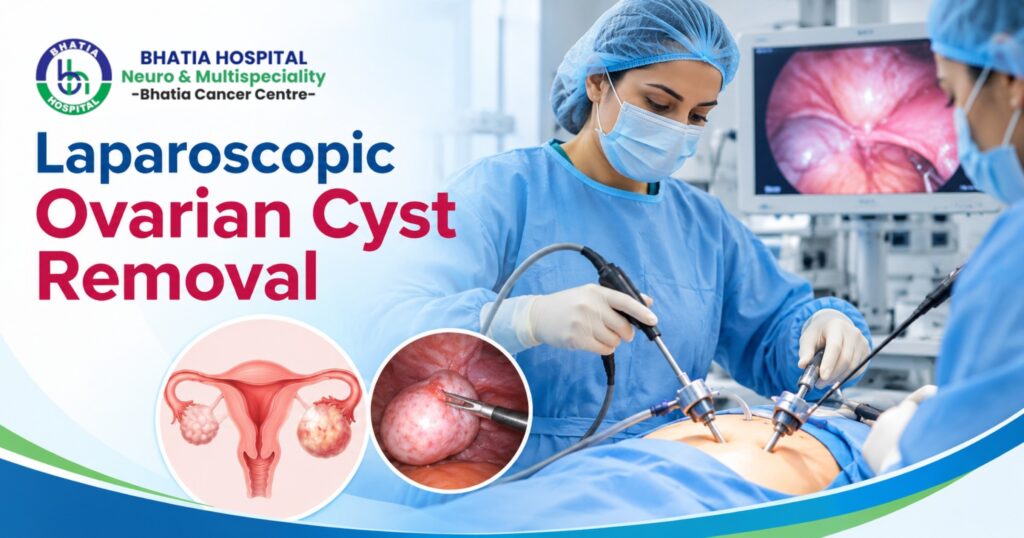
Laparoscopic ovarian cyst removal is also called laparoscopic ovarian cystectomy. The surgeon uses a thin camera and small instruments to remove the cyst through small cuts in the abdomen.
The procedure is usually performed under general anaesthesia. When possible, the surgeon removes the cyst while preserving the ovary. The removed tissue may be sent to a laboratory for examination.
Recovery varies by patient and procedure. Many patients return to normal activities within a few weeks, but more complex surgery can take longer.
What Is an Ovarian Cyst?
An ovarian cyst is a fluid-filled sac that develops in or on an ovary. Ovaries are part of the female reproductive system and release eggs during the menstrual cycle.
Ovarian cysts are common. Many develop during the menstrual cycle and resolve naturally.
Some cysts persist or cause symptoms. Others may need closer assessment because of their size or appearance on imaging.
What symptoms can an ovarian cyst cause?
Some cysts cause no symptoms. Others may cause:
Pain or pressure in the lower abdomen
Pelvic discomfort, sometimes on one side
Bloating or abdominal fullness
Pain during sexual activity
Frequent urination or pressure on the bladder
Changes in periods
Difficulty becoming pregnant in some cases
These symptoms can have several causes. A medical assessment is needed to identify the reason.
Seek emergency medical care for sudden, severe pelvic or abdominal pain, especially with vomiting, faintness, fever, or weakness. These symptoms may indicate a ruptured cyst or ovarian torsion, where the ovary twists and its blood supply may be reduced.
Does Every Ovarian Cyst Need Surgery?
No. Many ovarian cysts can be monitored without surgery.
Your doctor may recommend repeat ultrasound scans to check whether the cyst changes or disappears. Treatment depends on your age, symptoms, menopausal status, medical history, and scan findings.
Surgery may be considered when:
The cyst causes persistent or significant pain.
The cyst remains present or grows over time.
The cyst is large or causes pressure symptoms.
The scan shows features that need further investigation.
There is concern about possible cancer.
Complications are suspected.
The size of a cyst alone does not determine the treatment. Its appearance and your overall health also matter.
If cancer is suspected, the surgical approach and specialist team may differ from those used for a cyst that appears benign.
What Is Laparoscopic Ovarian Cystectomy?
Laparoscopic ovarian cystectomy is surgery to remove an ovarian cyst while aiming to preserve the ovary.
The surgeon makes small incisions in the abdomen. A laparoscope, which is a thin tube with a camera and light, provides a view of the pelvic organs.
Small surgical instruments are passed through additional incisions. The surgeon separates and removes the cyst, then controls bleeding and closes the incisions.
The exact technique depends on the cyst’s type, location, size, and relationship to the surrounding ovarian tissue.
Is ovarian cyst removal the same as ovary removal?
No. These are different procedures.
Ovarian cystectomy: Removes the cyst while attempting to preserve the ovary.
Oophorectomy: Removes an ovary.
Laparotomy: Uses a larger abdominal incision to access the cyst or ovary.
In some cases, removing the ovary may be necessary. The decision depends on the findings, the patient’s health, and the risk of cancer or other complications.
Ask your surgeon what procedure is planned and whether preserving the ovary is likely to be possible.
How Is Laparoscopic Ovarian Cyst Removal Performed?
The operation generally involves these steps.
1. Preparation and anaesthesia
Your team reviews your medical history, medicines, allergies, and test results. You will receive instructions about fasting and medication changes. The procedure is usually performed under general anaesthesia, so you are asleep during surgery.2. Small abdominal incisions
The surgeon makes a small incision, often near the belly button. The abdomen is gently inflated with carbon dioxide gas to create working space.3. Inserting the camera and instruments
The laparoscope provides images of the pelvic organs. Additional small incisions allow the surgeon to insert surgical instruments.4. Removing the cyst
The surgeon separates the cyst from the ovary when appropriate. The aim is to remove the cyst while protecting healthy ovarian tissue. The surgical plan may change if the cyst looks different from expected or if unexpected findings occur.5. Closing the incisions
The surgeon checks the operative area, removes the instruments, and releases the gas. The small incisions are then closed with stitches or another suitable method. The removed tissue may be sent for laboratory examination. Your doctor will explain when and how you will receive the results.How Should You Prepare for Ovarian Cyst Surgery?
Good preparation helps you understand the procedure and plan your recovery.
Before surgery:
- Tell your team about all medicines and supplements you take.
- Mention allergies and previous reactions to anaesthesia.
- Follow the hospital’s fasting instructions.
- Ask which medicines you should take or pause.
- Arrange transport home if you expect same-day discharge.
- Arrange help at home if you may need it.
- Discuss pregnancy plans and concerns about ovarian function.
Ask whether you need any additional tests before surgery. The tests depend on your symptoms, medical history, and scan findings.
Do not stop prescribed medicines without instructions from your healthcare team.
What Are the Benefits of Laparoscopic Ovarian Cyst Removal?
When suitable for the patient and cyst, laparoscopy may offer several advantages over open surgery.
Smaller incisions:
Laparoscopy uses small cuts instead of one larger abdominal incision.Less postoperative discomfort:
Many patients experience less pain after laparoscopic surgery than after open abdominal surgery. Individual experiences vary.Shorter hospital stay:
Some patients can go home the same day or the following day. The decision depends on recovery and the complexity of surgery.Earlier return to daily activities:
Recovery is often faster than after open surgery. However, patients should follow their surgeon’s instructions before returning to exercise, heavy lifting, or demanding work.Potential to preserve the ovary:
A cystectomy aims to remove the cyst while retaining healthy ovarian tissue when possible. These benefits are not guaranteed for every patient. Some cysts require open surgery or a different surgical plan.What Are the Risks of Laparoscopic Ovarian Cyst Removal?
Like all operations, laparoscopic cyst removal has potential risks.
These include:
Bleeding
Infection
Injury to nearby organs or blood vessels
Blood clots
Complications related to anaesthesia
Damage to healthy ovarian tissue
Need to remove an ovary in some cases
Conversion to open surgery
Persistence or recurrence of a cyst, depending on its type
The risks depend on your health, the cyst’s features, and the complexity of surgery.
If imaging raises concern about cancer, your surgeon may recommend a different approach. Some cysts need to be removed intact, and open surgery may be more appropriate.
Discuss the expected benefits and risks with your gynecologist before giving consent.
How Long Does Recovery Take After Laparoscopic Ovarian Cyst Removal?
Recovery after Laparoscopic surgery depends on the procedure, your health, and any complications.
Many patients return to usual activities within approximately two to three weeks after an uncomplicated laparoscopic cystectomy. Full recovery may take longer. More extensive surgery can require several additional weeks.
Use the timeline below as a general guide, not a guarantee.
| Recovery stage | What you may experience |
|---|---|
| First 24 hours | Sleepiness, mild nausea, abdominal soreness, and a need for rest |
| First few days | Incision discomfort, tiredness, bloating, or shoulder pain from the gas used during surgery |
| First 1–2 weeks | Gradual improvement and a gradual return to light daily activities |
| Following weeks | Increasing activity as healing progresses and your surgeon permits |
Some patients recover faster, while others need more time. Follow the discharge instructions provided for your specific operation.
When can you return to work?
The timing depends on your recovery and the physical demands of your job. Desk work may be possible sooner than work involving lifting, prolonged standing, or physical effort.
Ask your surgeon when you can safely resume your usual duties.
When can you exercise?
Start with gentle walking when your team says it is appropriate. Increase activity gradually.
Avoid heavy lifting, strenuous workouts, and abdominal exercises until your surgeon clears you. Do not push through increasing pain.
When can you drive?
Do not drive while taking medicines that cause drowsiness. You should also be able to wear a seat belt comfortably and perform an emergency stop safely.
Follow your surgeon’s advice and any applicable insurance requirements.
What Should You Eat After Ovarian Cyst Removal?
Unless your healthcare team gives different instructions, start with fluids and foods you can tolerate. Gradually return to your usual balanced diet.
During recovery:
Drink enough water.
Include fruits and vegetables.
Choose protein-rich foods such as lentils, beans, dairy, eggs, or other suitable sources.
Include fibre to help prevent constipation.
Follow any special dietary advice from your team.
Anaesthesia and pain medicines can sometimes cause nausea or constipation. Contact your healthcare team if you cannot keep fluids down or have persistent vomiting.
Diet supports recovery, but no specific food can guarantee faster healing or prevent ovarian cysts from returning.
Can You Get Pregnant After Laparoscopic Ovarian Cyst Removal?
Many patients can become pregnant after ovarian cyst surgery. However, fertility outcomes depend on the type of cyst, the amount of healthy ovarian tissue, age, and other reproductive factors.
A cystectomy aims to preserve the ovary when possible. Even so, some ovarian tissue may be affected during surgery.
Certain cysts, including endometriomas, and their treatment may affect ovarian reserve. Ovarian reserve refers to the remaining supply of eggs.
If you plan to become pregnant, tell your gynecologist before surgery. Ask how the procedure could affect your ovarian function and whether fertility-preserving options are appropriate.
Do not assume that surgery will improve fertility or guarantee a pregnancy.
Can an Ovarian Cyst Return After Surgery?
Yes, a cyst can return after removal. The likelihood depends on its type and the underlying condition.
Some functional cysts may develop again as part of the menstrual cycle. Endometriomas can also recur.
Your doctor may recommend follow-up visits or ultrasound scans, depending on the original findings and procedure. Ask whether you need ongoing monitoring and which symptoms should prompt another appointment.
What Warning Signs Should You Watch for After Surgery?
Contact your surgical team promptly if you develop:
Fever or chills
Severe or worsening abdominal pain
Persistent vomiting
Increasing abdominal swelling
Redness, warmth, or pus around an incision
Heavy vaginal bleeding
Difficulty passing urine
Leg swelling or pain
Seek emergency medical care for chest pain, difficulty breathing, fainting, or sudden severe pelvic pain.
These symptoms do not always mean a complication has occurred, but they need timely assessment.
Laparoscopic Ovarian Cyst Removal in Patiala
Patients in Patiala who have pelvic pain or an ovarian cyst diagnosis can consult a gynecologist to understand their treatment options.
Bhatia Hospital’s official gynecology service page lists ovarian cysts among the conditions it evaluates and describes selected laparoscopic gynecological procedures. The suitability of laparoscopic ovarian cyst removal depends on the cyst’s features, the patient’s health, and the gynecologist’s assessment.
Before deciding on surgery, discuss your ultrasound results, treatment options, the possibility of preserving the ovary, expected recovery time, and follow-up care.
To discuss your concerns, visit Bhatia Hospital’s official gynecology page or contact the hospital.
Conclusion:
Laparoscopic ovarian cyst removal uses small abdominal incisions to remove a cyst when surgery is appropriate. It may offer less postoperative discomfort and a shorter recovery than open surgery.
However, not every cyst needs an operation. The right treatment depends on the cyst’s appearance, symptoms, size, and possible risks.
Ask your gynecologist about the planned procedure, ovarian preservation, fertility considerations, and recovery instructions. Seek urgent medical care for sudden severe pelvic pain or other emergency symptoms.
FAQs:
1. How long does laparoscopic ovarian cyst removal take?
The operation’s duration depends on the cyst’s size, location, and complexity. Your surgeon can estimate the expected duration after reviewing your scans and medical history.
2. Is laparoscopic ovarian cyst removal a major surgery?
It is an operation performed under anaesthesia. Although it uses small incisions, it still carries surgical risks and requires recovery. The complexity depends on the cyst and the procedure needed.
3. Will my ovary be removed along with the cyst?
Not necessarily. An ovarian cystectomy aims to remove the cyst while preserving the ovary. However, removing an ovary may be necessary in some cases. Ask your surgeon about the plan before surgery.
4. Can I get pregnant after ovarian cyst removal?
Many patients can become pregnant after ovarian cyst removal. Fertility depends on ovarian function, the cyst type, age, and other reproductive factors. Discuss fertility preservation before surgery.
5. How long will I stay in hospital after surgery?
Some patients go home on the same day or the following day. A longer stay may be necessary if the procedure is complex or recovery requires additional monitoring.
6. Can an ovarian cyst disappear without surgery?
Yes. Many ovarian cysts resolve naturally. Your doctor may recommend monitoring and repeat ultrasound scans instead of immediate surgery. The approach depends on the cyst’s appearance, symptoms, and possible risks.
7. When should I seek medical help after ovarian cyst surgery?
Contact your healthcare team for fever, worsening pain, persistent vomiting, heavy bleeding, or signs of wound infection. Sudden severe pelvic pain, fainting, or breathing difficulty requires urgent medical assessment.
8. Can an ovarian cyst return after removal?
Yes. Recurrence depends on the cyst type and underlying condition. Your gynecologist may recommend follow-up appointments or scans based on your surgical findings.